Animated Logical Graphs • 13

Cf: Survey of Animated Logical Graphs

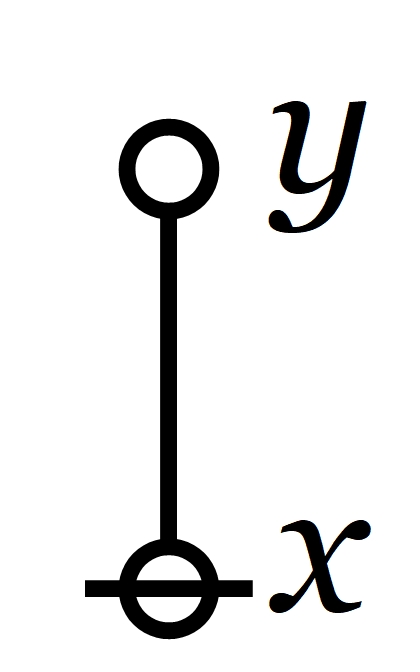
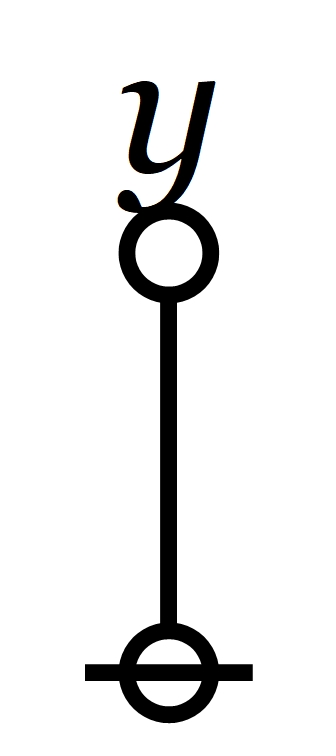
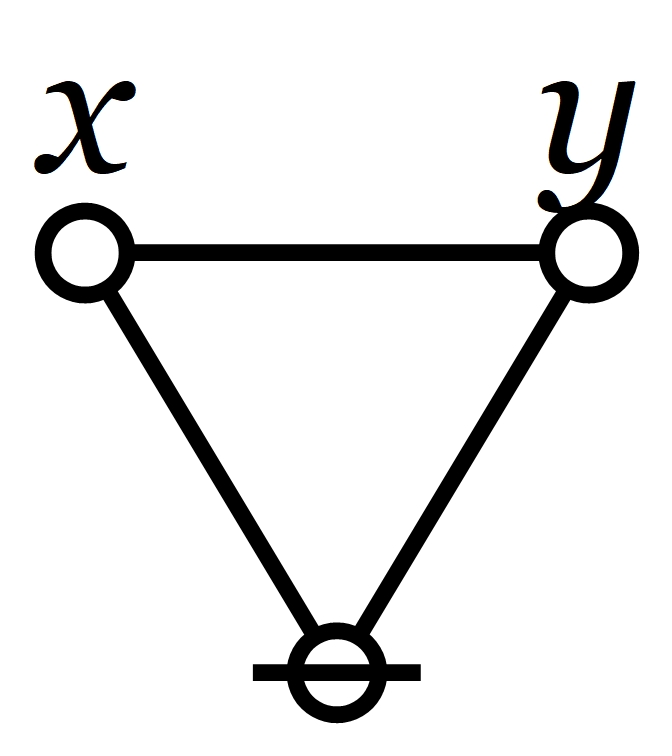
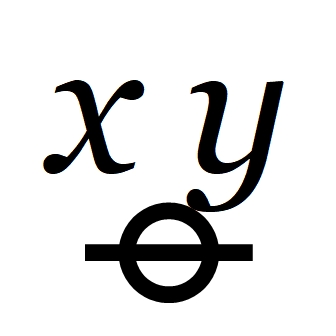
The blog post linked above updates my Survey of Resources for Animated Logical Graphs.  It contains links to basic expositions and extended discussions of the graphs themselves, deriving from the Alpha Graphs C.S. Peirce used for propositional logic, more recently revived and augmented by G. Spencer Brown in his Laws of Form.  What I contributed to their development was an extension from tree-like forms to what graph theorists know as cacti, and thereby hangs many a tale yet to be told.  I hope to add more proof animations as time goes on.

cc: Cybernetics (1) (2) • Peirce (1) (2) (3) (4) (5) (6) (7) (8) (9) (10) (11) (12) (13) (14)
cc: Ontolog Forum (1) (2) • Structural Modeling (1) (2) • Systems Science (1) (2)
cc: FB | Logical GraphsLaws of Form

Posted in Amphecks, Animata, Boolean Algebra, Boolean Functions, C.S. Peirce, Cactus Graphs, Constraint Satisfaction Problems, Deduction, Diagrammatic Reasoning, Duality, Equational Inference, Graph Theory, Laws of Form, Logic, Logical Graphs, Mathematics, Minimal Negation Operators, Model Theory, Painted Cacti, Peirce, Proof Theory, Propositional Calculus, Propositional Equation Reasoning Systems, Spencer Brown, Theorem Proving, Visualization | Tagged , , , , , , , , , , , , , , , , , , , , , , , , , | 9 Comments

Survey of Animated Logical Graphs • 2

This is one of several Survey posts I’ll be drafting from time to time, starting with minimal stubs and collecting links to the better variations on persistent themes I’ve worked on over the years.  After that I’ll look to organizing and revising the assembled material with an eye toward developing more polished articles.

Beginnings

Elements

Examples

Excursions

Applications

Blog Dialogs

Posted in Abstraction, Amphecks, Animata, Boole, Boolean Algebra, Boolean Functions, C.S. Peirce, Cactus Graphs, Computational Complexity, Constraint Satisfaction Problems, Equational Inference, Graph Theory, Laws of Form, Logic, Logical Graphs, Mathematics, Minimal Negation Operators, Painted Cacti, Peirce, Propositional Calculus, Propositional Equation Reasoning Systems, Spencer Brown, Surveys, Theorem Proving, Visualization, Zeroth Order Logic | Tagged , , , , , , , , , , , , , , , , , , , , , , , , , | 19 Comments

Conceptual Barriers • 3

Re: Ontolog ForumPaola Di Maio

Partly this discussion and partly just the mood I’m in brought to mind a motley assortment of old reminiscences.  My first years in college I oscillated (or vacillated) between math and physics, eventually returning to grad school in math, but only after a decade of cycling through majors from communications — of which I recall only a course in Aristotle — to psychology to philosophy to a “radical-liberal arts college” where I got to craft my own Bachelor’s degree in Mathematical and Philosophical Method.

But I’m getting ahead of the story.  The course in physics took off with a bang right away, moving quickly from classical to relativity to quantum physics.  My professors often took a Read the Masters! approach, giving us readings in Bohr, Dirac, Feynman, Heisenberg, and others, in addition to our regular textbooks.  Among the forces that drove me back to math, I remember Dirac’s algebraic symbolism, Heisenberg’s matrix mechanics, and above all Peirce, especially his use of logical matrices, that made me realize I needed to learn a lot more math before I could comprehend what any of them were talking about.

To be continued …

cc: Ontolog Forum (1) (2)Structural ModelingSystems Science

Posted in Artificial Intelligence, C.P. Snow, C.S. Peirce, Conceptual Barriers, Conceptual Integration, Constraint, Indication, Information, Inquiry, Inquiry Driven Systems, Intelligent Systems, Knowledge Representation, Pragmatic Semiotic Information, Scholarship of Integration, Semiotics, Sign Relations, Systems Theory, Two Cultures, Uncertainty | Tagged , , , , , , , , , , , , , , , , , , | 1 Comment

Conceptual Barriers • 2

Re: Ontolog ForumPaola Di Maio

Synchronicity being what it is, here for your contemplation are two pictures from a current discussion on Facebook.

See Tables 8 and 9 in the following article and section.

cc: Ontolog Forum (1) (2)Structural ModelingSystems Science

Posted in Artificial Intelligence, C.P. Snow, C.S. Peirce, Conceptual Barriers, Conceptual Integration, Constraint, Indication, Information, Inquiry, Inquiry Driven Systems, Intelligent Systems, Knowledge Representation, Pragmatic Semiotic Information, Scholarship of Integration, Semiotics, Sign Relations, Systems Theory, Two Cultures, Uncertainty | Tagged , , , , , , , , , , , , , , , , , , | 1 Comment

Conceptual Barriers • 1

Re: Ontolog ForumJohn Sowa

My first year at college the university held a cross‑campus colloquium taking its theme from C.P. Snow’s Two Cultures about the need for and difficulties of cross‑disciplinary communication and collaboration in our day.  The university had recently created three residential colleges focused on the arts, sciences, and government–history, designed to provide future citizens with an integrated perspective on how those concentrations fit into the bigger picture of the modern world.

Long time passing, I found myself returning to those very questions around the turn of the millennium, addressing the “problem of silos” and the “scholarship of integration” from the perspective of Peirce’s and Dewey’s pragmatism and semiotics.  Here’s a couple of contributions Susan Awbrey and I made to the area.

Conference Presentation

  • Awbrey, S.M., and Awbrey, J.L. (1999), “Organizations of Learning or Learning Organizations : The Challenge of Creating Integrative Universities for the Next Century”, Second International Conference of the Journal ‘Organization’, Re‑Organizing Knowledge, Trans‑Forming Institutions : Knowing, Knowledge, and the University in the 21st Century, University of Massachusetts, Amherst, MA.  Online.

Published Paper

  • Awbrey, S.M., and Awbrey, J.L. (2001), “Conceptual Barriers to Creating Integrative Universities”, Organization : The Interdisciplinary Journal of Organization, Theory, and Society 8(2), Sage Publications, London, UK, 269–284.  AbstractOnline.

I don’t know if the brands of ontologies being cranked out today are going to be the ultimate answer to these problems, but I do think there are applications of logic, mathematical modeling, and pragmatic semiotics that would certainly help a lot.

Resources

  • Constraints and Indications • (1)(2)

cc: Ontolog ForumStructural ModelingSystems Science

Posted in C.P. Snow, C.S. Peirce, Conceptual Barriers, Conceptual Integration, Information, Inquiry, Inquiry Driven Systems, Intelligent Systems, Knowledge Representation, Pragmatic Semiotic Information, Scholarship of Integration, Semiotics, Sign Relations, Systems Theory, Two Cultures | Tagged , , , , , , , , , , , , , , | 1 Comment

Semiotics, Semiosis, Sign Relations • Discussion 1

Re: Semiotic TriangleJohn Corcoran

Concepts for Peirce are mental symbols, so they fall under the general designation of signs.  For triadic sign relations in general, then, we are dealing with a triadic relation among (1) objects of signs, (2) signs of objects, and (3) what Peirce calls interpretant signs, or interpretants for short.  It is critical to regard the three designations of objects, signs, and interpretants as relational roles not ontological essences.  It is also critical to distinguish the following things:

  • The extended sign relation L as a subset of a cartesian product O \times S \times I,
  • The elementary sign relation as an ordered triple (o, s, i) in O \times S \times I,
  • The places forming an ordered triple (o, s, i),
  • The elements o, s, i filling those places.

Triangles like the one linked above have long been used to introduce the idea of a triadic sign relation.  They have the unintended consequence, however, of leading people to miss all the points I mentioned above.  So it’s wise to move quickly on to better pictures and more detailed descriptions.

Resources

cc: Cybernetics (1) (2)Ontolog • Peirce (1) (2)Structural ModelingSystems Science

Posted in C.S. Peirce, Category Theory, Logic, Relation Theory, Semiosis, Semiotics, Sign Relations, Triadic Relations | Tagged , , , , , , , | 15 Comments

Abductive Inference, Concept Formation, Hypothesis Formation • 1

In pragmatic semiotics, concept formation like hypothesis formation falls under the heading of abductive inference.  A lot has been said and there’s a lot more to say about that, but things are too much in flux right now to allow for an organized exposition.

So here’s just a teaser from Peirce on how concepts evolve from one level of complexity to the next, using incidentally a paradigm from the world of physics.

cc: Ontolog ForumStructural ModelingSystems ScienceFB | Peirce Matters

Posted in Abduction, C.S. Peirce, Complexity, Concept Formation, Differential Calculus, Differential Logic, Dyadic Relations, Dynamical Systems, Dynamics, Geometry, Hypothesis Formation, Inference, Logic, Logic of Relatives, Mathematics, Peirce's Categories, Physics, Relation Theory, Semiosis, Semiotics, Sign Relations, Triadic Relations, Triadicity | Tagged , , , , , , , , , , , , , , , , , , , , , , | Leave a comment

Signspiel • 1

Re: Ontolog ForumJohn Sowa

All sorts of players have given us all sorts of spiel about speech acts over the years but Peirce stands out from the chorus in giving us models of semiotic processes whose generation by triadic sign relations allows them to maintain a constant relation among signs, their active interpretants in conduct, and their ultimate pragmata, the objects and objectives of the whole action.  Shy of that, the spielerei of Austin and Wittgenstein simply never gets off the ground.

cc: FB | Semeiotics • Laws of Form • OntologMathstodonAcademia.edu
cc: Conceptual GraphsCyberneticsStructural ModelingSystems Science

Posted in C.S. Peirce, Cybernetics, Logic, Peirce, Pragmatism, Relation Theory, Semiosis, Semiotics, Sign Relations | Tagged , , , , , , , , | 4 Comments

Individuality, Identity, Teridentity • 1

Some problems cannot be solved in the paradigms where they first appear, which is why we keep recurring to them without quite freeing ourselves from the loops in which they ensnare us.  Questions about the supposed uniqueness of supposed individuals and the dyadic relation of identity are as old as the ship of Theseus and the morning and evening star(s) we steer by.

Peirce, of course, took another course …

As fortune has it, I find myself waylaid between bouts of travel, with promises to keep when it comes to Peirce’s information formula, so let me leave this for now with a link to one of the most critical passages in all of Peirce’s explorations:

Selection from C.S. Peirce, “Logic Of Relatives” (1870), CP 3.45–149

93.   In reference to the doctrine of individuals, two distinctions should be borne in mind.  The logical atom, or term not capable of logical division, must be one of which every predicate may be universally affirmed or denied.  For, let \mathrm{A} be such a term.  Then, if it is neither true that all \mathrm{A} is \mathrm{X} nor that no \mathrm{A} is \mathrm{X}, it must be true that some \mathrm{A} is \mathrm{X} and some \mathrm{A} is not \mathrm{X};  and therefore \mathrm{A} may be divided into \mathrm{A} that is \mathrm{X} and \mathrm{A} that is not \mathrm{X}, which is contrary to its nature as a logical atom.

Such a term can be realized neither in thought nor in sense.

Not in sense, because our organs of sense are special — the eye, for example, not immediately informing us of taste, so that an image on the retina is indeterminate in respect to sweetness and non-sweetness.  When I see a thing, I do not see that it is not sweet, nor do I see that it is sweet;  and therefore what I see is capable of logical division into the sweet and the not sweet.  It is customary to assume that visual images are absolutely determinate in respect to color, but even this may be doubted.  I know no facts which prove that there is never the least vagueness in the immediate sensation.

In thought, an absolutely determinate term cannot be realized, because, not being given by sense, such a concept would have to be formed by synthesis, and there would be no end to the synthesis because there is no limit to the number of possible predicates.

A logical atom, then, like a point in space, would involve for its precise determination an endless process.  We can only say, in a general way, that a term, however determinate, may be made more determinate still, but not that it can be made absolutely determinate.  Such a term as “the second Philip of Macedon” is still capable of logical division — into Philip drunk and Philip sober, for example;  but we call it individual because that which is denoted by it is in only one place at one time.  It is a term not absolutely indivisible, but indivisible as long as we neglect differences of time and the differences which accompany them.  Such differences we habitually disregard in the logical division of substances.  In the division of relations, etc., we do not, of course, disregard these differences, but we disregard some others.  There is nothing to prevent almost any sort of difference from being conventionally neglected in some discourse, and if I be a term which in consequence of such neglect becomes indivisible in that discourse, we have in that discourse,

[I] = 1.

This distinction between the absolutely indivisible and that which is one in number from a particular point of view is shadowed forth in the two words individual (τὸ ἄτομον) and singular (τὸ καθ᾿ ἕκαστον);  but as those who have used the word individual have not been aware that absolute individuality is merely ideal, it has come to be used in a more general sense.

Note

Peirce explains his use of the square bracket notation at CP 3.65.

I propose to denote the number of a logical term by enclosing the term in square brackets, thus, [t].

The number of an absolute term, as in the case of I, is defined as the number of individuals it denotes.

References

  • Peirce, C.S. (1870), “Description of a Notation for the Logic of Relatives, Resulting from an Amplification of the Conceptions of Boole’s Calculus of Logic”, Memoirs of the American Academy of Arts and Sciences 9, 317–378, 26 January 1870.  Reprinted, Collected Papers 3.45–149, Chronological Edition 2, 359–429.  Online (1) (2) (3).
  • Peirce, C.S., Collected Papers of Charles Sanders Peirce, vols. 1–6, Charles Hartshorne and Paul Weiss (eds.), vols. 7–8, Arthur W. Burks (ed.), Harvard University Press, Cambridge, MA, 1931–1935, 1958.
  • Peirce, C.S., Writings of Charles S. Peirce : A Chronological Edition, Peirce Edition Project (eds.), Indiana University Press, Bloomington and Indianapolis, IN, 1981–.

Resources

cc: Ontolog ForumStructural ModelingSystems Science

Posted in C.S. Peirce, Doctrine of Individuals, Icon Index Symbol, Identity, Individuality, Individuals, Logic, Logic of Relatives, Logical Atoms, Mathematics, Peirce, Relation Theory, Semiotics, Sign Relations, Teridentity, Triadic Relations | Tagged , , , , , , , , , , , , , , , | Leave a comment

{ Information = Comprehension × Extension } • Discussion 17

Re: Ontolog ForumJoseph Simpson

We are in the middle of trying to work out what Peirce has in mind with his concept of information.  He appears to have developed it from purely logical considerations — if logic can remain “pure” in applying itself to experience — and he thinks it solves “the puzzle of the validity of scientific inference”.

I am going, next, to show that inference is symbolization and that the puzzle of the validity of scientific inference lies merely in this superfluous comprehension and is therefore entirely removed by a consideration of the laws of information.

(Peirce 1866, p. 467)

We will eventually come to the task of seeing how a theory of information born in that environment relates to concepts of information in common use today, sprouted as they were from the needs of telegraph operators to detect and correct errors of transmission through noisy channels of communication.

As I see it, Peirce’s concept of information is potentially deeper and more general than concepts of information based on quantitative measures of probability and quantifiable statistics of messages.  That is possible because the qualitative properties of spaces studied in topology are deeper and more general than the quantitative properties of spaces bearing real‑valued measures.

All in good time, though.  We have a ways to go in understanding Peirce’s idea before we can say how the two paradigms compare.

References

  • Peirce, C.S. (1866), “The Logic of Science, or, Induction and Hypothesis”, Lowell Lectures of 1866, pp. 357–504 in Writings of Charles S. Peirce : A Chronological Edition, Volume 1, 1857–1866, Peirce Edition Project, Indiana University Press, Bloomington, IN, 1982.
  • Peirce, C.S. (1867), “Upon Logical Comprehension and Extension”, Proceedings of the American Academy of Arts and Sciences, Vol. 7, pp. 416–432.  ArchiveOnline.

Resources

cc: CyberneticsOntolog ForumStructural ModelingSystems Science

Posted in Abduction, C.S. Peirce, Comprehension, Deduction, Extension, Hypothesis, Icon Index Symbol, Induction, Inference, Information = Comprehension × Extension, Information Theory, Inquiry, Intension, Logic, Logic of Science, Peirce, Peirce's Categories, Pragmatic Semiotic Information, Pragmatism, Scientific Method, Semiotics, Sign Relations | Tagged , , , , , , , , , , , , , , , , , , , , , | 9 Comments