Higher Order Sign Relations • Discussion 5

Re: Higher Order Sign Relations • Discussion 3
Re: Relations, Types, Functions
Re: CyberneticsCliff Joslyn

Cliff Joslyn recommends the following books.

Dear Cliff,

The following Survey page gives a hint of the tack I’ve been taking with category theory since the early days but definitely moving into higher gear during my year at Illinois in the mid 1980s.  John Gray taught a course joint between math and computer science on the Applications of Lambda Calculus and David Plaisted taught a course on Resolution-Unification Theorem Proving, both of which I took and followed up with independent studies.  I spent a heady year making the circuit between math, computer science, and psychology departments and a lot of what I work on today goes back to issues raised in those days.

I know that Survey from a couple years ago still looks a little sketchy but I’ll be working to make it less so as time goes by, especially if I ever get around to unpacking my notes from the basement boxes.

I have been sampling current approaches to categories at sundry sites around the web over the last two decades — John Baez, nCafe, nLab, Zulip Category Chat, Topos Institute, etc.  As great as all that is there’s a reason why it bears but tangentially on the questions I’ve been pursuing.  That has to do with the Peirce Factor and how far a given line of inquiry takes account of it.

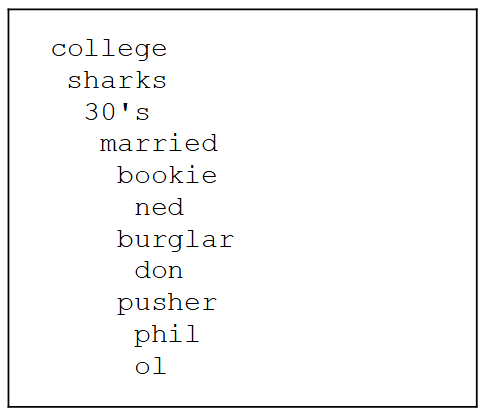
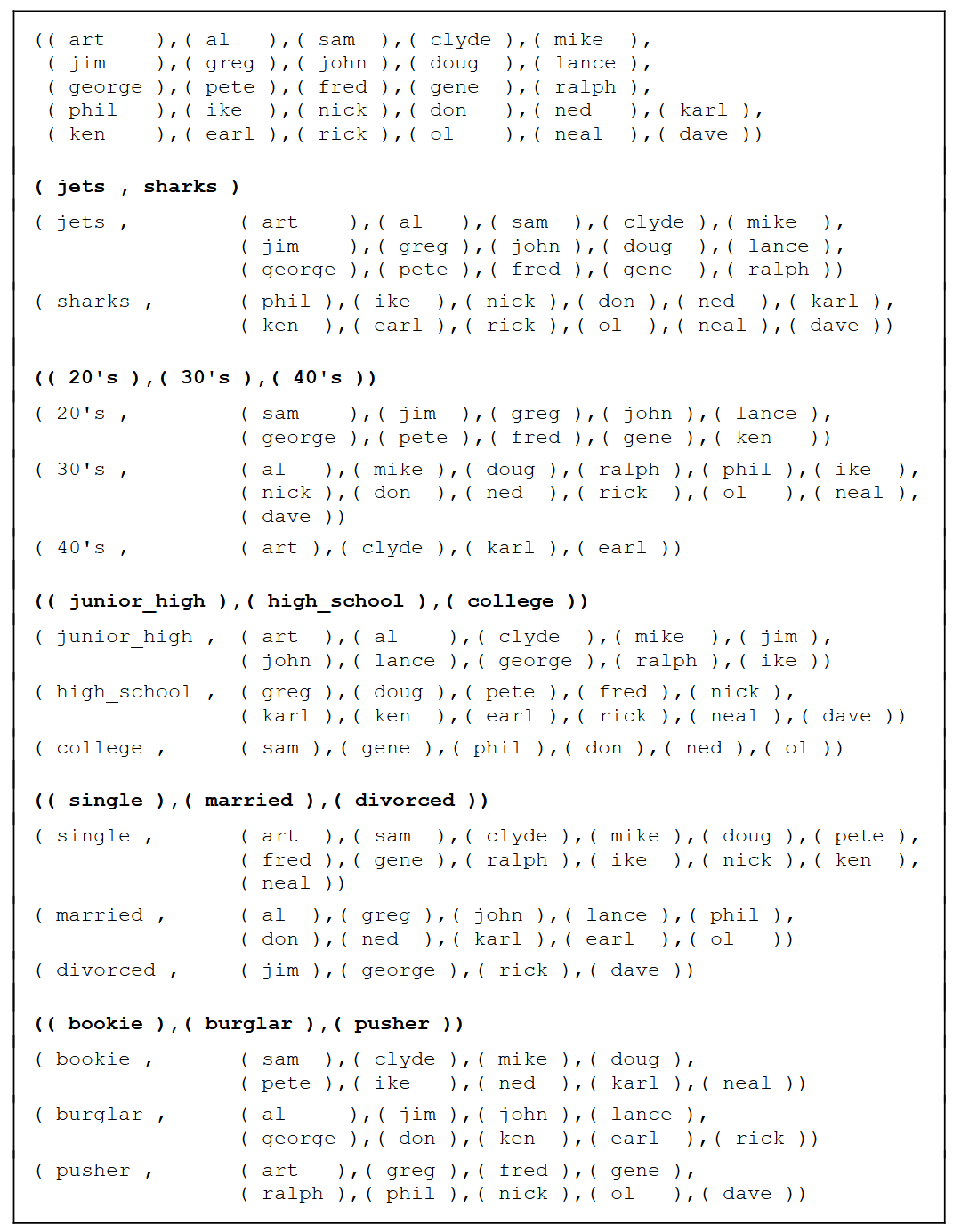
As luck would have it, one of the texts John Gray used for his course, Lambek and Scott’s Introduction to Higher Order Categorical Logic, resonated strongly with themes I knew from Peirce and that led me to many adventures of ideas still in progress.  The following set of excerpts I shared with the Standard Upper Ontology Group back in the day may suggest the character of that work.

  • Lambek, J. and Scott, P.J. (1986), Introduction to Higher Order Categorical Logic

There’s a lot more to say, but that’s all I have time for today …

Regards,

Jon

cc: Conceptual GraphsCyberneticsLaws of FormOntolog Forum
cc: FB | Inquiry Driven SystemsStructural ModelingSystems Science

Posted in C.S. Peirce, Gödel Numbers, Higher Order Sign Relations, Inquiry, Inquiry Driven Systems, Inquiry Into Inquiry, Logic, Peirce, Quotation, Reflection, Reflective Interpretive Frameworks, Semiotics, Sign Relations, Triadic Relations | Tagged , , , , , , , , , , , , , | 12 Comments

Survey of Inquiry Driven Systems • 4

This is a Survey of blog and wiki resources on Inquiry Driven Systems, material I plan to refine toward a more compact and systematic treatment of the subject.

An inquiry driven system is a system having among its state variables some representing its state of information with respect to various topics of interest, for example, its own state and the states of any potential object systems.  Thus it has a component of state tracing a trajectory though an information state space.

Elements

Background

Blog Dialogs

Developments

Applications

cc: Conceptual GraphsCyberneticsLaws of FormOntolog Forum
cc: FB | Inquiry Driven SystemsStructural ModelingSystems Science

Posted in Abduction, Action, Adaptive Systems, Aristotle, Artificial Intelligence, Automated Research Tools, Change, Cognitive Science, Communication, Cybernetics, Deduction, Descartes, Dewey, Discovery, Doubt, Education, Educational Systems Design, Educational Technology, Fixation of Belief, Induction, Information, Information Theory, Inquiry, Inquiry Driven Systems, Inquiry Into Inquiry, Intelligent Systems, Interpretation, Invention, Kant, Knowledge, Learning, Learning Theory, Logic, Logic of Science, Mathematics, Mental Models, Peirce, Pragmatic Maxim, Pragmatism, Process Thinking, Scientific Inquiry, Semiotics, Sign Relations, Surveys, Teaching, Triadic Relations, Visualization | Tagged , , , , , , , , , , , , , , , , , , , , , , , , , , , , , , , , , , , , , , , , , , , , , , | 5 Comments

Inquiry Into Inquiry • Discussion 5

Re: Inquiry Into Inquiry • In Medias Res
Re: Inquiry Into Inquiry • Flashback
Re: Inquiry Into Inquiry • Discussion 4

A quick review of the highlights so far, and then I’ll continue from the standpoint I indicated last time.  As you recall, Dan Everett opened with the following problem.

DE:
I am trying to represent two readings of the three juxtaposed sentences in English.  The first reading is that the judge and the jury both know that Malcolm is guilty.  The second is that the judge knows that the jury thinks that Malcolm is guilty.

Daniel Everett • Judge, Jury, Malcolm, Guilty • Graph 1

Daniel Everett • Judge, Jury, Malcolm, Guilty • Graph 2

Do these purported EGs of mine seem correct to you?

Dan’s initial question about logical graphs sent me further down memory lane than I usually go, to my first encounters with extensions vs. intensions in logic, intentional contexts, propositional attitudes, referential opacity, truth-functionality, and triadicity, puzzles about which my first logic prof sent me off to read Quine’s Ways of Paradox and a host of others.

I had been studying Peirce on my own through all my undergrad years and was fortunate at long last to find an advisor who was a fund of knowledge about Peirce and Pragmatism, not to mention the Ancients and philosophy in general.  In several of our discussions from those days I can remember expressing my hunch the problems of intentionality were not due to a distinct modality or quality of propositions but a different quantity or dimension of relations.  I did not get to Russell’s monographs of 1918 and 1913 until much later but when I did I was struck immediately by his use of graphs to represent relations, so like Peirce’s graphs for the logic of relatives.

Othello Believes Desdemona Loves Cassio

To be continued …

Reference

  • Bertrand Russell, “The Philosophy of Logical Atomism”, pp. 35–155 in The Philosophy of Logical Atomism, edited with an introduction by David Pears, Open Court, La Salle, IL, 1985.  First published 1918.

Resources

cc: Conceptual GraphsCyberneticsLaws of FormOntolog Forum
cc: FB | Inquiry Driven SystemsStructural ModelingSystems Science

Posted in Anthem, Initiative, Inquiry | Tagged , , | 7 Comments

Higher Order Sign Relations • Discussion 4

Re: Higher Order Sign Relations • Discussion 3
Re: Conceptual GraphsGary Zhu

GZ:
Is there any good contemporary reading of Peirce & James that you recommend?  Their original works have been quite challenging for me.

Dear Gary,

As fortune would have it, I haven’t found much to recommend in the secondary literature on Peirce over the last couple of decades.  Most of it looks bent on assimilating Peirce to the conventional wits of analytic and continental philosophy.  As a result, I hew pretty close to Peirce himself in my current reading.  You could try the two volumes of the Essential Peirce for general orientation, if a trifle light on the math side of Peirce.

The last contemporary work I read with anything like the spirit of Peirce about it would probably be Sowa’s Conceptual Structures, so try that if you haven’t already.  Still worth reading are Pragmatism by William James and How We Think by John Dewey.  James and Dewey lacked the mathematical perspective needed to take in Peirce’s full scope and Dewey was a little slow getting up to speed with Peirce’s message but he kept at it and had the benefit of living long enough to become an able expositor of pragmatic and scientific ways.  Plus he understood people and society far better than Peirce ever did.

There are a few references at the end of the following paper.

  • Awbrey, J.L., and Awbrey, S.M. (1995), “Interpretation as Action : The Risk of Inquiry”, Inquiry : Critical Thinking Across the Disciplines 15(1), 40–52.  ArchiveJournal.  Online (doc) (pdf).

cc: Conceptual GraphsCyberneticsLaws of FormOntolog Forum
cc: FB | Inquiry Driven SystemsStructural ModelingSystems Science

Posted in C.S. Peirce, Gödel Numbers, Higher Order Sign Relations, Inquiry, Inquiry Driven Systems, Inquiry Into Inquiry, Logic, Peirce, Quotation, Reflection, Reflective Interpretive Frameworks, Semiotics, Sign Relations, Triadic Relations | Tagged , , , , , , , , , , , , , | 13 Comments

Higher Order Sign Relations • Discussion 3

Re: Higher Order Sign Relations • Discussion 2
Re: Relations, Types, Functions
Re: CyberneticsCliff Joslyn

CJ:
Categorical approaches to systems theory have been very attractive to me for a long time.  My current work is categorically adjacent, and I’m funding some efforts in this direction.  The category of binary relations is central to our immediate work in hypergraphs and high-order networks, but is also to any general systems theoretical approach.  I’ve approached topoi and closed Cartesian categories a few times, but admit it’s challenging.  I need something at the level that David Spivak and crew have been developing to become more fluent, if you’re aware of his work.  Any worked examples you could provide would be very useful and welcome.

Dear Cliff,

There are a few sources I recall most vividly for the way they capture the attractions of categories.  The following references come from a bibliography I collected in the early 90s plus a number I added over the course of that decade.

The following sources may also be of interest.

  • Mili • Program construction and semantics from a relational point of view, using Tarski’s approach to binary relations (Fatma Mili taught a course on this at OU).
  • Freyd and ScedrovCategories, Allegories, a category-theoretic take on binary relations.

cc: Conceptual GraphsCyberneticsLaws of FormOntolog Forum
cc: FB | Inquiry Driven SystemsStructural ModelingSystems Science

Posted in C.S. Peirce, Gödel Numbers, Higher Order Sign Relations, Inquiry, Inquiry Driven Systems, Inquiry Into Inquiry, Logic, Peirce, Quotation, Reflection, Reflective Interpretive Frameworks, Semiotics, Sign Relations, Triadic Relations | Tagged , , , , , , , , , , , , , | 17 Comments

Inquiry Into Inquiry • Discussion 4

Re: Inquiry Into Inquiry • In Medias Res
Re: Inquiry Into Inquiry • Flashback
Re: FB Comment • Daniel Everett

Othello Believes Desdemona Loves Cassio

Dan Everett commented on my post about Russell’s question, “How shall we describe the logical form of a belief?”, giving his take on Russell’s analysis of the example, “Othello believes Desdemona loves Cassio”.

DE:
The most interesting aspect of such constructions from my perspective is that embedding is unnecessary for the reading.  In Piraha you can get independent clauses expressing the same thing.  Or even in English.  Othello believes something.  That something is that Desdemona loves Cassio.  So the advantage of Peircean graphs (and later of Discourse Representation Theory) is that the syntactic feature of embedding is not crucial.  Just as in larger discourse of multiple independent sentences.

I added the following observations.

Russell asks, “How shall we describe the logical form of a belief?”  The question is a good one, maybe too good, loaded with a surplus of meanings for “logical form”.  Read in the spectrum of interpretive lights traditional schools of thought have brought to bear on it, “logical form” hovers between the poles of objective form and syntactic form without ever settling down.  A more stable fix on its practical sense can be gained from the standpoint staked out by Peirce on the basis of the pragmatic maxim, aiming at objective structure and seeing syntactic structure as accessory to that aim.

To be continued …

Reference

  • Bertrand Russell, “The Philosophy of Logical Atomism”, pp. 35–155 in The Philosophy of Logical Atomism, edited with an introduction by David Pears, Open Court, La Salle, IL, 1985.  First published 1918.

Resources

cc: Conceptual GraphsCyberneticsLaws of FormOntolog Forum
cc: FB | Inquiry Driven SystemsStructural ModelingSystems Science

Posted in Anthem, Initiative, Inquiry | Tagged , , | 8 Comments

Inquiry Into Inquiry • Understanding 2

In the passage quoted in the previous post Bertrand Russell addresses the question, “What is the logical structure of the fact which consists in a given subject understanding a given proposition?” and he selects a proposition of the form ``A ~\text{and}~ B ~\text{are similar}" to demonstrate his way of analyzing the fact.  Russell wraps up his discussion of the example in the passage quoted below.

Excerpt from Bertrand Russell • “Theory of Knowledge” (1913)

Part 2. Atomic Propositional Thought

Chapter 1. The Understanding of Propositions

(4). [cont.]  It follows that, when a subject S understands ``A ~\text{and}~ B ~\text{are similar}", “understanding” is the relating relation, and the terms are S and A and B and similarity and R(x, y), where R(x, y) stands for the form “something and something have some relation”.  Thus a first symbol for the complex will be

U \{S, A, B, \mathrm{similarity}, R(x, y) \}~.

This symbol, however, by no means exhausts the analysis of the form of the understanding-complex.  There are many kinds of five-term complexes, and we have to decide what the kind is.

It is obvious, in the first place, that S is related to the four other terms in a way different from that in which any of the four other terms are related to each other.

(It is to be observed that we can derive from our five-term complex a complex having any smaller number of terms by replacing any one or more of the terms by “something”.  If S is replaced by “something”, the resulting complex is of a different form from that which results from replacing any other term by “something”.  This explains what is meant by saying that S enters in a different way from the other constituents.)

It is obvious, in the second place, that R(x, y) enters in a different way from the other three objects, and that “similarity” has a different relation to R(x, y) from that which A and B have, while A and B have the same relation to R(x, y).  Also, because we are dealing with a proposition asserting a symmetrical relation between A and B, A and B have each the same relation to “similarity”, whereas, if we had been dealing with an asymmetrical relation, they would have had different relations to it.  Thus we are led to the following map of our five-term complex.

Russell • Understanding (S, A, B, Similarity, Rxy)

In this figure, one relation goes from S to the four objects;  one relation goes from R(x, y) to similarity, and another to A and B, while one relation goes from similarity to A and B.

This figure, I hope, will help to make clearer the map of our five-term complex.  But to explain in detail the exact abstract meaning of the various items in the figure would demand a lengthy formal logical discussion.  Meanwhile the above attempt must suffice, for the present, as an analysis of what is meant by “understanding a proposition”.  (Russell, TOK, 117–118).

Reference

  • Bertrand Russell, Theory of Knowledge : The 1913 Manuscript, edited by Elizabeth Ramsden Eames in collaboration with Kenneth Blackwell, Routledge, London, UK, 1992.  First published, George Allen and Unwin, 1984.

Resources

cc: Conceptual GraphsCyberneticsLaws of FormOntolog Forum
cc: FB | Inquiry Driven SystemsStructural ModelingSystems Science

Posted in Anthem, Initiative, Inquiry | Tagged , , | 7 Comments

Inquiry Into Inquiry • Understanding 1

Another passage from Russell further illustrates what I see as a critical juncture in his thought.  The graph-theoretic figure he uses in analyzing a complex of logical relationships brings him to the edge of seeing the limits of dyadic analysis — but he veers off and does not make the leap.  At any rate, that’s how it looks from a perspective informed by Peirce.

Excerpt from Bertrand Russell • “Theory of Knowledge” (1913)

Part 2. Atomic Propositional Thought

Chapter 1. The Understanding of Propositions

(4).  We come now to the last problem which has to be treated in this chapter, namely:  What is the logical structure of the fact which consists in a given subject understanding a given proposition?  The structure of an understanding varies according to the proposition understood.  At present, we are only concerned with the understanding of atomic propositions;  the understanding of molecular propositions will be dealt with in Part 3.

Let us again take the proposition “A and B are similar”.

It is plain, to begin with, that the complexA and B being similar”, even if it exists, does not enter in, for if it did, we could not understand false propositions, because in their case there is no such complex.

It is plain, also, from what has been said, that we cannot understand the proposition unless we are acquainted with A and B and similarity and the form “something and something have some relation”.  Apart from these four objects, there does not appear, so far as we can see, to be any object with which we need be acquainted in order to understand the proposition.

It seems to follow that these four objects, and these only, must be united with the subject in one complex when the subject understands the proposition.  It cannot be any complex composed of them that enters in, since they need not form any complex, and if they do, we need not be acquainted with it.  But they themselves must all enter in, since if they did not, it would be at least theoretically possible to understand the proposition without being acquainted with them.

In this argument, I appeal to the principle that, when we understand, those objects with which we must be acquainted when we understand, and those only, are object-constituents (i.e. constituents other than understanding itself and the subject) of the understanding-complex.  (Russell, TOK, 116–117).

The passage continues in the next post.

Reference

  • Bertrand Russell, Theory of Knowledge : The 1913 Manuscript, edited by Elizabeth Ramsden Eames in collaboration with Kenneth Blackwell, Routledge, London, UK, 1992.  First published, George Allen and Unwin, 1984.

Resources

cc: Conceptual GraphsCyberneticsLaws of FormOntolog Forum
cc: FB | Inquiry Driven SystemsStructural ModelingSystems Science

Posted in Anthem, Initiative, Inquiry | Tagged , , | 8 Comments

Inquiry Into Inquiry • Flash Back

The fault, dear Brutus, is not in our stars,
But in ourselves …

Julius Caesar • 1.2.141–142

Signs have a power to inform, to lead our thoughts and thus our actions in accord with reality, to make reality our friend.  And signs have a power to misinform, to corrupt our thoughts and thus our actions and lead us to despair of all our ends.

Excerpt from Bertrand Russell • “The Philosophy of Logical Atomism” (1918)

4. Propositions and Facts with More than One Verb: Beliefs, Etc.

4.3. How shall we describe the logical form of a belief?

I want to try to get an account of the way that a belief is made up.  That is not an easy question at all.  You cannot make what I should call a map-in-space of a belief.  You can make a map of an atomic fact but not of a belief, for the simple reason that space-relations always are of the atomic sort or complications of the atomic sort.  I will try to illustrate what I mean.

The point is in connexion with there being two verbs in the judgment and with the fact that both verbs have got to occur as verbs, because if a thing is a verb it cannot occur otherwise than as a verb.

Suppose I take ‘A believes that B loves C’.  ‘Othello believes that Desdemona loves Cassio’.  There you have a false belief.  You have this odd state of affairs that the verb ‘loves’ occurs in that proposition and seems to occur as relating Desdemona to Cassio whereas in fact it does not do so, but yet it does occur as a verb, it does occur in the sort of way that a verb should do.

I mean that when A believes that B loves C, you have to have a verb in the place where ‘loves’ occurs.  You cannot put a substantive in its place.  Therefore it is clear that the subordinate verb (i.e. the verb other than believing) is functioning as a verb, and seems to be relating two terms, but as a matter of fact does not when a judgment happens to be false.  That is what constitutes the puzzle about the nature of belief.

You will notice that whenever one gets to really close quarters with the theory of error one has the puzzle of how to deal with error without assuming the existence of the non-existent.

I mean that every theory of error sooner or later wrecks itself by assuming the existence of the non-existent.  As when I say ‘Desdemona loves Cassio’, it seems as if you have a non-existent love between Desdemona and Cassio, but that is just as wrong as a non-existent unicorn.  So you have to explain the whole theory of judgment in some other way.

I come now to this question of a map.  Suppose you try such a map as this:

Othello Believes Desdemona Loves Cassio

This question of making a map is not so strange as you might suppose because it is part of the whole theory of symbolism.  It is important to realize where and how a symbolism of that sort would be wrong:  Where and how it is wrong is that in the symbol you have this relationship relating these two things and in the fact it doesn’t really relate them.  You cannot get in space any occurrence which is logically of the same form as belief.

When I say ‘logically of the same form’ I mean that one can be obtained from the other by replacing the constituents of the one by the new terms.

If I say ‘Desdemona loves Cassio’ that is of the same form as ‘A is to the right of B’.  Those are of the same form, and I say that nothing that occurs in space is of the same form as belief.

I have got on here to a new sort of thing, a new beast for our zoo, not another member of our former species but a new species.  The discovery of this fact is due to Mr. Wittgenstein.  (Russell, POLA, 89–91).

Reference

  • Bertrand Russell, “The Philosophy of Logical Atomism”, pp. 35–155 in The Philosophy of Logical Atomism, edited with an introduction by David Pears, Open Court, La Salle, IL, 1985.  First published 1918.

Resources

cc: Conceptual GraphsCyberneticsLaws of FormOntolog Forum
cc: FB | Inquiry Driven SystemsStructural ModelingSystems Science

Posted in Anthem, Initiative, Inquiry | Tagged , , | 9 Comments

Inquiry Into Inquiry • In Medias Res

Re: Daniel Everett

DE:
I am trying to represent two readings of the three juxtaposed sentences in English.  The first reading is that the judge and the jury both know that Malcolm is guilty.  The second is that the judge knows that the jury thinks that Malcolm is guilty.

Daniel Everett • Judge, Jury, Malcolm, Guilty • Graph 1

Daniel Everett • Judge, Jury, Malcolm, Guilty • Graph 2

Do these purported EGs of mine seem correct to you?

Dear Dan,

Apologies for the delay in responding … I won’t have much of use to say about those particular graphs as I’ve long been following a different fork in Peirce’s work about how to get from Alpha to Beta, from propositional to quantificational logic via graphical syntax.

But the examples raise one of the oldest issues I’ve bothered about over the years, going back to the days when I read PQR (Peirce, Quine, Russell) in tandem and many long discussions with my undergrad phil advisor.  That is the question of intentional contexts and “referential opacity”.  The thing is Peirce’s pragmatic standpoint yields a radically distinct analysis of belief, knowledge, and indeed truth from the way things have been handled down the line from logical atomism to logical empiricism to analytic philosophy in general.  As it happens, there was a critical branch point in time when Russell almost got a clue but Wittgenstein bullied him into dropping it, at least so far as I could tell from a scattered sample of texts.

At any rate, I fell down the Wayback Machine rabbit hole looking for things I wrote about all this on the Peirce List and other places around the web at the turn of the millennium …

I’d almost be tempted to start a blog series on this, probably simulcast on the Facebook Peirce Matters page if you’re into discussing it online … I have enough off the cuff to start an anchor post or two, but it might be the middle of August before I could do much more.

Resources

cc: Conceptual GraphsCyberneticsLaws of FormOntolog Forum
cc: FB | Inquiry Driven SystemsStructural ModelingSystems Science

Posted in Anthem, Initiative, Inquiry | Tagged , , | 10 Comments