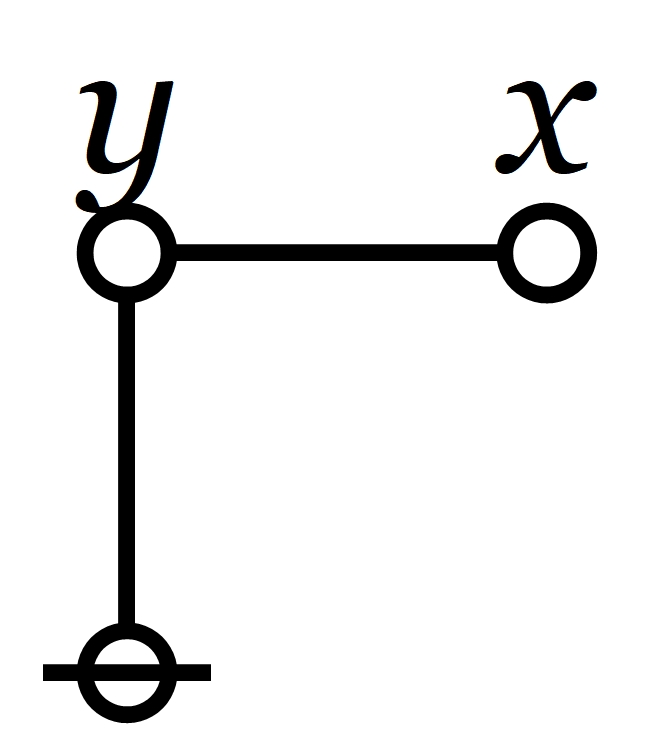
Animated Logical Graphs • 51

Peirce's Law

Re: Richard J. LiptonThe Future Of Mathematics?Is The End Near?

Synchronicity being what it is, a long-running discussion on the Peirce List just gave me a handy bridge to a topic I’ve been meaning to take up in several other connections.  So I’m adding my comment to this series, along with links to additional resources.

Re: Peirce List (1) (2) (3) (4) (5)

Pursuing the discussion of many things:
of laws — and graphs — and reasoning —
of contradictions — and abductions —
and why the third is given not —
and whether figs have wings —

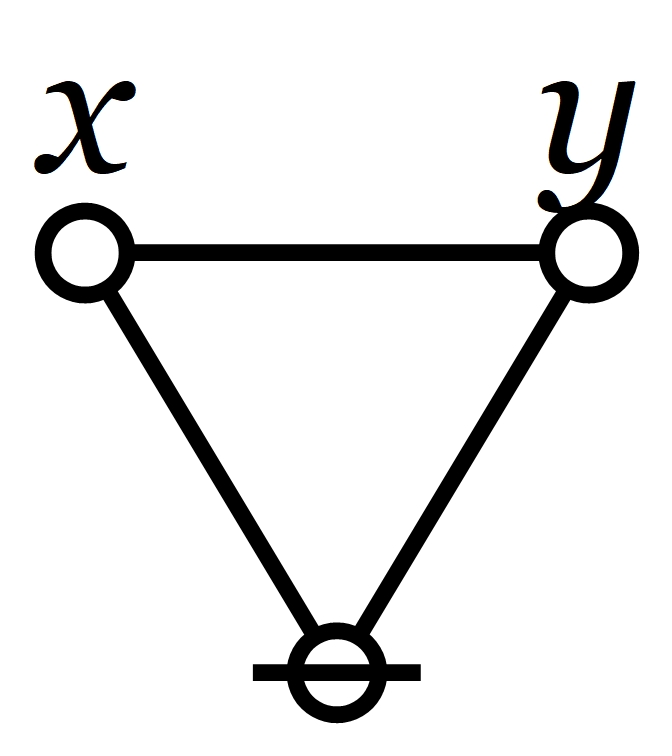
It might not be non sequitur to remember that place in Peirceland where we walk the line between classical and intuitionistic logic, namely, the boundary marked by the principle we have come to call Peirce’s Law.

Here’s links to bits of fol-de-rule, with graphs and everything —

Resources

cc: Cybernetics Communications (1) (2)FB | Logical Graphs • Ontolog Forum (1) (2)
• Peirce (1) (2) (3) (4) (5) (6) (7) (8) (9) (10) • Structural Modeling (1) (2) • Systems (1) (2)

Posted in Amphecks, Animata, Boolean Algebra, Boolean Functions, C.S. Peirce, Cactus Graphs, Constraint Satisfaction Problems, Deduction, Diagrammatic Reasoning, Duality, Equational Inference, Graph Theory, Laws of Form, Logic, Logical Graphs, Mathematics, Minimal Negation Operators, Model Theory, Painted Cacti, Peirce, Proof Theory, Propositional Calculus, Propositional Equation Reasoning Systems, Spencer Brown, Theorem Proving, Visualization | Tagged , , , , , , , , , , , , , , , , , , , , , , , , , | 8 Comments

Survey of Abduction, Deduction, Induction, Analogy, Inquiry • 2

This is a Survey of blog and wiki posts on three elementary forms of inference, as recognized by a logical tradition extending from Aristotle through Charles S. Peirce.  Particular attention is paid to the way these inferential rudiments combine to form the more complex patterns of analogy and inquiry.

Blog Dialogs

Blog Series

Blog Surveys

OEIS Wiki

Ontolog Forum

Posted in Abduction, Aristotle, C.S. Peirce, Deduction, Dewey, Discovery, Doubt, Fixation of Belief, Functional Logic, Icon Index Symbol, Induction, Inference, Information, Inquiry, Invention, Logic, Logic of Science, Mathematics, Morphism, Paradigmata, Paradigms, Pattern Recognition, Peirce, Philosophy, Pragmatic Maxim, Pragmatism, Scientific Inquiry, Scientific Method, Semiotics, Sign Relations, Surveys, Syllogism, Triadic Relations, Visualization | Tagged , , , , , , , , , , , , , , , , , , , , , , , , , , , , , , , , , | 11 Comments

Abduction, Deduction, Induction, Analogy, Inquiry • 30

Re: Richard J. LiptonThe Future Of Mathematics?Is The End Near?

Re: “Proofs Are Not As Important As Discoveries” (PANAIAD).

Conjecture and Discovery fall under the heading of Abductive Inference (AI’s missing grape).

About which more when I pull my heading out of the Pandemic …

In the mean time, here’s a budget of links from previous discussions.

Inquiry Blog

OEIS Wiki

Ontolog Forum

cc: CyberneticsOntolog • Peirce (1) (2)Structural ModelingSystems Science

Posted in Abduction, Analogy, Aristotle, Artificial Intelligence, C.S. Peirce, Deduction, Induction, Inquiry, Inquiry Driven Systems, Intelligent Systems Engineering, Logic, Mental Models, Peirce, Scientific Method, Semiotics, Systems | Tagged , , , , , , , , , , , , , , , | 5 Comments

Animated Logical Graphs • 50

Re: Richard J. LiptonThe Art Of Math
Re: Animated Logical Graphs • (30) (45) (46) (47) (48) (49)

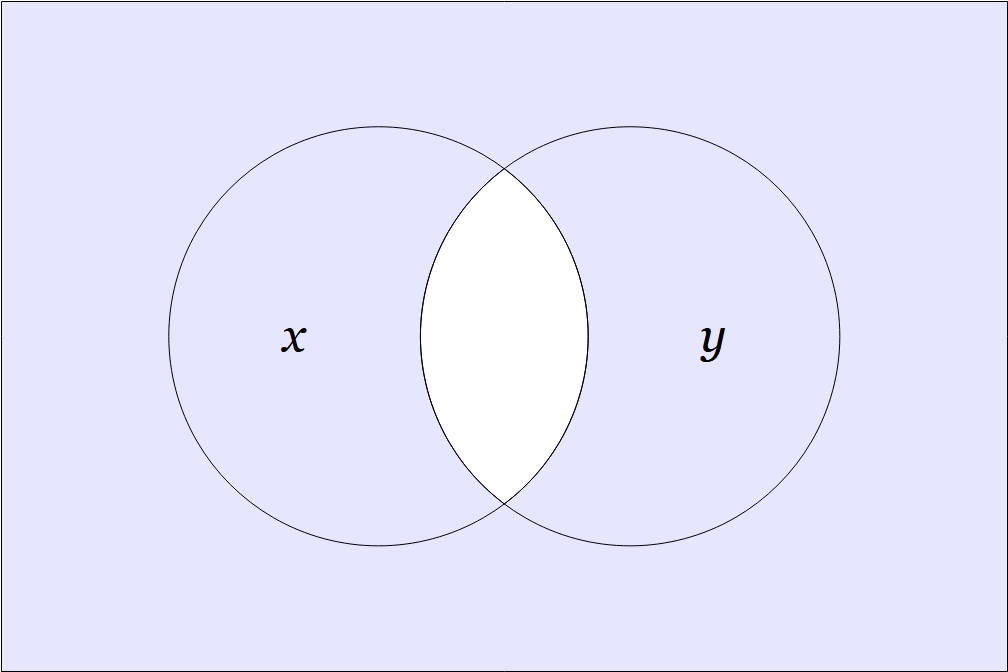
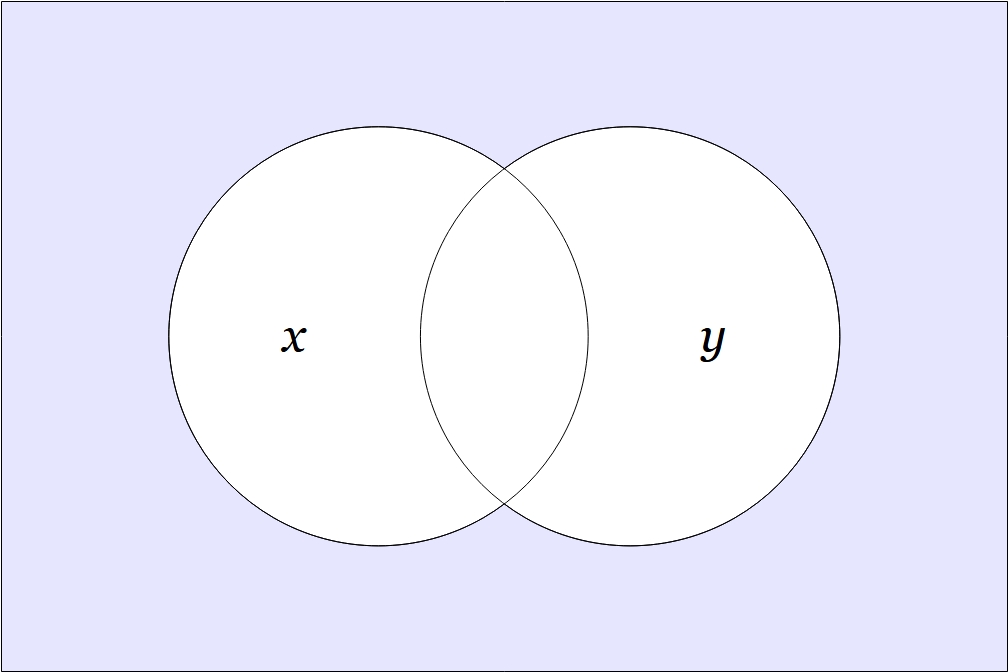
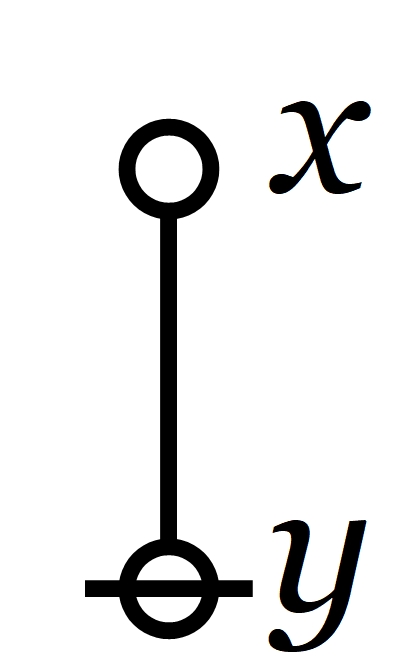
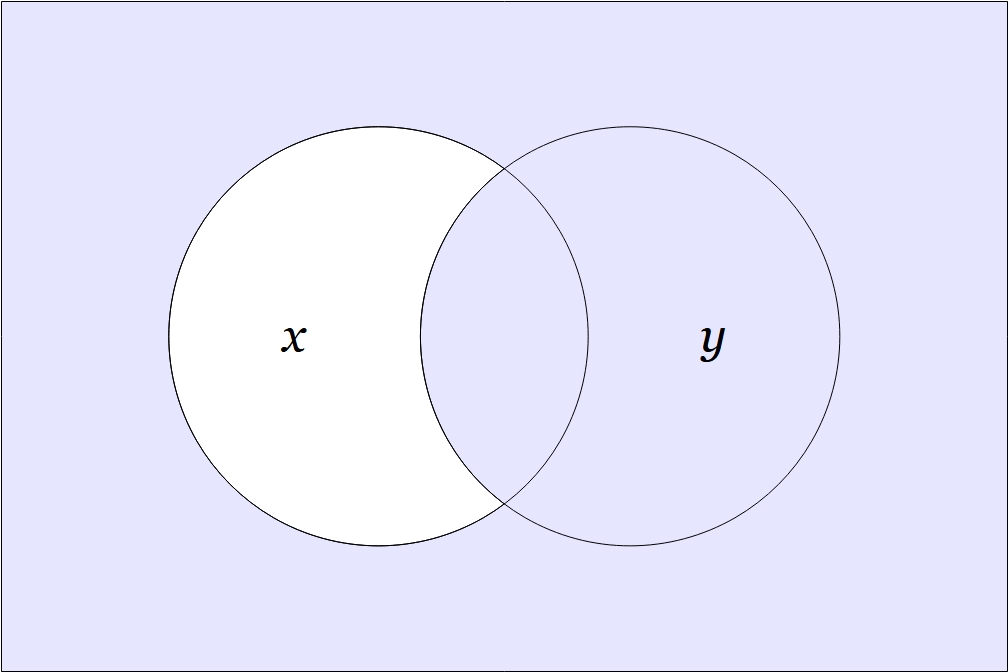
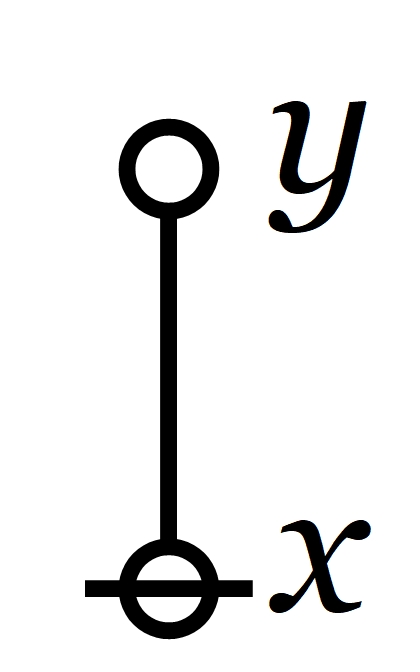
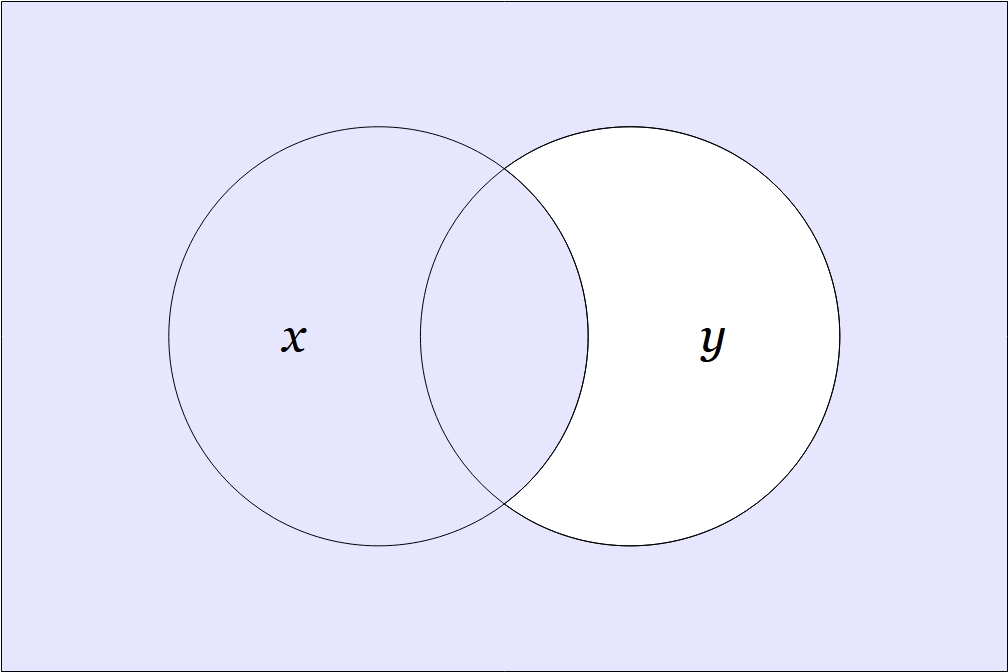
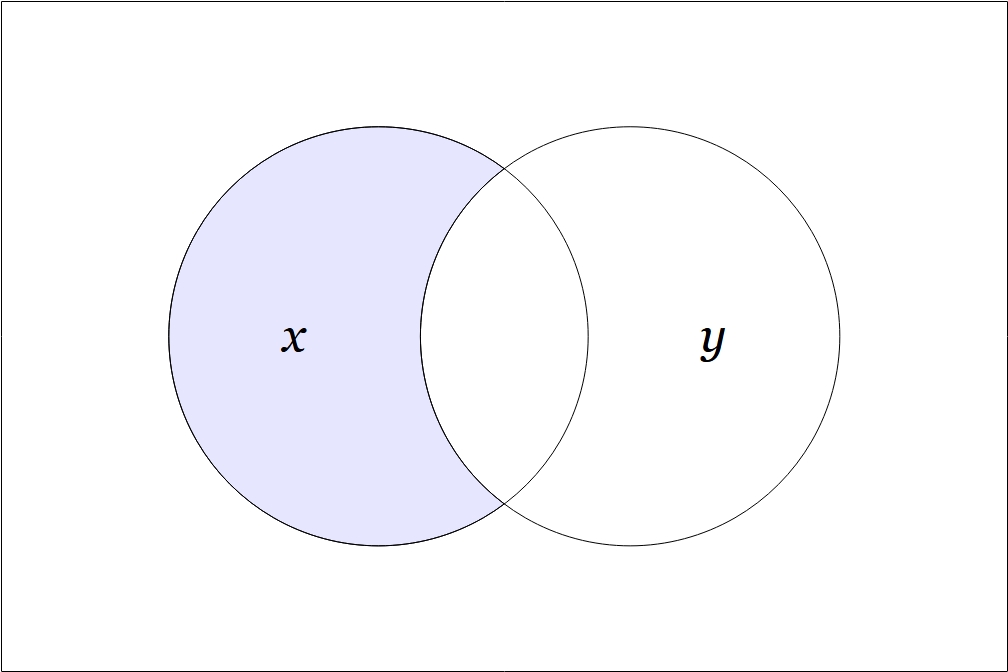
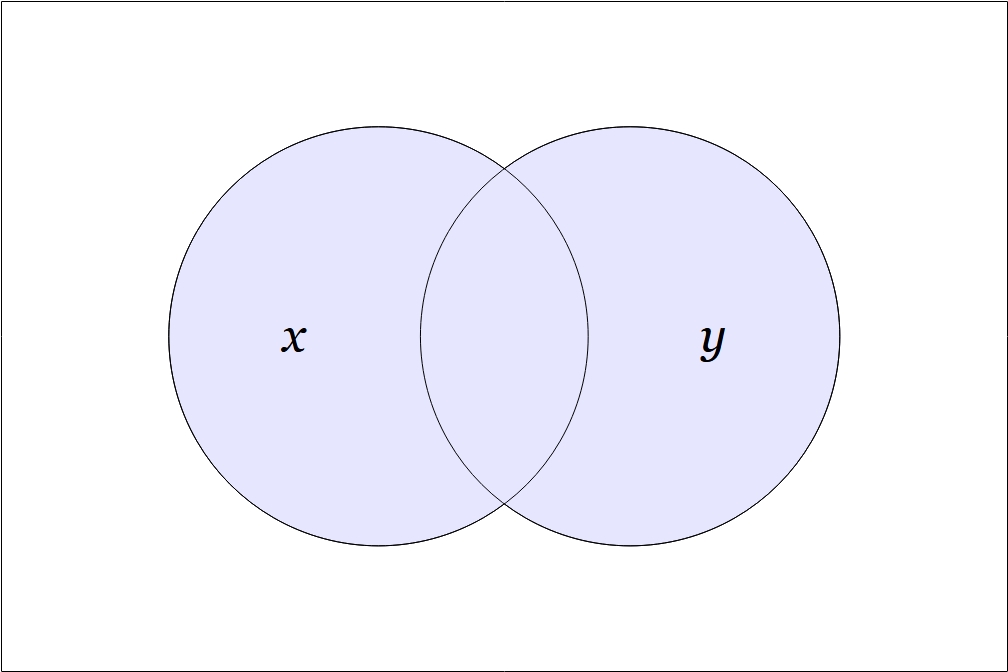
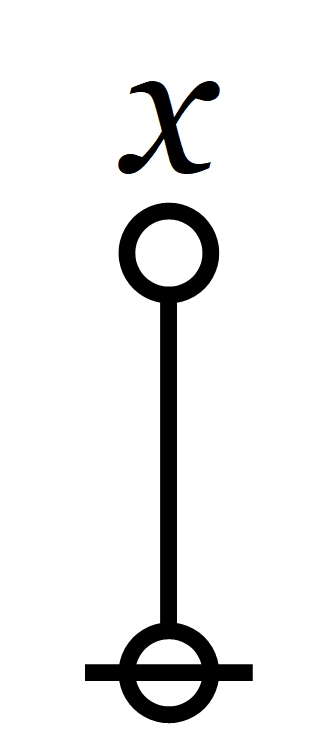
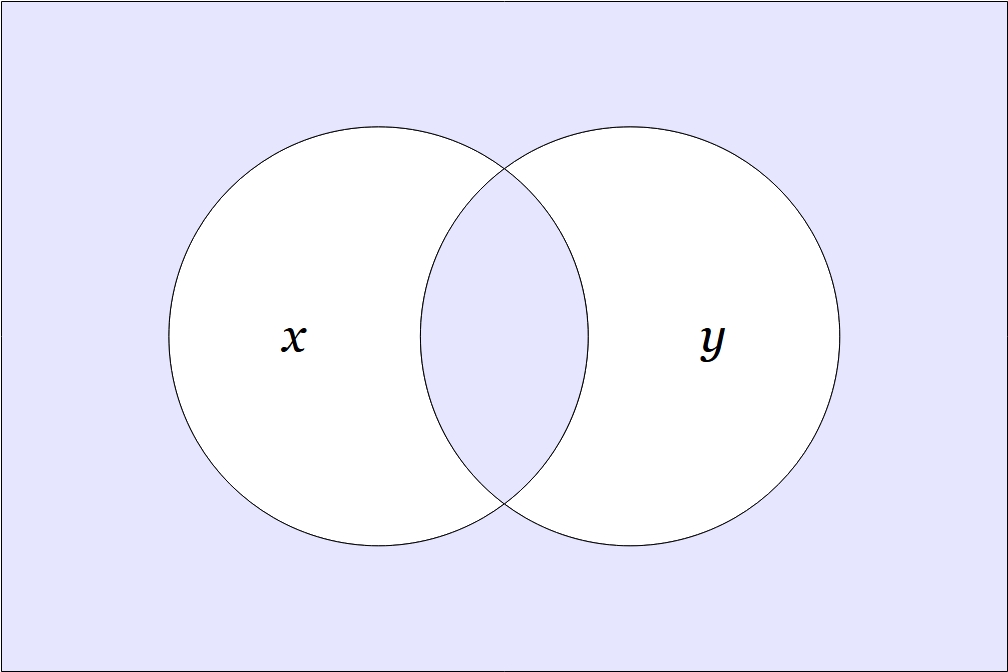
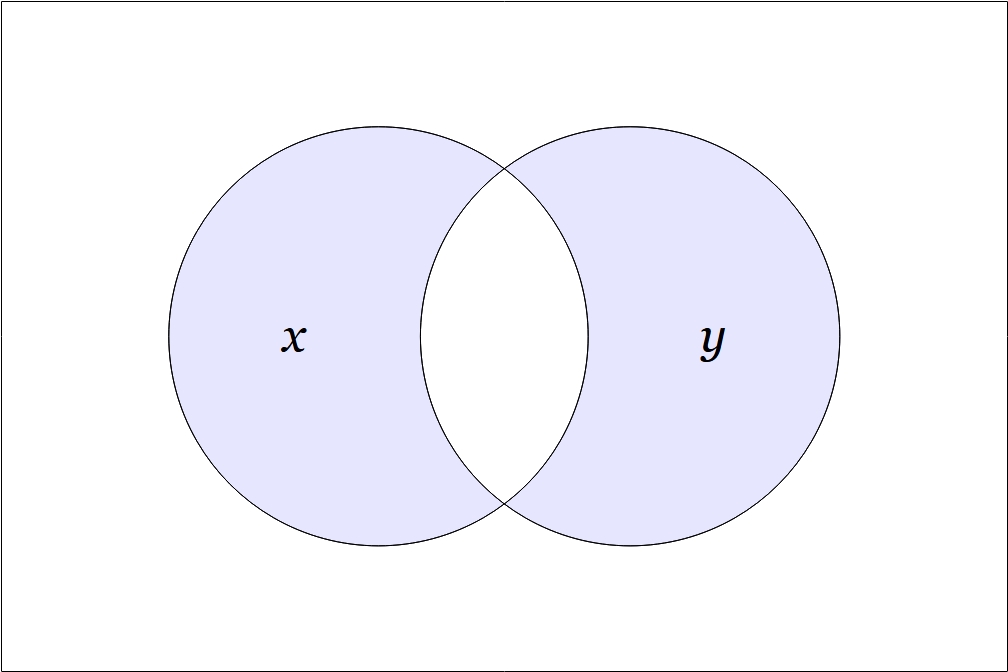
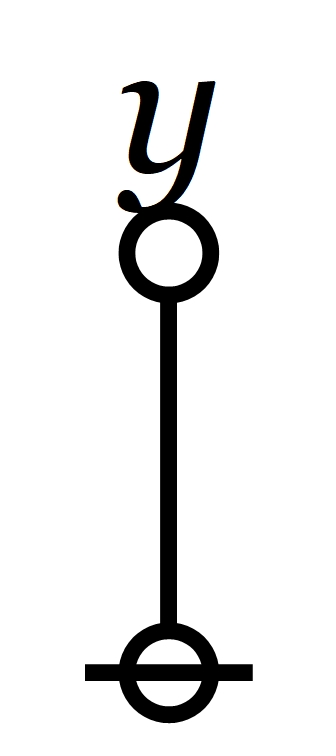
In the last of our six ways of looking at the Peirce duality between entitative and existential interpretations, we consider the previous Table of Logical Graphs and Venn Diagrams sorted in Orbit Order.

Logical Graphs • Entitative and Existential Venn Diagrams • Orbit Order
\text{Logical Graph} \text{Entitative Interpretation} \text{Existential Interpretation}
Cactus Stem
 
f₁₅(x,y) f₀(x,y)
\texttt{(} ~ \texttt{)}
 
\text{true}
f_{15}
\text{false}
f_{0}
Cactus (x)(y)
 
f₇(x,y) f₁(x,y)
\texttt{(} x \texttt{)(} y \texttt{)}
 
\lnot x \lor \lnot y
f_{7}
\lnot x \land \lnot y
f_{1}
Cactus (x)y
 
f₁₁(x,y) f₂(x,y)
\texttt{(} x \texttt{)} y
 
x \Rightarrow y
f_{11}
x \nLeftarrow y
f_{2}
Cactus x(y)
 
f₁₃(x,y) f₄(x,y)
x \texttt{(} y \texttt{)}
 
x \Leftarrow y
f_{13}
x \nRightarrow y
f_{4}
Cactus xy
 
f₁₄(x,y) f₈(x,y)
x y
 
x \lor y
f_{14}
x \land y
f_{8}
Cactus (x)
 
f₃(x,y) f₃(x,y)
\texttt{(} x \texttt{)}
 
\lnot x
f_{3}
\lnot x
f_{3}
Cactus x
 
f₁₂(x,y) f₁₂(x,y)
x
 
x
f_{12}
x
f_{12}
Cactus (x,y)
 
f₉(x,y) f₆(x,y)
\texttt{(} x \texttt{,} y \texttt{)}
 
x = y
f_{9}
x \ne y
f_{6}
Cactus ((x,y))
 
f₆(x,y) f₉(x,y)
\texttt{((} x \texttt{,} y \texttt{))}
 
x \ne y
f_{6}
x = y
f_{9}
Cactus (y)
 
f₅(x,y) f₅(x,y)
\texttt{(} y \texttt{)}
 
\lnot y
f_{5}
\lnot y
f_{5}
Cactus y
 
f₁₀(x,y) f₁₀(x,y)
y
 
y
f_{10}
y
f_{10}
Cactus (xy)
 
f₁(x,y) f₇(x,y)
\texttt{(} x y \texttt{)}
 
\lnot (x \lor y)
f_{1}
\lnot (x \land y)
f_{7}
Cactus (x(y))
 
f₂(x,y) f₁₁(x,y)
\texttt{(} x \texttt{(} y \texttt{))}
 
x \nLeftarrow y
f_{2}
x \Rightarrow y
f_{11}
Cactus ((x)y)
 
f₄(x,y) f₁₃(x,y)
\texttt{((} x \texttt{)} y \texttt{)}
 
x \nRightarrow y
f_{4}
x \Leftarrow y
f_{13}
Cactus ((x)(y))
 
f₈(x,y) f₁₄(x,y)
\texttt{((} x \texttt{)(} y \texttt{))}
 
x \land y
f_{8}
x \lor y
f_{14}
Cactus Root
 
f₀(x,y) f₁₅(x,y)
 
 
\text{false}
f_{0}
\text{true}
f_{15}

Resources

cc: Cybernetics Communications (1) (2)FB | Logical Graphs • Ontolog Forum (1) (2)
cc: Peirce (1) (2) (3) (4) (5) (6) (7) (8) (9) • Structural Modeling (1) (2) • Systems (1) (2)

Posted in Amphecks, Animata, Boolean Algebra, Boolean Functions, C.S. Peirce, Cactus Graphs, Constraint Satisfaction Problems, Deduction, Diagrammatic Reasoning, Duality, Equational Inference, Graph Theory, Laws of Form, Logic, Logical Graphs, Mathematics, Minimal Negation Operators, Model Theory, Painted Cacti, Peirce, Proof Theory, Propositional Calculus, Propositional Equation Reasoning Systems, Spencer Brown, Theorem Proving, Visualization | Tagged , , , , , , , , , , , , , , , , , , , , , , , , , | 8 Comments

Animated Logical Graphs • 49

Re: Richard J. LiptonThe Art Of Math
Re: Animated Logical Graphs • (30) (45) (46) (47) (48)

Dualities are symmetries of order two and symmetries bear on complexity by reducing its measure in proportion to their order.  The inverse relationship between symmetry and all those dissymmetries from dispersion and diversity to entropy and uncertainty is governed in cybernetics by the Law of Requisite Variety, the medium of which exchanges C.S. Peirce invested in his formula, Information = Comprehension × Extension.

The duality between entitative and existential interpretations of logical graphs is one example of a mathematical symmetry but it’s not unusual to find symmetries within symmetries and it’s always rewarding to find them where they exist.  To that end let’s take up our Table of Venn Diagrams and Logical Graphs on Two Variables and sort the rows to bring together diagrams and graphs having similar shapes.  What defines their similarity is the action of a mathematical group whose operations transform the elements of each class among one another but intermingle no dissimilar elements.  In the jargon of transformation groups these classes are called orbits.  We find the sixteen rows partition into seven orbits, as shown below.

Venn Diagrams and Logical Graphs on Two Variables • Orbit Order
\text{Boolean Function} \text{Entitative Graph} \text{Existential Graph}
f₀(x,y) Cactus Root
 
Cactus Stem
 
f_{0} \text{false} \text{false}
f₁(x,y) Cactus (xy)
 
Cactus (x)(y)
 
f_{1} \lnot (x \lor y) \lnot x \land \lnot y
f₂(x,y) Cactus (x(y))
 
Cactus (x)y
 
f_{2} \lnot x \land y \lnot x \land y
f₄(x,y) Cactus ((x)y)
 
Cactus x(y)
 
f_{4} x \land \lnot y x \land \lnot y
f₈(x,y) Cactus ((x)(y))
 
Cactus xy
 
f_{8} x \land y x \land y
f₃(x,y) Cactus (x)
 
Cactus (x)
 
f_{3} \lnot x \lnot x
f₁₂(x,y) Cactus x
 
Cactus x
 
f_{12} x x
f₆(x,y) Cactus ((x,y))
 
Cactus (x,y)
 
f_{6} x \ne y x \ne y
f₉(x,y) Cactus (x,y)
 
Cactus ((x,y))
 
f_{9} x = y x = y
f₅(x,y) Cactus (y)
 
Cactus (y)
 
f_{5} \lnot y \lnot y
f₁₀(x,y) Cactus y
 
Cactus y
 
f_{10} y y
f₇(x,y) Cactus (x)(y)
 
Cactus (xy)
 
f_{7} \lnot x \lor \lnot y \lnot (x \land y)
f₁₁(x,y) Cactus (x)y
 
Cactus (x(y))
 
f_{11} x \Rightarrow y x \Rightarrow y
f₁₃(x,y) Cactus x(y)
 
Cactus ((x)y)
 
f_{13} x \Leftarrow y x \Leftarrow y
f₁₄(x,y) Cactus xy
 
Cactus ((x)(y))
 
f_{14} x \lor y x \lor y
f₁₅(x,y) Cactus Stem
 
Cactus Root
 
f_{15} \text{true} \text{true}

Resources

cc: Cybernetics Communications (1) (2)FB | Logical Graphs • Ontolog Forum (1) (2)
cc: Peirce (1) (2) (3) (4) (5) (6) (7) (8) (9) • Structural Modeling (1) (2) • Systems (1) (2)

Posted in Amphecks, Animata, Boolean Algebra, Boolean Functions, C.S. Peirce, Cactus Graphs, Constraint Satisfaction Problems, Deduction, Diagrammatic Reasoning, Duality, Equational Inference, Graph Theory, Laws of Form, Logic, Logical Graphs, Mathematics, Minimal Negation Operators, Model Theory, Painted Cacti, Peirce, Proof Theory, Propositional Calculus, Propositional Equation Reasoning Systems, Spencer Brown, Theorem Proving, Visualization | Tagged , , , , , , , , , , , , , , , , , , , , , , , , , | 9 Comments

Animated Logical Graphs • 48

Re: Richard J. LiptonThe Art Of Math
Re: Animated Logical Graphs • (30) (45) (46) (47)

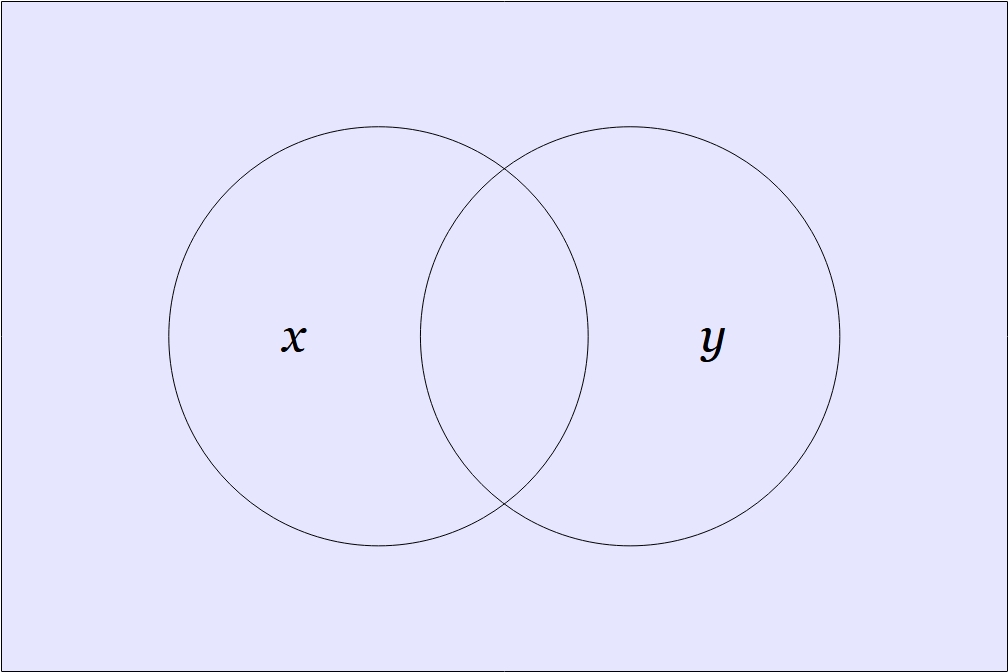
A more graphic picture of Peirce duality is given by the next Table, which shows how logical graphs map to venn diagrams under entitative and existential interpretations.  Column 1 shows the logical graphs for the sixteen boolean functions on two variables.  Column 2 shows the venn diagrams associated with the entitative interpretation and Column 3 shows the venn diagrams associated with the existential interpretation.

Logical Graphs • Entitative and Existential Venn Diagrams
\text{Logical Graph} \text{Entitative Interpretation} \text{Existential Interpretation}
Cactus Stem
 
f₁₅(x,y) f₀(x,y)
\texttt{(} ~ \texttt{)}
 
\text{true}
f_{15}
\text{false}
f_{0}
Cactus (x)(y)
 
f₇(x,y) f₁(x,y)
\texttt{(} x \texttt{)(} y \texttt{)}
 
\lnot x \lor \lnot y
f_{7}
\lnot x \land \lnot y
f_{1}
Cactus (x)y
 
f₁₁(x,y) f₂(x,y)
\texttt{(} x \texttt{)} y
 
x \Rightarrow y
f_{11}
x \nLeftarrow y
f_{2}
Cactus (x)
 
f₃(x,y) f₃(x,y)
\texttt{(} x \texttt{)}
 
\lnot x
f_{3}
\lnot x
f_{3}
Cactus x(y)
 
f₁₃(x,y) f₄(x,y)
x \texttt{(} y \texttt{)}
 
x \Leftarrow y
f_{13}
x \nRightarrow y
f_{4}
Cactus (y)
 
f₅(x,y) f₅(x,y)
\texttt{(} y \texttt{)}
 
\lnot y
f_{5}
\lnot y
f_{5}
Cactus (x,y)
 
f₉(x,y) f₆(x,y)
\texttt{(} x \texttt{,} y \texttt{)}
 
x = y
f_{9}
x \ne y
f_{6}
Cactus (xy)
 
f₁(x,y) f₇(x,y)
\texttt{(} x y \texttt{)}
 
\lnot (x \lor y)
f_{1}
\lnot (x \land y)
f_{7}
Cactus xy
 
f₁₄(x,y) f₈(x,y)
x y
 
x \lor y
f_{14}
x \land y
f_{8}
Cactus ((x,y))
 
f₆(x,y) f₉(x,y)
\texttt{((} x \texttt{,} y \texttt{))}
 
x \ne y
f_{6}
x = y
f_{9}
Cactus y
 
f₁₀(x,y) f₁₀(x,y)
y
 
y
f_{10}
y
f_{10}
Cactus (x(y))
 
f₂(x,y) f₁₁(x,y)
\texttt{(} x \texttt{(} y \texttt{))}
 
x \nLeftarrow y
f_{2}
x \Rightarrow y
f_{11}
Cactus x
 
f₁₂(x,y) f₁₂(x,y)
x
 
x
f_{12}
x
f_{12}
Cactus ((x)y)
 
f₄(x,y) f₁₃(x,y)
\texttt{((} x \texttt{)} y \texttt{)}
 
x \nRightarrow y
f_{4}
x \Leftarrow y
f_{13}
Cactus ((x)(y))
 
f₈(x,y) f₁₄(x,y)
\texttt{((} x \texttt{)(} y \texttt{))}
 
x \land y
f_{8}
x \lor y
f_{14}
Cactus Root
 
f₀(x,y) f₁₅(x,y)
 
 
\text{false}
f_{0}
\text{true}
f_{15}

Resources

cc: Cybernetics Communications (1) (2)FB | Logical Graphs • Ontolog Forum (1) (2)
cc: Peirce List (1) (2) (3) (4) (5) (6) (7) (8) • Structural Modeling (1) (2) • Systems (1) (2)
Posted in Amphecks, Animata, Boolean Algebra, Boolean Functions, C.S. Peirce, Cactus Graphs, Constraint Satisfaction Problems, Deduction, Diagrammatic Reasoning, Duality, Equational Inference, Graph Theory, Laws of Form, Logic, Logical Graphs, Mathematics, Minimal Negation Operators, Model Theory, Painted Cacti, Peirce, Proof Theory, Propositional Calculus, Propositional Equation Reasoning Systems, Spencer Brown, Theorem Proving, Visualization | Tagged , , , , , , , , , , , , , , , , , , , , , , , , , | 10 Comments

Animated Logical Graphs • 47

Re: Richard J. LiptonThe Art Of Math
Re: Animated Logical Graphs • (30) (45) (46)

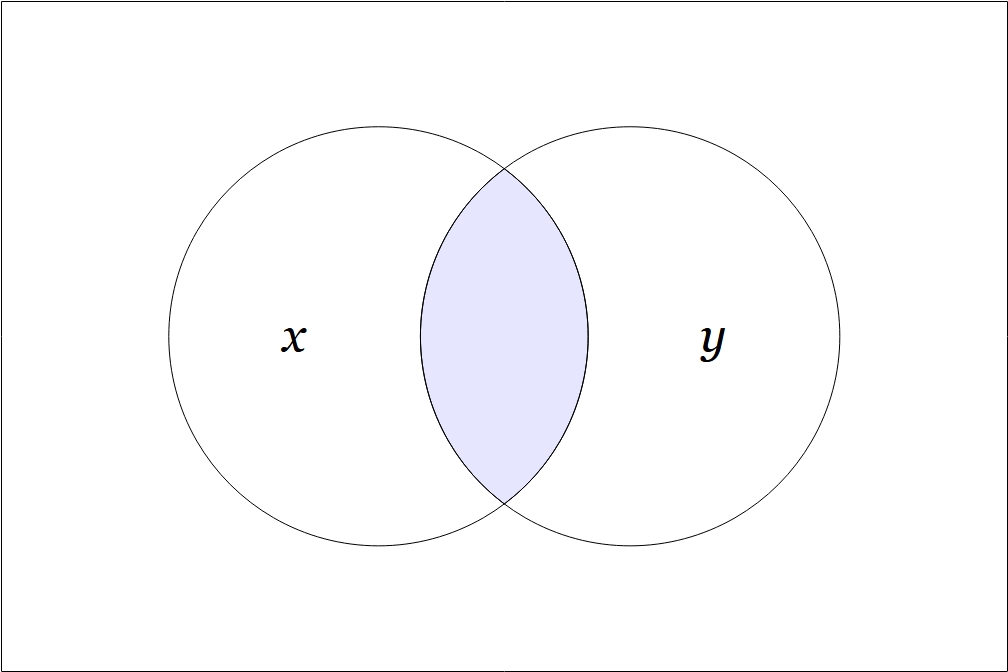
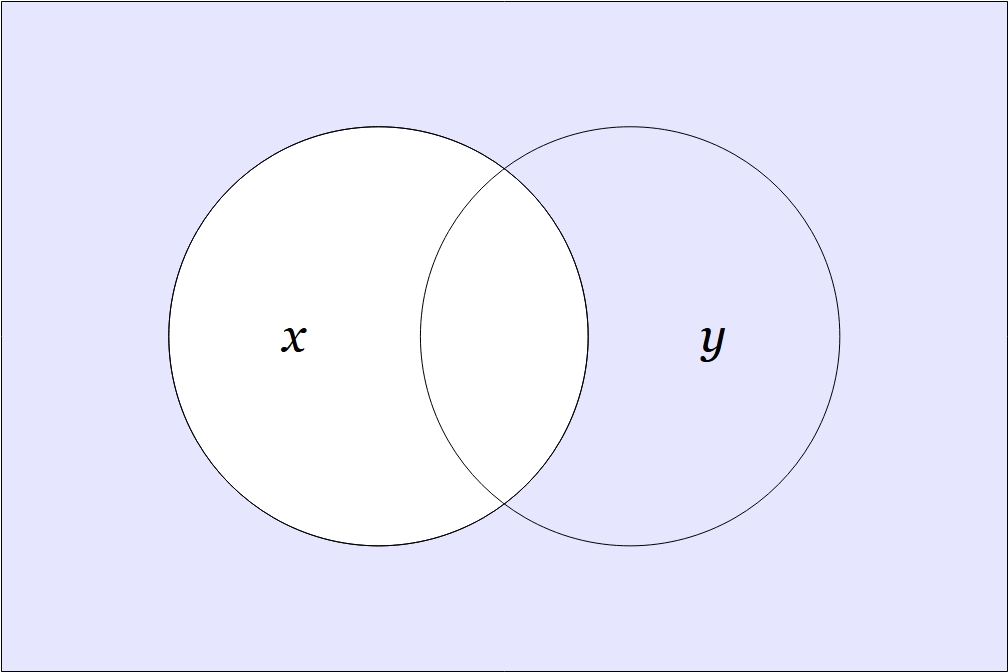
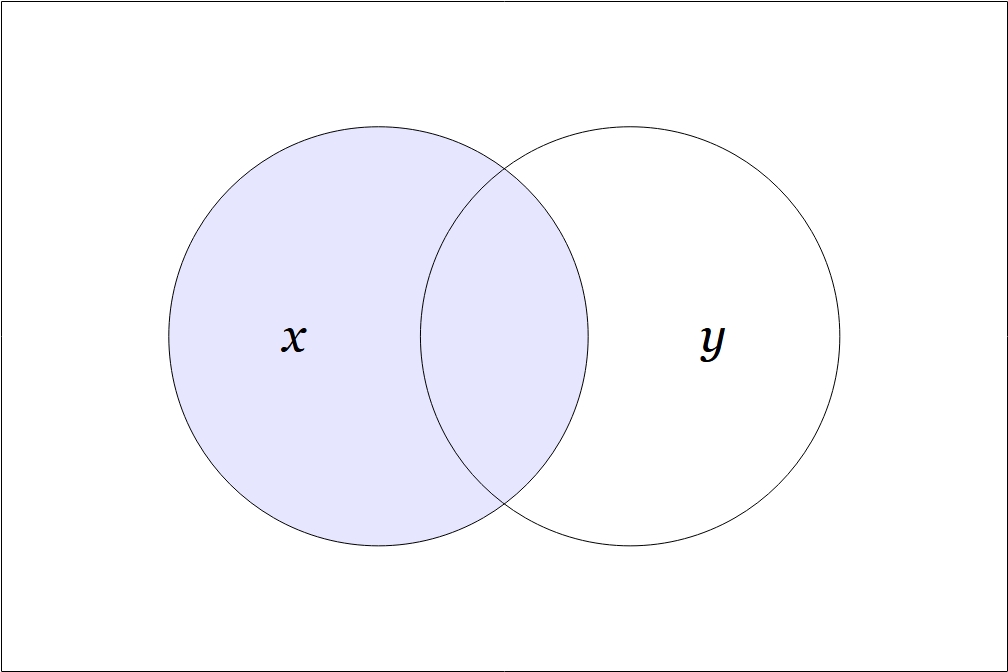
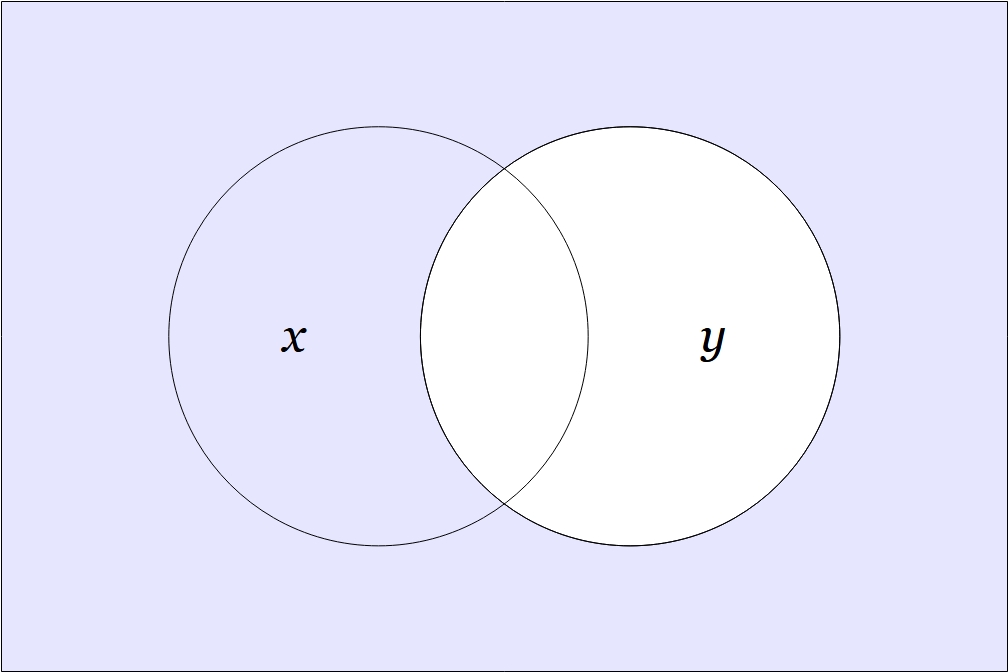
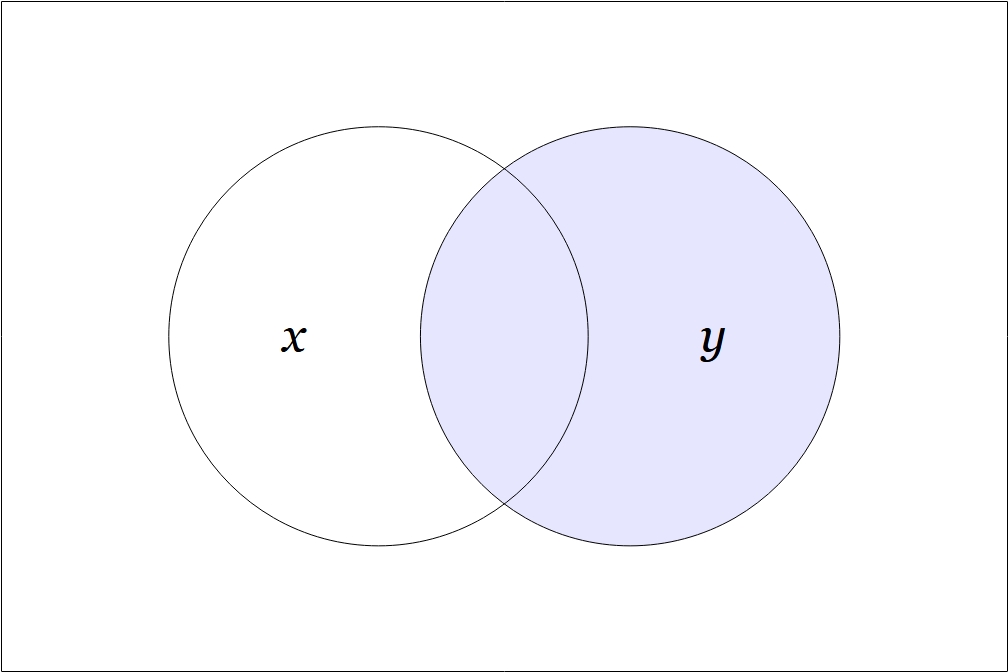
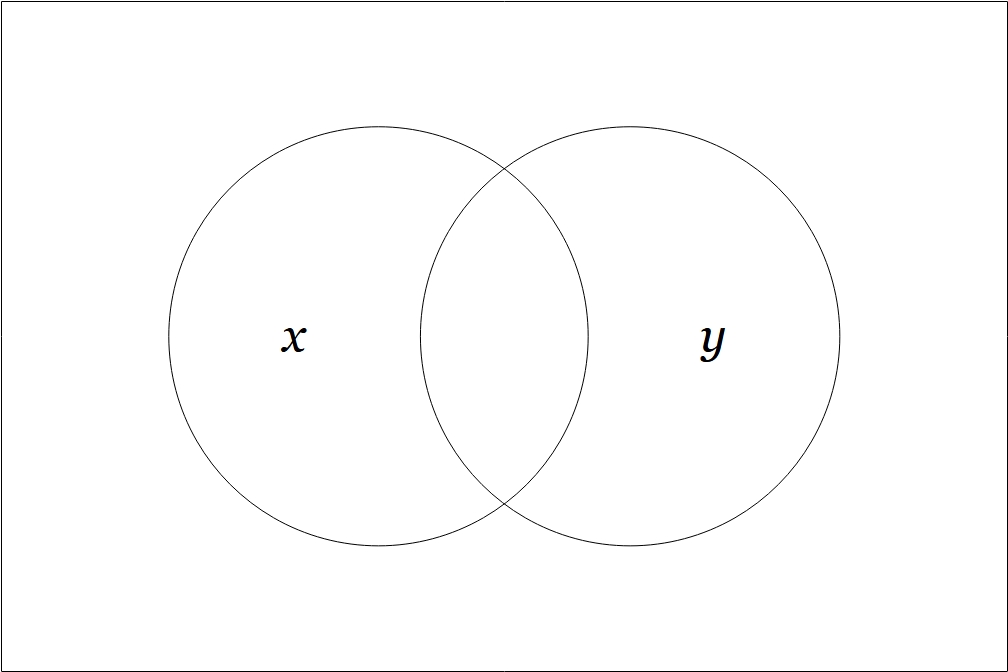
A logical concept represented by a boolean variable has its extension, the cases it covers in a designated universe of discourse, and its comprehension (or intension), the properties it implies in a designated hierarchy of predicates.  The formulas and graphs tabulated in previous posts are well-adapted to articulate the syntactic and intensional aspects of propositional logic.  But their very tailoring to those tasks tends to slight the extensional and therefore empirical applications of logic.  Venn diagrams, despite their unwieldiness as the number of logical dimensions increases, are indispensable in providing the visual intuition with a solid grounding in the extensions of logical concepts.  All that makes it worthwhile to reset our table of boolean functions on two variables to include the corresponding venn diagrams.

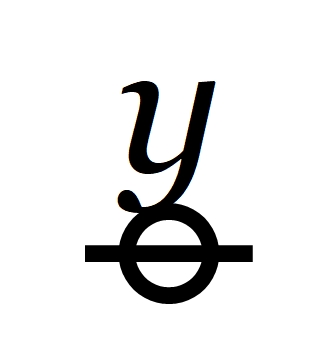
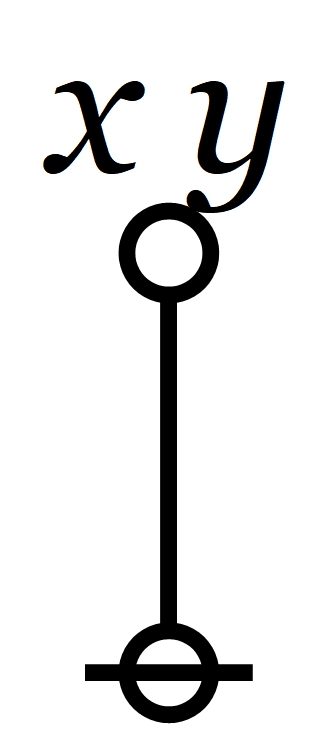
Venn Diagrams and Logical Graphs on Two Variables
\text{Boolean Function} \text{Entitative Graph} \text{Existential Graph}
f₀(x,y) Cactus Root
 
Cactus Stem
 
f_{0} \text{false} \text{false}
f₁(x,y) Cactus (xy)
 
Cactus (x)(y)
 
f_{1} \lnot (x \lor y) \lnot x \land \lnot y
f₂(x,y) Cactus (x(y))
 
Cactus (x)y
 
f_{2} \lnot x \land y \lnot x \land y
f₃(x,y) Cactus (x)
 
Cactus (x)
 
f_{3} \lnot x \lnot x
f₄(x,y) Cactus ((x)y)
 
Cactus x(y)
 
f_{4} x \land \lnot y x \land \lnot y
f₅(x,y) Cactus (y)
 
Cactus (y)
 
f_{5} \lnot y \lnot y
f₆(x,y) Cactus ((x,y))
 
Cactus (x,y)
 
f_{6} x \ne y x \ne y
f₇(x,y) Cactus (x)(y)
 
Cactus (xy)
 
f_{7} \lnot x \lor \lnot y \lnot (x \land y)
f₈(x,y) Cactus ((x)(y))
 
Cactus xy
 
f_{8} x \land y x \land y
f₉(x,y) Cactus (x,y)
 
Cactus ((x,y))
 
f_{9} x = y x = y
f₁₀(x,y) Cactus y
 
Cactus y
 
f_{10} y y
f₁₁(x,y) Cactus (x)y
 
Cactus (x(y))
 
f_{11} x \Rightarrow y x \Rightarrow y
f₁₂(x,y) Cactus x
 
Cactus x
 
f_{12} x x
f₁₃(x,y) Cactus x(y)
 
Cactus ((x)y)
 
f_{13} x \Leftarrow y x \Leftarrow y
f₁₄(x,y) Cactus xy
 
Cactus ((x)(y))
 
f_{14} x \lor y x \lor y
f₁₅(x,y) Cactus Stem
 
Cactus Root
 
f_{15} \text{true} \text{true}

Resources

cc: Cybernetics Communications (1) (2)FB | Logical Graphs • Ontolog Forum (1) (2)
cc: Peirce List (1) (2) (3) (4) (5) (6) (7) (8) • Structural Modeling (1) (2) • Systems (1) (2)
Posted in Amphecks, Animata, Boolean Algebra, Boolean Functions, C.S. Peirce, Cactus Graphs, Constraint Satisfaction Problems, Deduction, Diagrammatic Reasoning, Duality, Equational Inference, Graph Theory, Laws of Form, Logic, Logical Graphs, Mathematics, Minimal Negation Operators, Model Theory, Painted Cacti, Peirce, Proof Theory, Propositional Calculus, Propositional Equation Reasoning Systems, Spencer Brown, Theorem Proving, Visualization | Tagged , , , , , , , , , , , , , , , , , , , , , , , , , | 11 Comments

Animated Logical Graphs • 46

Re: Richard J. LiptonThe Art Of Math
Re: Animated Logical Graphs • (30) (45)

Another way of looking at Peirce duality is given by the following Table, which shows how logical graphs denote boolean functions under entitative and existential interpretations.  Column 1 shows the logical graphs for the sixteen boolean functions on two variables.  Column 2 shows the boolean functions denoted under the entitative interpretation and Column 3 shows the boolean functions denoted under the existential interpretation.

\text{Logical Graphs} \stackrel{_\bullet}{} \text{Entitative and Existential Interpretations}

Logical Graphs • Entitative and Existential Interpretations

Resources

cc: Cybernetics Communications (1) (2)FB | Logical Graphs • Ontolog Forum (1) (2)
cc: Peirce List (1) (2) (3) (4) (5) (6) (7) (8) • Structural Modeling (1) (2) • Systems (1) (2)

Posted in Amphecks, Animata, Boolean Algebra, Boolean Functions, C.S. Peirce, Cactus Graphs, Constraint Satisfaction Problems, Deduction, Diagrammatic Reasoning, Duality, Equational Inference, Graph Theory, Laws of Form, Logic, Logical Graphs, Mathematics, Minimal Negation Operators, Model Theory, Painted Cacti, Peirce, Proof Theory, Propositional Calculus, Propositional Equation Reasoning Systems, Spencer Brown, Theorem Proving, Visualization | Tagged , , , , , , , , , , , , , , , , , , , , , , , , , | 14 Comments

Animated Logical Graphs • 45

Re: Richard J. LiptonThe Art Of Math
Re: Animated Logical Graphs • (30)

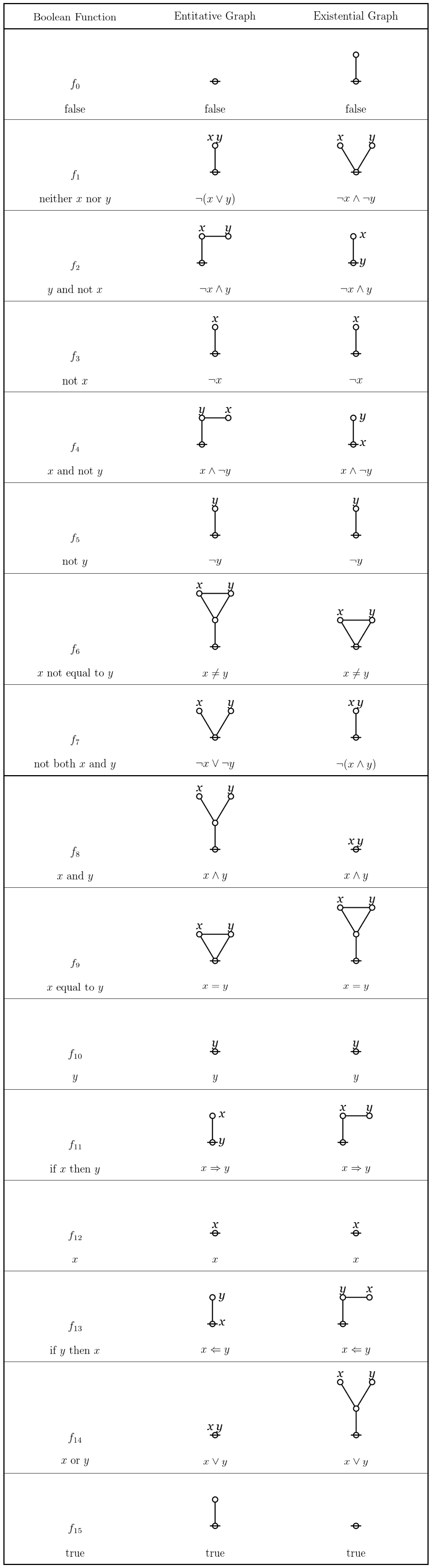
There’s a nice interplay between geometric and logical dualities in C.S. Peirce’s graphical systems of logic, rooted in his discovery of the amphecks \textsc{nand} and \textsc{nnor} and flowering in his logical graphs for propositional and predicate calculus.  Peirce’s logical graphs bear the dual interpretations he dubbed entitative and existential graphs.

Here’s a Table of Boolean Functions on Two Variables, using an extension of Peirce’s graphs from trees to cacti, illustrating the duality so far as it affects propositional calculus.

\text{Boolean Functions on Two Variables}

Boolean Functions on Two Variables

Resources

cc: Cybernetics Communications (1) (2)FB | Logical Graphs • Ontolog Forum (1) (2)
cc: Peirce List (1) (2) (3) (4) (5) (6) (7) (8) • Structural Modeling (1) (2) • Systems (1) (2)

Posted in Amphecks, Animata, Boolean Algebra, Boolean Functions, C.S. Peirce, Cactus Graphs, Constraint Satisfaction Problems, Deduction, Diagrammatic Reasoning, Duality, Equational Inference, Graph Theory, Laws of Form, Logic, Logical Graphs, Mathematics, Minimal Negation Operators, Model Theory, Painted Cacti, Peirce, Proof Theory, Propositional Calculus, Propositional Equation Reasoning Systems, Spencer Brown, Theorem Proving, Visualization | Tagged , , , , , , , , , , , , , , , , , , , , , , , , , | 18 Comments

Problems In Philosophy • 12

Re: R.J. Lipton and K.W. ReganThe Night Of The Ethical Algorithm
Re: K.W. ReganThe Election Night Time Warp
Re: Ontolog ForumJohn Sowa

JFS:
C.S. Peirce made a very clear and sharp distinction between formal or mathematical logic and logic as semiotic.
\cdots
Short summary:  When Peirce uses the word ‘logic’ by itself, it’s important to check the context to see whether he’s talking about formal logic or logic as semiotic.

Dear John,

The first post of this series was prompted by a post 4 years ago on the Gödel’s Lost Letter and P=NP blog which jumped from the frying pan of problems in programming to the fire of problems in philosophy.  Then last week two more posts, linked above, made the leap to two of the most flagrant problems in politics, namely, (1) the passage from effective and efficient algorithms to ethical algorithms and (2) the perils of navigating turbulent seas in a ship of state guided by elective representation, where the people pick their pilots from among themselves to represent their collective will and whatever wits they can muster.
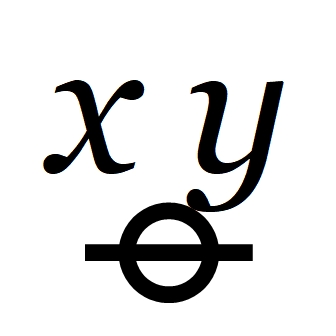
Bearing all that in mind, I would like to keep exploring the ancient issues of aesthetics, ethics, and logic from our contemporary algorithmic perspective.  There the descriptive and normative orientations to knowledge parallel the systems-theoretic dimensions of information and control.  And there we find normative sciences appearing under the banner of “design sciences”.  In that frame the art of crafting a ship of state becomes a question of optimal design for a human society.

When it comes to logic, then, a generic conception will do for now, leaving Peirce’s definition of logic as formal semiotic and fine points of the difference between mathematical logic and mathematics of logic to another day.

Resources

cc: CyberneticsOntolog ForumPeirce ListStructural ModelingSystems Science

Posted in Aesthetics, Algorithms, Animata, Automata, Beauty, C.S. Peirce, Ethics, Inquiry, Justice, Logic, Model Theory, Normative Science, Peirce, Philosophy, Pragmatism, Problem Solving, Proof Theory, Summum Bonum, Truth, Virtue | Tagged , , , , , , , , , , , , , , , , , , , | 1 Comment