Inquiry Into Inquiry • Discussion 3

Re: Peirce List • (1) (2)
Re: Inquiry Into Inquiry • Discussion 2

The fact most neglected about the Neglected Argument is its character as an abductive argument, a “Holy Guess” if you will to believe, and as such the most fallible and mutable of hypotheses a happily fallible creature can create.  Its object is an hypostatic abstraction from human experience and the hypostasis has reality in virtue of whatever properties would be consistently assigned to it.  Does the object of the guess take an active part in human evolution or does human evolution play its part in making and reshaping its best guess?

O time, thou must untangle this, not I.
It is too hard a knot for me t’untie.

Twelfth Night • Act 2 Scene 3

Submitted in quality of a case study on the role of abductive inference in inquiry and the role of phenomenology in science.

Resources

cc: Category TheoryCyberneticsOntolog Forum • Peirce List (1) (2) (3) (4) (5)
cc: FB | Inquiry Driven SystemsLaws of FormStructural ModelingSystems Science

Posted in Anthem, Balance, Inquiry | Tagged , , | 6 Comments

Relations & Their Relatives • Discussion 21

Re: Ontolog ForumAlex Shkotin

AS:
Let me underline an important point:  first of all, we have found in nature and society one or another relation and ask how many members each example of this relation can have?  i.e. arity is a feature of relation itself.  So […] we come here to the logic of relations and its discovery.  For me, examples of relations of different arity from one or another domain would be great.

Here’s a first introduction to k-adic or k-ary relations from a mathematical perspective.

Here’s a few additional resources and assorted discussions with folks around the web.

More than anything else it is critical to understand the differences among the following things.

  1. The relation itself, which is a mathematical object,
    a subset embedded in a cartesian product of several
    sets called the “domains” of the relation.
  2. The individual k-tuple, sometimes called an “elementary relation”,
    a single element of the relation and therefore of the cartesian product.
  3. The syntactic forms, lexical or graphical or whatever,
    used to describe elements and subsets of the relation.
  4. The real phenomena and real situations, empirical or quasi-empirical,
    which we use mathematical objects such as numbers, sets, functions,
    graphs, groups, algebras, manifolds, relations, etc. to model, at least
    approximately and well enough to cope with the realities in practice.

cc: Category TheoryCyberneticsOntologStructural ModelingSystems Science
cc: FB | Relation TheoryLaws of Form • Peirce List (1) (2) (3)

Posted in C.S. Peirce, Category Theory, Control, Cybernetics, Dyadic Relations, Information, Inquiry, Logic, Logic of Relatives, Mathematics, Peirce, Relation Theory, Semiosis, Semiotics, Sign Relations, Systems Theory, Triadic Relations | Tagged , , , , , , , , , , , , , , , , | 9 Comments

Semiotics, Semiosis, Sign Relations • Discussion 17

Re: Peirce List • Robert Marty (1) (2) (3)

Dear Robert,

I’ve been reviewing the discussions of August on this topic and I think it might be possible to advance our inquiry and even establish new levels of competence in our theory of signs if we examined the main points again and dedicated ourselves to clearing up the subject’s more persistent enigmas.

As I was preparing to recap our earlier discussions, it gradually dawned on me how one issue more than any other is the source of major misunderstanding and a whole lot of “people talking past each other”, as the saying goes.  To put it succinctly if very roughly, it has to do with the difference between people who have tests in search of answers and people who have answers in search of tests.  I say very roughly because it’s clear all of us are all of those people some of the time.  And yet we do see cognitive bifurcations and cultural divides persisting through time and people sorting to one basin or the other for extended periods if not the duration of a lifetime.

I’ll take up a tactic for dealing with that issue next time.

Regards,

Jon

cc: Category Theory • Cybernetics (1) (2)Ontolog Forum • Peirce List (1) (2) (3) (4)
cc: FB | SemeioticsLaws of FormStructural ModelingSystems Science

Posted in C.S. Peirce, Category Theory, Logic, Relation Theory, Semiosis, Semiotics, Sign Relations, Triadic Relations | Tagged , , , , , , , | 8 Comments

Inquiry Into Inquiry • Discussion 2

Re: Peirce ListPhyllis Chiasson
Re: Peirce ListEdwina Taborsky

PC:
Phenomenology is (with math) the underpinning of both scientific inquiry and everyday reasoning.  Improve one’s capability for observation and classification and you improve his/her ability to think and reason.  “Neglected Argument” has interesting things to say about the categories and this process as does “What Pragmatism Is”.

Although the Neglected Argument was one of the first Peirce essays my undergraduate philosophy advisor (who happened to be a Unitarian minister) gave me for contemplation — I remember coming to an unconventional, indirect argument, ontological proof sort of epiphany near the end — I can’t say I’ve paid all that much attention to Peirce’s theodicy since those days, but I can’t recall reading anything he wrote to distinguish his perspective from what is ordinarily called “deism”.  Does he ever declare for the (male personified) anthropomorphic God, so capitalized, of Abraham, Luther, Calvin, or any other, literal, non‑metaphorical theism of that kind?

Resources

cc: Category TheoryCyberneticsOntolog Forum • Peirce List (1) (2) (3) (4) (5)
cc: FB | Inquiry Driven SystemsLaws of FormStructural ModelingSystems Science

Posted in Anthem, Balance, Inquiry | Tagged , , | 8 Comments

Inquiry Into Inquiry • Discussion 1

Re: Inquiry Into Inquiry • On Balance
Re: Laws of FormPeter Jones

PJ:
I realise, in brief, the extent of your project —

but reading your post makes me wonder about the core aspects of my own —
nursing / health care — focus that also happens to have generic utility.

Dear Peter,

I have a few bits of work on my plate at the moment —
I will try to make a fuller reply in a day or two.

My wife, Susan Awbrey, and I have various degrees of acquaintance with nursing research, a smattering for me and much more for her.  Sue’s doctorate is in Educational Systems Design.  She served as an assistant professor and director of learning resources at the Michigan State University College of Nursing through most of the 1980s, collaborating with nurse researchers on issues of instructional design and information technology.  During 1989–91 we both had positions at the University of Texas Medical Branch (UTMB) School of Nursing in Galveston.  I had a faculty associate position consulting on research statistics, computing, and database management, meanwhile doing research on the hot new areas of AI applications to medical knowledge, diagnosis as abductive reasoning, physiological cybernetics, the novice/expert shift, and bridging the gap between qualitative and quantitative research methodologies.

Regards,

Jon

Resources

cc: Category TheoryCyberneticsOntolog Forum • Peirce List (1) (2) (3) (4) (5)
cc: FB | Inquiry Driven SystemsLaws of FormStructural ModelingSystems Science

Posted in Anthem, Balance, Inquiry | Tagged , , | 7 Comments

Inquiry Into Inquiry • On Balance

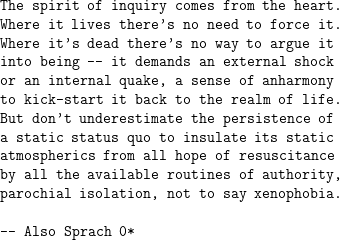
\begin{array}{l}  \texttt{The spirit of inquiry comes from the heart.}\\  \texttt{Where it lives there's no need to force it.}\\  \texttt{Where it's dead there's no way to argue it}\\  \texttt{into being -- it demands an external shock}\\  \texttt{or an internal quake, a sense of anharmony}\\  \texttt{to kick-start it back to the realm of life.}\\  \texttt{But don't underestimate the persistence of}\\  \texttt{a static status quo to insulate its static}\\  \texttt{atmospherics from all hope of resuscitance}\\  \texttt{by all the available routines of authority,}\\  \texttt{parochial isolation, not to say xenophobia.}\\  \\  \texttt{-- Also Sprach 0*}  \end{array}

Everyone knows what it means to have obstacles to overcome or events to understand and how we go hunting for whatever action, model, or theory will do the trick.  Other times we have a scheme or theory all ready in mind — like a key we try on every door we find.  It is not unusual to shift from one stance to the other, perhaps many times a day, and even the most balanced among us may pass through phases of life exploring the extremes in one direction or the other.  Luckily if all too painfully, an inward sense of disharmony or an outward clash with reality will nudge us back to center, if we but pay the due attention.

Resources

cc: Category TheoryCyberneticsOntolog Forum • Peirce List (1) (2) (3) (4) (5)
cc: FB | Inquiry Driven SystemsLaws of FormStructural ModelingSystems Science

Posted in Anthem, Balance, Inquiry | Tagged , , | 8 Comments

Riffs and Rotes • 59281

Re: Persiflage59281

Numberfile • What’s Special About 59,281?

If p is prime then the decimal expansion of 1/p repeats, so it makes sense to talk about the “average” of the digits of 1/p.  The average can be bigger than 4.5, equal to 4.5, or less than 4.5.  Which is most likely?  Which is least likely?  Click to find out.

\textsc{Challenge Problem.}  Is there any prime for which the digit average is bigger than it is for p = 59281?

I can’t imagine this will help with the problem, it’s just a thing I do with interesting numbers I encounter …

See Riffs and Rotes for the basic idea.

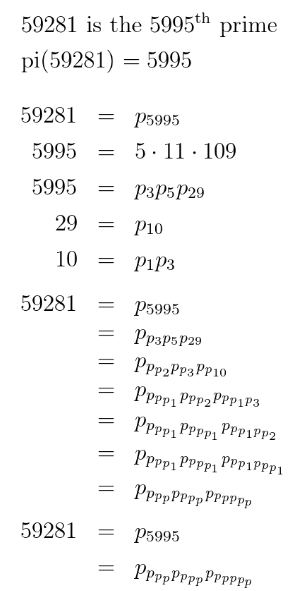
Doubly Recursive Factorization 59281

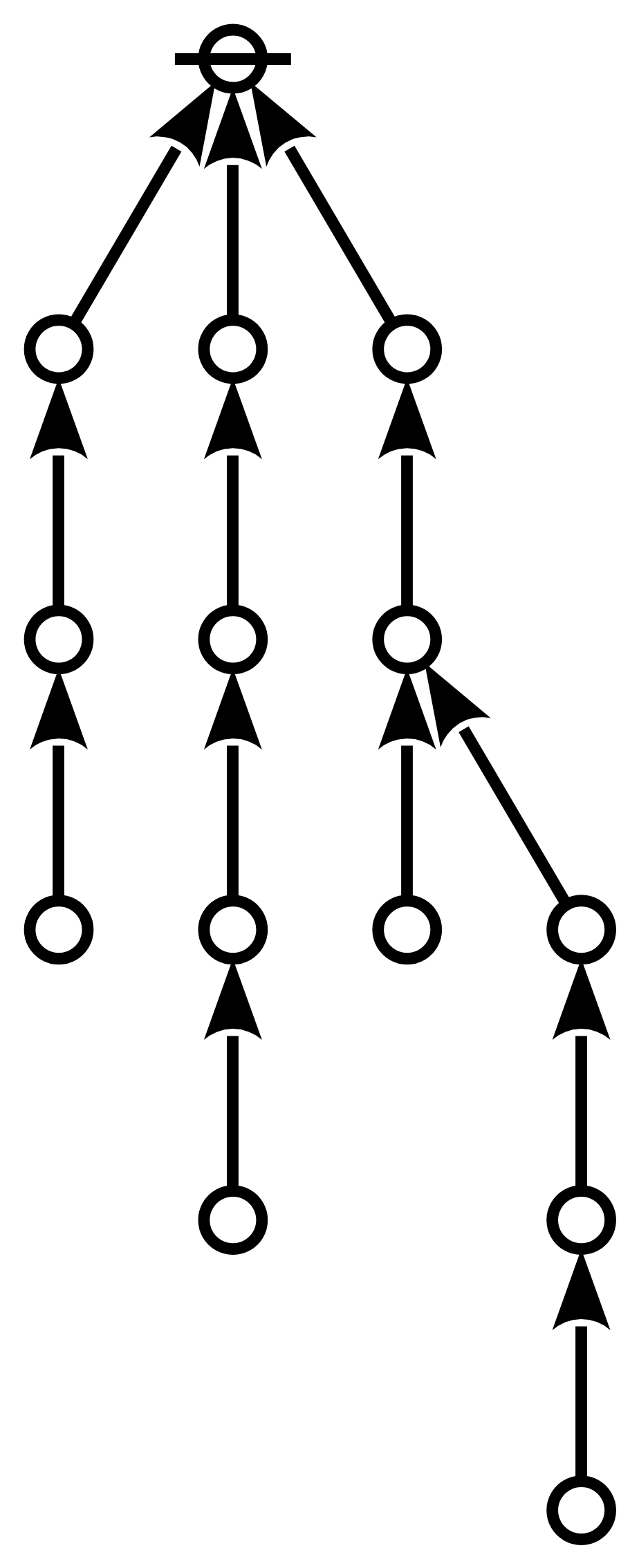
Here is the Riff for 59281

Riff 59281

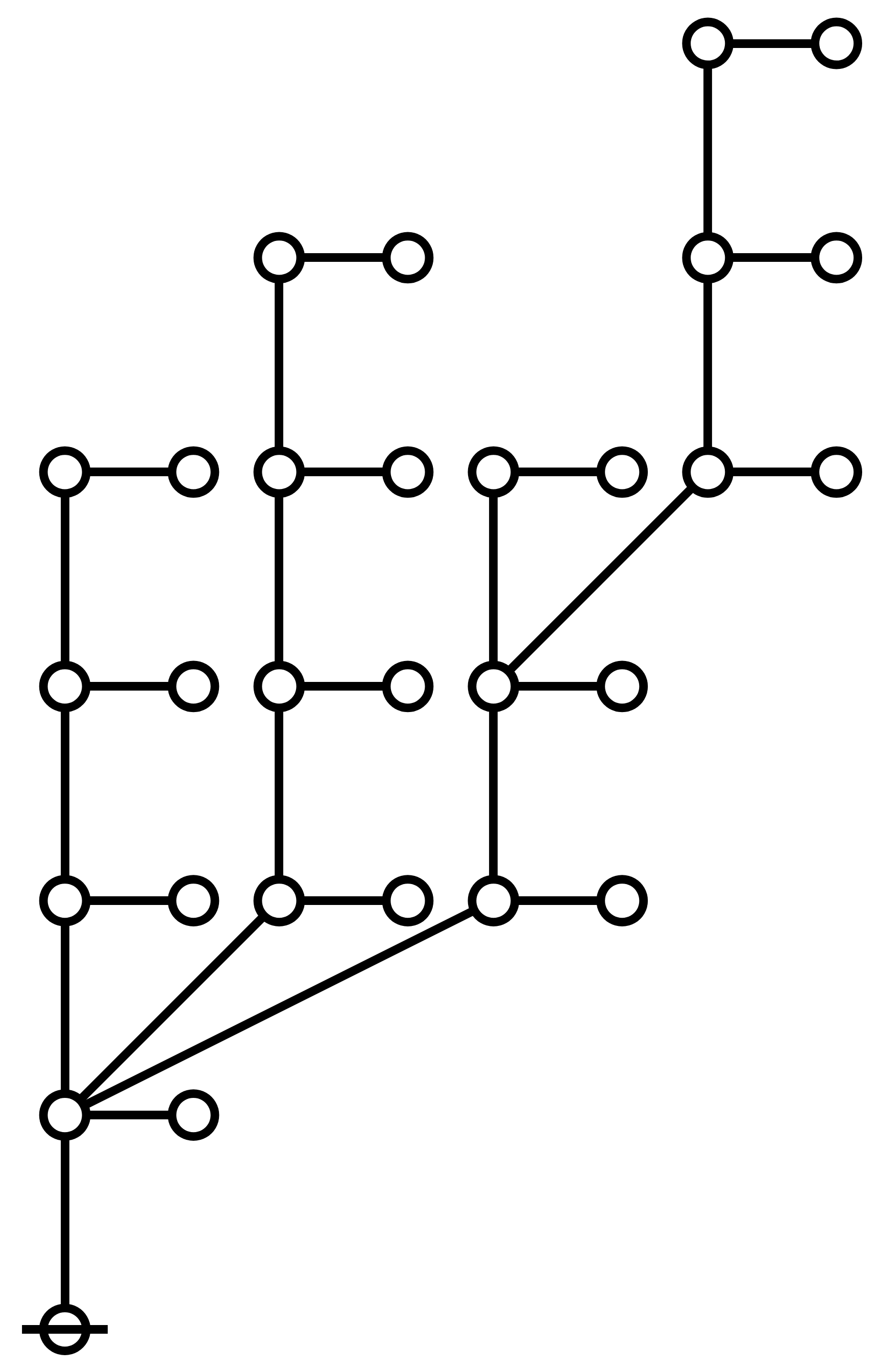
Here is the Rote for 59281

Rote 59281

One peculiar property of this number I notice is its being “square-free all the way down”.  Once again, I have no clue whether that has anything to do with the problem at hand.

Resources

cc: Category TheoryCyberneticsOntolog Forum • Peirce List (1) (2) (3)SeqFan
cc: FB | Riffs and RotesLaws of FormStructural ModelingSystems Science

Posted in Arithmetic, Combinatorics, Graph Theory, Group Theory, Logic, Mathematics, Number Theory, Riffs and Rotes | Tagged , , , , , , , | Leave a comment

On Reading Peirce • Discussion 2

Re: Peirce ListJon AwbreyGary Richmond

JA:
Well, it’s true, all science is under construction.
But not everything under construction is a science.
GR:
True.  But I’d suggest that there is no good reason to block the way of inquiry of those who think that phaneroscopy, for example, may prove to be a science even if, at present, it remains in my view but a science egg.  That it is not yet clear whether it can be fully developed as a science (I believe that there is good to think that it can) is, for me at least, one of the reasons why we’re having this slow read.

So, those who think phaneroscopy (involving the doctrine of categories) is worth looking further into include not only André De Tienne, but to cite again a recent book on the topic, Richard Kenneth Atkins’ 2018 monograph, Charles S. Peirce’s Phenomenology : Analysis and Consciousness.

Dear Gary,

You know me well enough to know I have nothing against neologisms — I used to coin 5 or 6 every morning before breakfast … but I’m much better now — and don’t get me wrong, I fully sympathize with Peirce’s desire to distinguish his take on phenomenology from Hegel’s mis-takes.  And I’m totally copacetic with using the word inquiry to describe any activity aimed at fixing belief, at least, in broad brush among friends.  But it’s one toke over the line if we call any form of inquiry a science, for then we’d have Tenacioscopy, Authorioscopy, Apriorioscopy to counter on a recurring basis, not that we don’t already have to deal with them under hosts and legions of the usual suspect old-fangled paleologisms.

So it’s gotta stop somewhere — and for that we have to acknowledge
critical criteria in our critique of what makes inquiry scientific.

I see I’m one neologism short of my old quota —
but I’ll save oöscience for next time …

Regards,

Jon

cc: Category TheoryCyberneticsLaws of FormOntolog ForumPeirce List
cc: FB | Peirce MattersStructural ModelingSystems Science

Posted in Anthem, C.S. Peirce, Inquiry, Inquiry Into Inquiry, Logic, Mathematics, Pragmatism, Science, Semiotics | Tagged , , , , , , , , | Leave a comment

On Reading Peirce • Discussion 1

\begin{array}{l}  \texttt{The spirit of inquiry comes from the heart.}\\  \texttt{Where it lives there's no need to force it.}\\  \texttt{Where it's dead there's no way to argue it}\\  \texttt{into being -- it demands an external shock}\\  \texttt{or an internal quake, a sense of anharmony}\\  \texttt{to kick-start it back to the realm of life.}\\  \texttt{But don't underestimate the persistence of}\\  \texttt{a static status quo to insulate its static}\\  \texttt{atmospherics from all hope of resuscitance}\\  \texttt{by all the available routines of authority,}\\  \texttt{parochial isolation, not to say xenophobia.}\\  \\  \texttt{-- Also Sprach 0*}  \end{array}

Re: Peirce ListJon AwbreyJohn Sowa

JFS:
I detect a prebit of irony in your note.

Although I respect Peirce’s ethics of terminology and observe his recommendations when they are appropriate and realistic, I also know that most of them have died on the vine of common sense.

If Peirce had owned an automobile, he would have called it an autokineto.  Greece is the only country in the world that uses the word “autokineto”.

Dear John,

I actually like the sound (if not the fuzy) of “prebit”, there’s a lot of potential for playing off QM’s “qubit” and I once coined the term “ambit” for an ambiguous bit.

But seriously, Folks, my tone may be comic ironic but the underlying sentiment is straightforward enough.  I’ve been consistent in the way I read Peirce since my first encounters with his work over 50 years ago, the same way I read every other mathematician or scientist worth reading, doyen or pioneer or otherwise.  Of all the things they say or write, some things can be proven logically, some things can be supported experimentally, and then there’s a host of approximations, beliefs, conjectures, hypotheses, impressions, popular expositions, rhetorical parables, speculations, ad inf.

If the thinker in question is worth reading at all then all of that is worth reading in the proper light, but it takes the due sort of intellectual prism to sort it all out.

Regards,

Jon

cc: Category TheoryCyberneticsLaws of FormOntolog ForumPeirce List
cc: FB | Peirce MattersStructural ModelingSystems Science

Posted in Anthem, C.S. Peirce, Inquiry, Inquiry Into Inquiry, Logic, Mathematics, Pragmatism, Science, Semiotics | Tagged , , , , , , , , | Leave a comment

Semiotics, Semiosis, Sign Relations • Discussion 16

Re: FB | SemeioticsMarius V. Constantin

MVC:
Have you taken into consideration the difference between weak negation and strong negation?

I always begin classically where logic is concerned — I guess that means “strong” negation — we make a stronger start and get better mileage on that basis before we run into the specialized circumstances, mainly in computational and generalized semiotic settings, which force us to weaken our logic.

MVC:
It is so-called semiotic negation, which, by the way, was an aspect, for me, in so-called resolution logic (Ch. Sanders Peirce is mentioned on that one).

I took a computer science course on resolution-unification theorem provers at U. Illinois in the mid 1980s.  If that’s the same sort of resolution, it generalizes the modus ponens inference rule, all of which exemplify implicational inference.  Peirce’s logical graphs allow a degree of equational or information-preserving inference, a fact which Spencer Brown drew out and made more clear.

cc: Category Theory • Cybernetics (1) (2)
cc: Ontolog ForumStructural ModelingSystems Science
cc: FB | SemeioticsLaws of Form • Peirce List (1) (2) (3) (4) (5) (6) (7)

Posted in C.S. Peirce, Category Theory, Logic, Relation Theory, Semiosis, Semiotics, Sign Relations, Triadic Relations | Tagged , , , , , , , | 8 Comments