{ Information = Comprehension × Extension } • Discussion 16

Re: Ontolog Forum • Joseph Simpson

To understand the purpose of Peirce’s lecture hall illustrations I think we need to consider how these sorts of expository examples come into being.  Having crafted a few myself the technique is much like the Art of the Story Problem I remember from my days teaching math.  We have a universe of discourse circumscribed by a particular subject matter, say linear algebra, plane geometry, the quadratic formula, or the like, and we have a set of methods that work well enough in that context to recommend their use to others.  The methods themselves have been abstracted and formalized over the years, if not millennia, to the point of being detached from everyday life and potential practice, so we flesh them out with names and local habitations and narrative figures designed to tutor nature — or at least the students thereof.

The main thing we want from our stock examples and story problems is to show how it’s possible to bring a body of abstract ideas to bear on ordinary practical affairs.  We are thus reversing to a degree the process by which a formalized subject matter is abstracted from a host of concrete situations, but only to a degree, as dredging up the mass of adventitious and conflicting details would be too distracting.  Instead we stipulate a hypothetical state of affairs whose concrete structure falls under the class of ideal structures studied in our formal subject matter.

Reference

  • Peirce, C.S. (1866), “The Logic of Science, or, Induction and Hypothesis”, Lowell Lectures of 1866, pp. 357–504 in Writings of Charles S. Peirce : A Chronological Edition, Volume 1, 1857–1866, Peirce Edition Project, Indiana University Press, Bloomington, IN, 1982.

Resources

cc: Cybernetics • Ontolog Forum • Structural Modeling • Systems Science

Posted in Abduction, C.S. Peirce, Comprehension, Deduction, Extension, Hypothesis, Icon Index Symbol, Induction, Inference, Information = Comprehension × Extension, Information Theory, Inquiry, Intension, Logic, Logic of Science, Peirce, Peirce's Categories, Pragmatic Semiotic Information, Pragmatism, Scientific Method, Semiotics, Sign Relations | Tagged , , , , , , , , , , , , , , , , , , , , , | 9 Comments

{ Information = Comprehension × Extension } • Discussion 15

I am roughly at the halfway point of my comments on Peirce’s information formula, having just finished up the link between abductive inference and iconic reference.  The discussion of induction and indexicals will follow pretty much the same pattern, though there are a few wrinkles having to do with a number of interesting differences between Peirce’s early and later accounts of indices.

The rest of this post is slightly tangent to the topic at hand, but I couldn’t resist saying a few more words about the duality of information and control once other discussions brought the issue to mind.

⁂

Viewing systems topics like change, control, dynamics, goals, objectives, optimization, process, purpose and so on in the light of the information dimension opens up a wide field of investigation.  It’s been my custom to cultivate that field layer by layer, working up from the most basic layer with a modicum of utility, namely, propositional calculus.  This is the layer of qualitative description underlying every layer of quantitative description.

Propositional calculus is the level of logic we’ve been using in our present discussion to describe various classes of entities populating a given universe of discourse.  Whether we call the corresponding descriptors predicates, propositions, or terms is of no importance for present purposes so long as we are using them solely as symbols in a symbolic calculus following a specific set of rules.

Extending the layer of propositional calculus from its coverage of static situations to the description of time-evolving states can be done fairly easily.  One follows the model of physics, where dealing with change made little progress until the development of differential calculus.  The analogous medium at the logical level is the differential extension of propositional calculus, or “differential propositional calculus”, for short.  See the following resource for a gentle introduction.

Reference

  • Peirce, C.S. (1866), “The Logic of Science, or, Induction and Hypothesis”, Lowell Lectures of 1866, pp. 357–504 in Writings of Charles S. Peirce : A Chronological Edition, Volume 1, 1857–1866, Peirce Edition Project, Indiana University Press, Bloomington, IN, 1982.

Resources

cc: Cybernetics • Ontolog Forum • Structural Modeling • Systems Science

Posted in Abduction, C.S. Peirce, Comprehension, Deduction, Extension, Hypothesis, Icon Index Symbol, Induction, Inference, Information = Comprehension × Extension, Information Theory, Inquiry, Intension, Logic, Logic of Science, Peirce, Peirce's Categories, Pragmatic Semiotic Information, Pragmatism, Scientific Method, Semiotics, Sign Relations | Tagged , , , , , , , , , , , , , , , , , , , , , | 9 Comments

{ Information = Comprehension × Extension } • Discussion 14

Re: Ontolog Forum • Bruce Schuman

Information and optimization go hand in hand — discovering the laws or constraints naturally governing the systems in which we live is a big part of moving toward our hearts’ desires within them.  I’m engaged in trying to clear up a few old puzzles about information at present but the dual relationship of information and control in cybernetic systems is never far from my mind.  At any rate, here’s a sampling of thoughts along those lines I thought I might add to the mix.

Resources

cc: Cybernetics • Ontolog Forum • Structural Modeling • Systems Science

Posted in Abduction, Analogy, C.S. Peirce, Comprehension, Cybernetics, Deduction, Extension, Icon Index Symbol, Induction, Inference, Information = Comprehension × Extension, Information Theory, Inquiry, Intension, Logic, Logic of Science, Optimal Control, Optimization, Pragmatic Semiotic Information, Representation, Scientific Method, Semiotics, Sign Relations, Triadicity | Tagged , , , , , , , , , , , , , , , , , , , , , , , | 9 Comments

{ Information = Comprehension × Extension } • Discussion 13

Re: Deborah G. Mayo • R.A. Fisher: “Statistical Methods and Scientific Induction”

As much as I incline toward Fisher’s views over those of Neyman and Pearson, I always find these controversies driving me back to Peirce.  It’s my personal sense there’s no chance (or hope) of resolving the issues until we get clear about the distinct roles of abductive, deductive, and inductive inference and quit confounding abduction and induction the way mainstream statistics has always done.

Resources

cc: Cybernetics • Ontolog Forum • Structural Modeling • Systems Science

Posted in Abduction, C.S. Peirce, Comprehension, Deduction, Extension, Hypothesis, Icon Index Symbol, Induction, Inference, Information = Comprehension × Extension, Information Theory, Inquiry, Intension, Logic, Logic of Science, Peirce, Peirce's Categories, Pragmatic Semiotic Information, Pragmatism, Scientific Method, Semiotics, Sign Relations | Tagged , , , , , , , , , , , , , , , , , , , , , | 9 Comments

{ Information = Comprehension × Extension } Revisited • Comment 5

Let’s stay with Peirce’s example of abductive inference a little longer and try to clear up the more troublesome confusions that tend to arise.

Figure 1 shows the implication ordering of logical terms in the form of a lattice diagram.

Figure 1. Conjunctive Term z, Taken as Predicate

Figure 1. Conjunctive Term z, Taken as Predicate

One thing needs to be stressed at this point.  It is important to recognize the conjunctive term itself — namely, the syntactic string “spherical bright fragrant juicy tropical fruit” — is not an icon but a symbol.  It has its place in a formal system of symbols, for example, a propositional calculus, where it would normally be interpreted as a logical conjunction of six elementary propositions, denoting anything in the universe of discourse with all six of the corresponding properties.  The symbol denotes objects which may be taken as icons of oranges by virtue of their bearing those six properties in common with oranges.  But there are no objects denoted by the symbol which aren’t already oranges themselves.  Thus we observe a natural reduction in the denotation of the symbol, consisting in the absence of cases outside of oranges which have all the properties indicated.

The above analysis provides another way to understand the abductive inference from the Fact x \Rightarrow z and the Rule y \Rightarrow z to the Case x \Rightarrow y.  The lack of any cases which are z and not y is expressed by the implication z \Rightarrow y.  Taking this together with the Rule y \Rightarrow z gives the logical equivalence y = z.  But this reduces the Case x \Rightarrow y to the Fact x \Rightarrow z and so the Case is justified.

Viewed in the light of the above analysis, Peirce’s example of abductive reasoning exhibits an especially strong form of inference, almost deductive in character.  Do all abductive arguments take this form, or may there be weaker styles of abductive reasoning which enjoy their own levels of plausibility?  That must remain an open question at this point.

Reference

  • Peirce, C.S. (1866), “The Logic of Science, or, Induction and Hypothesis”, Lowell Lectures of 1866, pp. 357–504 in Writings of Charles S. Peirce : A Chronological Edition, Volume 1, 1857–1866, Peirce Edition Project, Indiana University Press, Bloomington, IN, 1982.

Resources

cc: Cybernetics • Ontolog Forum • Structural Modeling • Systems Science

Posted in Abduction, C.S. Peirce, Comprehension, Deduction, Extension, Hypothesis, Icon Index Symbol, Induction, Inference, Information = Comprehension × Extension, Information Theory, Inquiry, Intension, Logic, Logic of Science, Peirce, Peirce's Categories, Pragmatic Semiotic Information, Pragmatism, Scientific Method, Semiotics, Sign Relations | Tagged , , , , , , , , , , , , , , , , , , , , , | 9 Comments

{ Information = Comprehension × Extension } Revisited • Comment 4

Many things still puzzle me about Peirce’s account at this point.  I indicated a few of them by means of question marks at several places in the last two Figures.  There is nothing for it but returning to the text and trying once more to follow the reasoning.

Let’s go back to Peirce’s example of abductive inference and try to get a clearer picture of why he connects it with conjunctive terms and iconic signs.

Figure 1 shows the implication ordering of logical terms in the form of a lattice diagram.

Figure 1. Conjunctive Term z, Taken as Predicate

Figure 1. Conjunctive Term z, Taken as Predicate

The relationship between conjunctive terms and iconic signs may be understood as follows.  If there is anything with all the properties described by the conjunctive term — spherical bright fragrant juicy tropical fruit — then sign users may use that thing as an icon of an orange, precisely by virtue of the fact it shares those properties with an orange.  But the only natural examples of things with all those properties are oranges themselves, so the only thing qualified to serve as a natural icon of an orange by virtue of those very properties is that orange itself or another orange.

Reference

  • Peirce, C.S. (1866), “The Logic of Science, or, Induction and Hypothesis”, Lowell Lectures of 1866, pp. 357–504 in Writings of Charles S. Peirce : A Chronological Edition, Volume 1, 1857–1866, Peirce Edition Project, Indiana University Press, Bloomington, IN, 1982.

Resources

cc: Cybernetics • Ontolog Forum • Structural Modeling • Systems Science

Posted in Abduction, C.S. Peirce, Comprehension, Deduction, Extension, Hypothesis, Icon Index Symbol, Induction, Inference, Information = Comprehension × Extension, Information Theory, Inquiry, Intension, Logic, Logic of Science, Peirce, Peirce's Categories, Pragmatic Semiotic Information, Pragmatism, Scientific Method, Semiotics, Sign Relations | Tagged , , , , , , , , , , , , , , , , , , , , , | 9 Comments

{ Information = Comprehension × Extension } Revisited • Comment 3

Peirce identifies inference with a process he describes as symbolization.  Let us consider what that might imply.

I am going, next, to show that inference is symbolization and that the puzzle of the validity of scientific inference lies merely in this superfluous comprehension and is therefore entirely removed by a consideration of the laws of information.  (467).

Even if it were only a rough analogy between inference and symbolization, a principle of logical continuity, what is known in physics as a correspondence principle, would suggest parallels between steps of reasoning in the neighborhood of exact inferences and signs in the vicinity of genuine symbols.  This would lead us to expect a correspondence between degrees of inference and degrees of symbolization extending from exact to approximate (non-demonstrative) inferences and from genuine to approximate (degenerate) symbols.

For this purpose, I must call your attention to the differences there are in the manner in which different representations stand for their objects.

In the first place there are likenesses or copies — such as statues, pictures, emblems, hieroglyphics, and the like.  Such representations stand for their objects only so far as they have an actual resemblance to them — that is agree with them in some characters.  The peculiarity of such representations is that they do not determine their objects — they stand for anything more or less;  for they stand for whatever they resemble and they resemble everything more or less.

The second kind of representations are such as are set up by a convention of men or a decree of God.  Such are tallies, proper names, &c.  The peculiarity of these conventional signs is that they represent no character of their objects.

Likenesses denote nothing in particular;  conventional signs connote nothing in particular.

The third and last kind of representations are symbols or general representations.  They connote attributes and so connote them as to determine what they denote.  To this class belong all words and all conceptions.  Most combinations of words are also symbols.  A proposition, an argument, even a whole book may be, and should be, a single symbol.  (467–468).

In addition to Aristotle, the influence of Kant on Peirce is very strongly marked in these earliest expositions.  The invocations of “conceptions of the understanding”, the “use of concepts” and thus of symbols in reducing the manifold of extension, and the not so subtle hint of the synthetic à priori in Peirce’s discussion, not only of natural kinds but also of the kinds of signs leading up to genuine symbols, can all be recognized as pervasive Kantian themes.

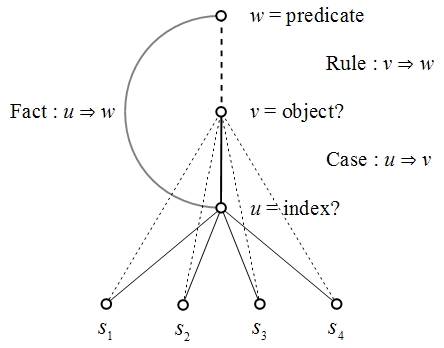
In order to draw out these themes and see how Peirce was led to develop their leading ideas, let us bring together our previous Figures, abstracting from their concrete details, and see if we can figure out what is going on.

Figure 3 shows an abductive step of inquiry, as taken on the cue of an iconic sign.

Figure 3. Conjunctive Predicate z, Abduction of Case x ⇒ y

Figure 3. Conjunctive Predicate z, Abduction of Case x ⇒ y

Figure 4 shows an inductive step of inquiry, as taken on the cue of an indicial sign.

Figure 4. Disjunctive Subject u, Induction of Rule v ⇒ w

Figure 4. Disjunctive Subject u, Induction of Rule v ⇒ w

To be continued …

Reference

  • Peirce, C.S. (1866), “The Logic of Science, or, Induction and Hypothesis”, Lowell Lectures of 1866, pp. 357–504 in Writings of Charles S. Peirce : A Chronological Edition, Volume 1, 1857–1866, Peirce Edition Project, Indiana University Press, Bloomington, IN, 1982.

Resources

cc: Cybernetics • Ontolog Forum • Structural Modeling • Systems Science

Posted in Abduction, C.S. Peirce, Comprehension, Deduction, Extension, Hypothesis, Icon Index Symbol, Induction, Inference, Information = Comprehension × Extension, Information Theory, Inquiry, Intension, Logic, Logic of Science, Peirce, Peirce's Categories, Pragmatic Semiotic Information, Pragmatism, Scientific Method, Semiotics, Sign Relations | Tagged , , , , , , , , , , , , , , , , , , , , , | 11 Comments

{ Information = Comprehension × Extension } Revisited • Comment 2

Let’s examine Peirce’s second example of a disjunctive term — neat, swine, sheep, deer — within the style of lattice framework we used before.

Hence if we find out that neat are herbivorous, swine are herbivorous, sheep are herbivorous, and deer are herbivorous;  we may be sure that there is some class of animals which covers all these, all the members of which are herbivorous.  (468–469).

Accordingly, if we are engaged in symbolizing and we come to such a proposition as “Neat, swine, sheep, and deer are herbivorous”, we know firstly that the disjunctive term may be replaced by a true symbol.  But suppose we know of no symbol for neat, swine, sheep, and deer except cloven-hoofed animals.  (469).

This is apparently a stock example of inductive reasoning which Peirce is borrowing from traditional discussions, so let us pass over the circumstance that modern taxonomies may classify swine as omnivores.

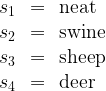
In view of the analogical symmetries the disjunctive term shares with the conjunctive case, we can run through this example in fairly short order.  We have an aggregate of four terms:

\begin{array}{lll}  s_1 & = & \mathrm{neat}  \\  s_2 & = & \mathrm{swine}  \\  s_3 & = & \mathrm{sheep}  \\  s_4 & = & \mathrm{deer}  \end{array}

Suppose u is the logical disjunction of the above four terms:
\begin{array}{lll}  u & = &  \texttt{((} s_1 \texttt{)(} s_2 \texttt{)(} s_3 \texttt{)(} s_4 \texttt{))}  \end{array}

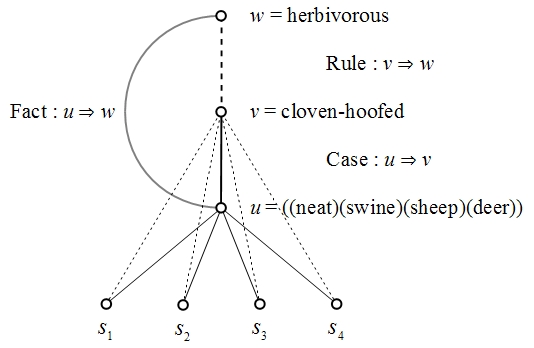
Figure 2 diagrams the situation before us.

Figure 2. Disjunctive Term u, Taken as Subject

Figure 2. Disjunctive Term u, Taken as Subject

Here we have a situation that is dual to the structure of the conjunctive example.  There is a gap between the logical disjunction u, in lattice terminology, the least upper bound (lub) of the disjoined terms, u = \mathrm{lub} \{ s_1, s_2, s_3, s_4 \}, and what we might regard as the natural disjunction or natural lub of these terms, namely, v, cloven-hoofed.

Once again, the sheer implausibility of imagining the disjunctive term u would ever be embedded exactly as such in a lattice of natural kinds leads to the evident naturalness of the induction to v \Rightarrow w, namely, the rule that cloven-hoofed animals are herbivorous.

Reference

  • Peirce, C.S. (1866), “The Logic of Science, or, Induction and Hypothesis”, Lowell Lectures of 1866, pp. 357–504 in Writings of Charles S. Peirce : A Chronological Edition, Volume 1, 1857–1866, Peirce Edition Project, Indiana University Press, Bloomington, IN, 1982.

Resources

cc: Cybernetics • Ontolog Forum • Structural Modeling • Systems Science

Posted in Abduction, C.S. Peirce, Comprehension, Deduction, Extension, Hypothesis, Icon Index Symbol, Induction, Inference, Information = Comprehension × Extension, Information Theory, Inquiry, Intension, Logic, Logic of Science, Peirce, Peirce's Categories, Pragmatic Semiotic Information, Pragmatism, Scientific Method, Semiotics, Sign Relations | Tagged , , , , , , , , , , , , , , , , , , , , , | 9 Comments

{ Information = Comprehension × Extension } Revisited • Comment 1

At this point in his inventory of scientific reasoning, Peirce is relating the nature of inference, information, and inquiry to the character of the signs mediating the process in question, a process he is presently describing as symbolization.

In the interest of clarity let’s draw from Peirce’s account a couple of quick sketches, designed to show how the examples he gives of conjunctive terms and disjunctive terms might look if they were cast within a lattice-theoretic frame.

Let’s examine Peirce’s example of a conjunctive term — spherical, bright, fragrant, juicy, tropical fruit — within a lattice framework.  We have these six terms:

\begin{array}{lll}  t_1 & = & \mathrm{spherical}  \\  t_2 & = & \mathrm{bright}  \\  t_3 & = & \mathrm{fragrant}  \\  t_4 & = & \mathrm{juicy}  \\  t_5 & = & \mathrm{tropical}  \\  t_6 & = & \mathrm{fruit}  \end{array}

Suppose z is the logical conjunction of the above six terms:

\begin{array}{lll}  z & = & t_1 \cdot t_2 \cdot t_3 \cdot t_4 \cdot t_5 \cdot t_6  \end{array}

What on earth could Peirce mean by saying that such a term is not a true symbol or that it is of no use whatever?

In particular, consider the following statement:

If it occurs in the predicate and something is said to be a spherical bright fragrant juicy tropical fruit, since there is nothing which is all this which is not an orange, we may say that this is an orange at once.

In other words, if something x is said to be z then we may guess fairly surely x is really an orange, in short, x has all the additional features otherwise summed up quite succinctly in the much more constrained term y, where y means an orange.

Figure 1 shows the implication ordering of logical terms in the form of a lattice diagram.

Figure 1. Conjunctive Term z, Taken as Predicate

Figure 1. Conjunctive Term z, Taken as Predicate

What Peirce is saying about z not being a genuinely useful symbol can be explained in terms of the gap between the logical conjunction z, in lattice terms, the greatest lower bound (glb) of the conjoined terms, z = \mathrm{glb} \{ t_1, t_2, t_3, t_4, t_5, t_6 \}, and what we might regard as the natural conjunction or natural glb of these terms, namely, y, an orange.  That is to say, there is an extra measure of constraint that goes into forming the natural kinds lattice from the free lattice that logic and set theory would otherwise impose.  The local manifestations of this global information are meted out over the structure of the natural lattice by just such abductive gaps as the one between z and y.

Reference

  • Peirce, C.S. (1866), “The Logic of Science, or, Induction and Hypothesis”, Lowell Lectures of 1866, pp. 357–504 in Writings of Charles S. Peirce : A Chronological Edition, Volume 1, 1857–1866, Peirce Edition Project, Indiana University Press, Bloomington, IN, 1982.

Resources

cc: Cybernetics • Ontolog Forum • Structural Modeling • Systems Science

Posted in Abduction, C.S. Peirce, Comprehension, Deduction, Extension, Hypothesis, Icon Index Symbol, Induction, Inference, Information = Comprehension × Extension, Information Theory, Inquiry, Intension, Logic, Logic of Science, Peirce, Peirce's Categories, Pragmatic Semiotic Information, Pragmatism, Scientific Method, Semiotics, Sign Relations | Tagged , , , , , , , , , , , , , , , , , , , , , | 9 Comments

{ Information = Comprehension × Extension } • Discussion 12

Re: Ontolog Forum • Azamat Abdoullaev

As I suggested in an earlier discussion, the difference that makes a difference in Peirce’s contribution to our understanding of inference and reference is “due to his concurrent development of the logic of relative terms and the mathematics of relations, especially triadic relations.”  It is only with the addition of these tools to our toolbox that we begin to form models adequate to the complexity of the object phenomena, namely, the whole panoply of activities involved in observation, conceptualization, communication, and inquiry.

I’ll be bringing these tools to bear as needed in the current engagement with Peirce’s incipient information theory, but only as the application calls for them.  For a more general grounding in the relational logic and mathematics Peirce was developing in parallel at this time, see the series of selections and commentary I started on his 1870 Logic of Relatives.

Here’s the work in progress so far on the OEIS Wiki.

Here’s the overview for a parallel series of blog posts.

Resources

cc: Cybernetics • Ontolog Forum • Structural Modeling • Systems Science

Posted in Abduction, C.S. Peirce, Comprehension, Deduction, Extension, Hypothesis, Icon Index Symbol, Induction, Inference, Information = Comprehension × Extension, Information Theory, Inquiry, Intension, Logic, Logic of Science, Peirce, Peirce's Categories, Pragmatic Semiotic Information, Pragmatism, Scientific Method, Semiotics, Sign Relations | Tagged , , , , , , , , , , , , , , , , , , , , , | 9 Comments