Sign Relations, Triadic Relations, Relations • 7

Re: Ontolog ForumJoseph Simpson

JS:
A binary relation is a set of ordered pairs of the elements of some other set.

That is the first definition I learned for binary relations.

Slightly more generally, a binary relation L is a subset of a cartesian product X \times Y of two sets, X and Y.  In symbols, L \subseteq X \times Y.  Of course X and Y could be the same, but that’s not always the case.

I have long used the adjectives, 2-place, binary, and dyadic pretty much interchangeably in application to relations but I developed a bias toward dyadic on account of computational contexts where binary is reserved for binary numerals.

Once again, partly due to computational exigencies, I would now regard this first definition as the weak typing version.

The strong typing definition of a k-place relation L \subseteq X_1 \times \ldots \times X_k includes the cartesian product X_1 \times \ldots \times X_k as an essential part of its specification.  This serves to harmonize the definition of a k-place relation with the use of mathematical category theory in computer science.

When I get more time, I’ll go through the material I linked on relation theory in a slightly more leisurely manner …

Resources

cc: Ontolog ForumStructural ModelingSystems Science

Posted in C.S. Peirce, Icon Index Symbol, Knowledge Representation, Logic, Logic of Relatives, Mathematics, Ontology, Peirce, Pragmatism, Relation Theory, Semiosis, Semiotics, Sign Relations, Triadic Relations, Triadicity | Tagged , , , , , , , , , , , , , , | 16 Comments

Theme One Program • Discussion 4

Re: Systems ScienceJoseph Simpson

Let me step back and talk about the research intention driving this work.

In a very real sense everything I’ve been doing along this line of inquiry for the last fifty years falls within the larger traditions of AI, A-Life, cybernetics, and systems theory that first got my attention in the late 1960s.  Arbib, Ashby, McCulloch, Minsky and Papert, Wiener stand out among the early influences that whetted my appetite for computational and systems-theoretic approaches to inquiry.  It’s fair to say the questions they asked, the hints and tools they provided are always on my mind even today.

A few references, among many others

  • Arbib, M.A., Brains, Machines, and Mathematics.  1st edition 1964.  2nd edition, Springer-Verlag, New York, NY, 1987.
  • Ashby, W.R., An Introduction to Cybernetics, Chapman and Hall, London, UK, 1956.  Methuen and Company, London, UK, 1964.
  • McCulloch, W.S., Embodiments of Mind, MIT Press, Cambridge, MA, 1965.  3rd printing 1975.
  • Minsky, M., and Papert, S., Perceptrons : An Introduction to Computational Geometry, 1st edition 1969, 2nd printing 1972.  Expanded edition, MIT Press, Cambridge, MA, 1988.
  • Wiener, N., Cybernetics : or, Control and Communication in the Animal and the Machine, 1st edition 1948.  2nd edition, MIT Press, Cambridge, MA, 1961.

Time scarce and scattered, will get to the rest later …

cc: Ontolog ForumStructural ModelingSystems Science

Posted in Algorithms, Animata, Artificial Intelligence, Boolean Functions, C.S. Peirce, Cactus Graphs, Cognition, Computation, Constraint Satisfaction Problems, Data Structures, Differential Logic, Equational Inference, Formal Languages, Graph Theory, Inquiry Driven Systems, Laws of Form, Learning Theory, Logic, Logical Graphs, Mathematics, Minimal Negation Operators, Painted Cacti, Peirce, Propositional Calculus, Semiotics, Spencer Brown, Visualization | Tagged , , , , , , , , , , , , , , , , , , , , , , , , , , | 6 Comments

Theme One Program • Discussion 3

What I’m doing this summer …

Eighteen years living in the same place and we blissfully forgot what it takes to pack up a house and find a new one.  Thankfully most of the renovation work is done but it’s looking like it will be August before I get my head above water.  Just bits and snatches of time till then …

The main functional test for me is getting a fully running version that works on the sorts of examples I stored at Google Drive.

There’s a sample of commenting I started — just barely started — at this place.

There’s a lot that could be done with the interface, especially making it more visual, displaying the graphical data structures, etc.

There’s hand-generated examples of “animated proofs” in the cactus graph variant of the CSP–GSB calculus at this place.

There’s discussion of those examples here.

And it would be wonderful to automate those eventually.

That’s all for now …

cc: Ontolog ForumStructural ModelingSystems Science

Posted in Algorithms, Animata, Artificial Intelligence, Boolean Functions, C.S. Peirce, Cactus Graphs, Cognition, Computation, Constraint Satisfaction Problems, Data Structures, Differential Logic, Equational Inference, Formal Languages, Graph Theory, Inquiry Driven Systems, Laws of Form, Learning Theory, Logic, Logical Graphs, Mathematics, Minimal Negation Operators, Painted Cacti, Peirce, Propositional Calculus, Semiotics, Spencer Brown, Visualization | Tagged , , , , , , , , , , , , , , , , , , , , , , , , , , | 6 Comments

Sign Relations, Triadic Relations, Relations • 6

Re: Ontolog ForumJoseph Simpson

Just by way of clarifying and emphasizing a few points —

I use the word relation to mean a special type of mathematical object, namely, a designated subset included within a cartesian product of sets.

Whatever else this definition of a relation may have going for or against it, it does single out a class of formal structures working in good stead as intermediary objects between the world of phenomena and our human capacity for coping with whatever reality emanates in those phenomena.  That’s mainly how I aim to use it here.

When I’m being careful, then, I’ll try to use words that maintain a distinction between objects, formal or otherwise, and the symbolic modifications of media we use to reference those objects.

For instance, I took some care with this statement from my last post:

The mathematical examples are typical of many in linguistic, logical, and mathematical contexts where we start out with compact, ready-made axioms, definitions, equations, expressions, formulas, predicates, or terms that denote the relations of interest.

For example, we might be discussing dyadic relative terms like “parent of —” or “square of —” and triadic relative terms like “giver of — to —” or “sum of — and —”.

I used “axioms, definitions, equations, expressions, formulas, predicates, terms” along with “dyadic relative terms” and “triadic relative terms” for various sorts of symbolic entities that serve to denote or describe formal objects of thought and discussion, while I tried to reserve “relations” for the objects themselves.

cc: Ontolog ForumStructural ModelingSystems Science

Posted in C.S. Peirce, Icon Index Symbol, Knowledge Representation, Logic, Logic of Relatives, Mathematics, Ontology, Peirce, Pragmatism, Relation Theory, Semiosis, Semiotics, Sign Relations, Triadic Relations, Triadicity | Tagged , , , , , , , , , , , , , , | 16 Comments

Sign Relations, Triadic Relations, Relations • 5

Re: Ontolog ForumRavi Sharma

I chose those examples of triadic relations to be as simple as possible without being completely trivial but they already exemplify many features we need to keep in mind in all the more complex cases as we use relational models of realistic phenomena and objective domains.

The mathematical examples are typical of many in linguistic, logical, and mathematical contexts where we start out with compact, ready-made axioms, definitions, equations, expressions, formulas, predicates, or terms that denote the relations of interest.

For example, we might be discussing dyadic relative terms like “parent of —” or “square of —” and triadic relative terms like “giver of — to —” or “sum of — and —”.

If we spend the majority of our time in contexts like that we may form the impression that all the relational concepts we’ll ever need can be requisitioned off-the-shelf from pre-fab stock, no assembly required.

That’s a pretty picture of our mental equipment.  It may even be true if we cook the data long enough and fudge the meaning of pre-fab down to the level of amino acids or quarks or some other bosons on the bus.

As a practical matter, however, research pursued in experimental veins tends to push the envelope of pre-fab concepts into surprisingly novel realms of ideas.

I’ll discuss the examples of sign relations as I get more time …

cc: Ontolog ForumStructural ModelingSystems Science

Posted in C.S. Peirce, Icon Index Symbol, Knowledge Representation, Logic, Logic of Relatives, Mathematics, Ontology, Peirce, Pragmatism, Relation Theory, Semiosis, Semiotics, Sign Relations, Triadic Relations, Triadicity | Tagged , , , , , , , , , , , , , , | 18 Comments

Sign Relations, Triadic Relations, Relations • 4

The middle ground between relations in general and the sign relations we need to do logic, inquiry, communication, and so on is occupied by triadic relations, also called ternary or 3‑place relations.

Triadic relations are some of the most pervasive in mathematics, over and above the importance of sign relations for logic.

Here’s a primer with examples from mathematics and semiotics:

cc: Ontolog ForumStructural ModelingSystems Science

Posted in C.S. Peirce, Icon Index Symbol, Knowledge Representation, Logic, Logic of Relatives, Mathematics, Ontology, Peirce, Pragmatism, Relation Theory, Semiosis, Semiotics, Sign Relations, Triadic Relations, Triadicity | Tagged , , , , , , , , , , , , , , | 18 Comments

Sign Relations, Triadic Relations, Relations • 3

At the wide end of the funnel, here’s an introduction to relations in general, focusing on the discrete mathematical variety we find most useful in applications, for example, as background for relational data bases and empirical data.

cc: Ontolog ForumStructural ModelingSystems Science

Posted in C.S. Peirce, Icon Index Symbol, Knowledge Representation, Logic, Logic of Relatives, Mathematics, Ontology, Peirce, Pragmatism, Relation Theory, Semiosis, Semiotics, Sign Relations, Triadic Relations, Triadicity | Tagged , , , , , , , , , , , , , , | 16 Comments

Sign Relations, Triadic Relations, Relations • 2

I always have trouble deciding whether to start with the genus and drive down to the species or else to start with concrete examples and follow Sisyphus up Mt. Abstraction.

Soon after I made my 3rd try at grad school, this time in Systems Engineering, I was trying to explain sign relations to my advisor and he — being the very model of a modern systems engineer — asked me to give a single simple concrete example, as simple as possible without being trivial, and this is the example I came up with:

Here’s a more compact and self-contained article starting from scratch and covering much of the same material:

Folks already registered with any Wikipedia system site may find it convenient to use the article talk page at Wikiversity for additional discussion.

cc: Ontolog ForumStructural ModelingSystems Science

Posted in C.S. Peirce, Icon Index Symbol, Knowledge Representation, Logic, Logic of Relatives, Mathematics, Ontology, Peirce, Pragmatism, Relation Theory, Semiosis, Semiotics, Sign Relations, Triadic Relations, Triadicity | Tagged , , , , , , , , , , , , , , | 16 Comments

Theme One Program • Discussion 2

Re: Systems ScienceJoseph Simpson

Warfield gets it right about the relationship between object languages and metalanguages.  Something about the prefix meta- has contributed to a not uncommon misconception that metalanguages are formalized to a higher degree than the languages they objectify whereas in fact the opposite is true.

As it happens, the relation of informal contexts to formal contexts and what I’ve elsewhere called the formalization arrows between them are themes of major importance in my study of Inquiry Driven Systems.  Being short on time at the moment, I’ll give just a pointer to one of many relevant discussions and hope to elaborate further at the next opportunity.

cc: Ontolog ForumSystems Science

Posted in Algorithms, Animata, Artificial Intelligence, Boolean Functions, C.S. Peirce, Cactus Graphs, Cognition, Computation, Constraint Satisfaction Problems, Data Structures, Differential Logic, Equational Inference, Formal Languages, Graph Theory, Inquiry Driven Systems, Laws of Form, Learning Theory, Logic, Logical Graphs, Mathematics, Minimal Negation Operators, Painted Cacti, Peirce, Propositional Calculus, Semiotics, Spencer Brown, Visualization | Tagged , , , , , , , , , , , , , , , , , , , , , , , , , , | 6 Comments

Theme One Program • Exposition 3

Coding Logical Graphs

My earliest experiments coding logical graphs as dynamic “pointer” data structures taught me that conceptual and computational efficiencies of a critical sort could be achieved by generalizing their abstract graphs from trees to the variety graph theorists know as cacti.  The genesis of that generalization is a tale worth telling another time, but for now it’s best to jump right in and proceed by way of generic examples.

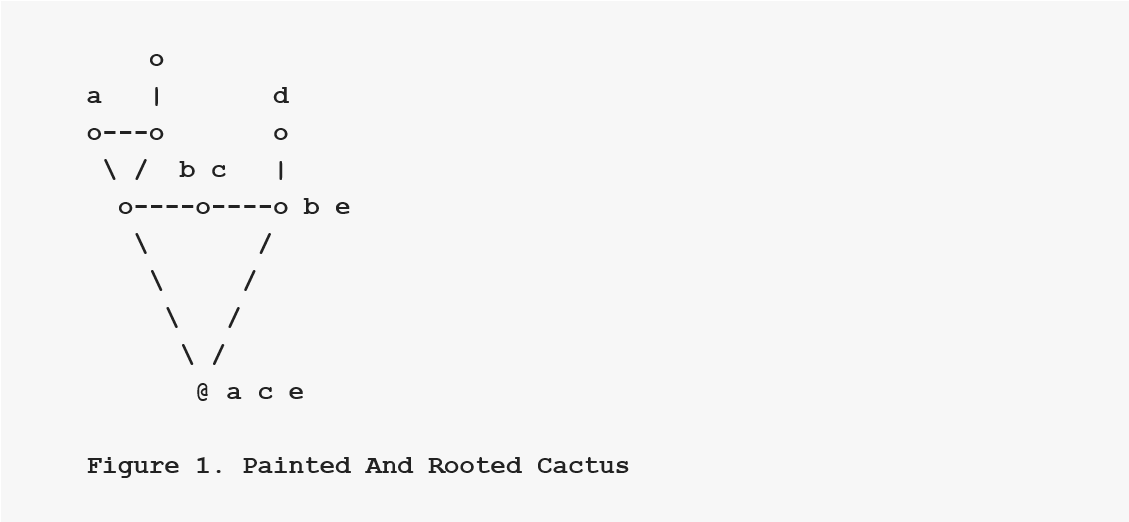
Figure 1 shows a typical example of a painted and rooted cactus.

Painted And Rooted Cactus

Figure 2 shows a way to visualize the correspondence between cactus graphs and cactus strings, demonstrated on the cactus from Figure 1.  By way of convenient terminology, the polygons of a cactus graph are called its lobes.  An edge not part of a larger polygon is called a 2‑gon or a bi‑gon.  A terminal bi‑gon is called a spike.

Cactus Graph and Cactus Expression

The correspondence between a cactus graph and a cactus string is obtained by an operation called traversing the graph in question.

  • One traverses a cactus graph by beginning at the left hand side of the root node, reading off the list of paints one encounters at that point.  Since the order of elements at any node is not significant, one may start the cactus string with that list of paints or save them for the end.  We have done the latter in this case.
  • One continues by climbing up the left hand side of the leftmost lobe, marking the ascent by means of a left parenthesis, traversing whatever cactus one happens to reach at the first node above the root, that done, proceeding from left to right along the top side of the lobe, marking each interlobal span by means of a comma, traversing each cactus in turn one meets along the way, on completing the last of them climbing down the right hand side of the lobe, marking the descent by means of a right parenthesis, and then traversing each cactus in turn, in left to right order, that is incident with the root node.

The string of letters, parentheses, and commas one obtains by this procedure is called the traversal string of the graph, in this case, a cactus string.

Resources

cc: Conceptual GraphsCyberneticsLaws of FormOntolog Forum
cc: FB | Theme One ProgramStructural ModelingSystems Science

Posted in Algorithms, Animata, Artificial Intelligence, Boolean Functions, C.S. Peirce, Cactus Graphs, Cognition, Computation, Constraint Satisfaction Problems, Data Structures, Differential Logic, Equational Inference, Formal Languages, Graph Theory, Inquiry Driven Systems, Laws of Form, Learning Theory, Logic, Logical Graphs, Mathematics, Minimal Negation Operators, Painted Cacti, Peirce, Propositional Calculus, Semiotics, Spencer Brown, Visualization | Tagged , , , , , , , , , , , , , , , , , , , , , , , , , , | 2 Comments