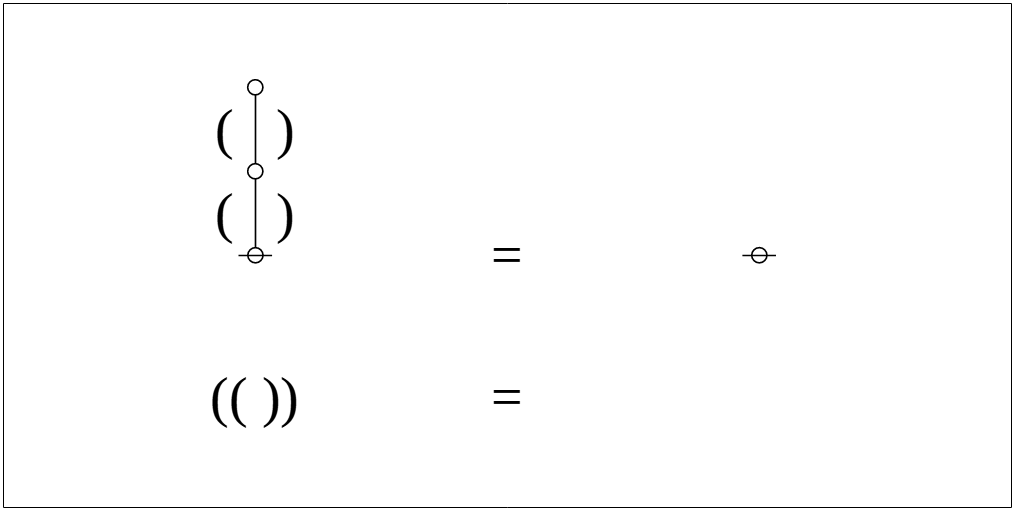
Relations & Their Relatives • Discussion 25

Re: Daniel Everett • Polyunsaturated Predicates
Re: Relations & Their Relatives • Discussion 24

Dear Daniel,

I’ve been meaning to get back to this as it keeps coming up and it’s kind of important but it took me a while to find the thread again.  Just by way of jumping in and hitting the ground running I found a record of a previous discussion from the heydays and fraydays of the old Peirce List — I’ll plunder that for what it’s worth and see if I can render the main ideas any clearer this time around.

Cf: The Difference That Makes A Difference That Peirce Makes • 9
Re: Peirce List | Rheme and ReasonJon AwbreyGary FuhrmanJohn Sowa

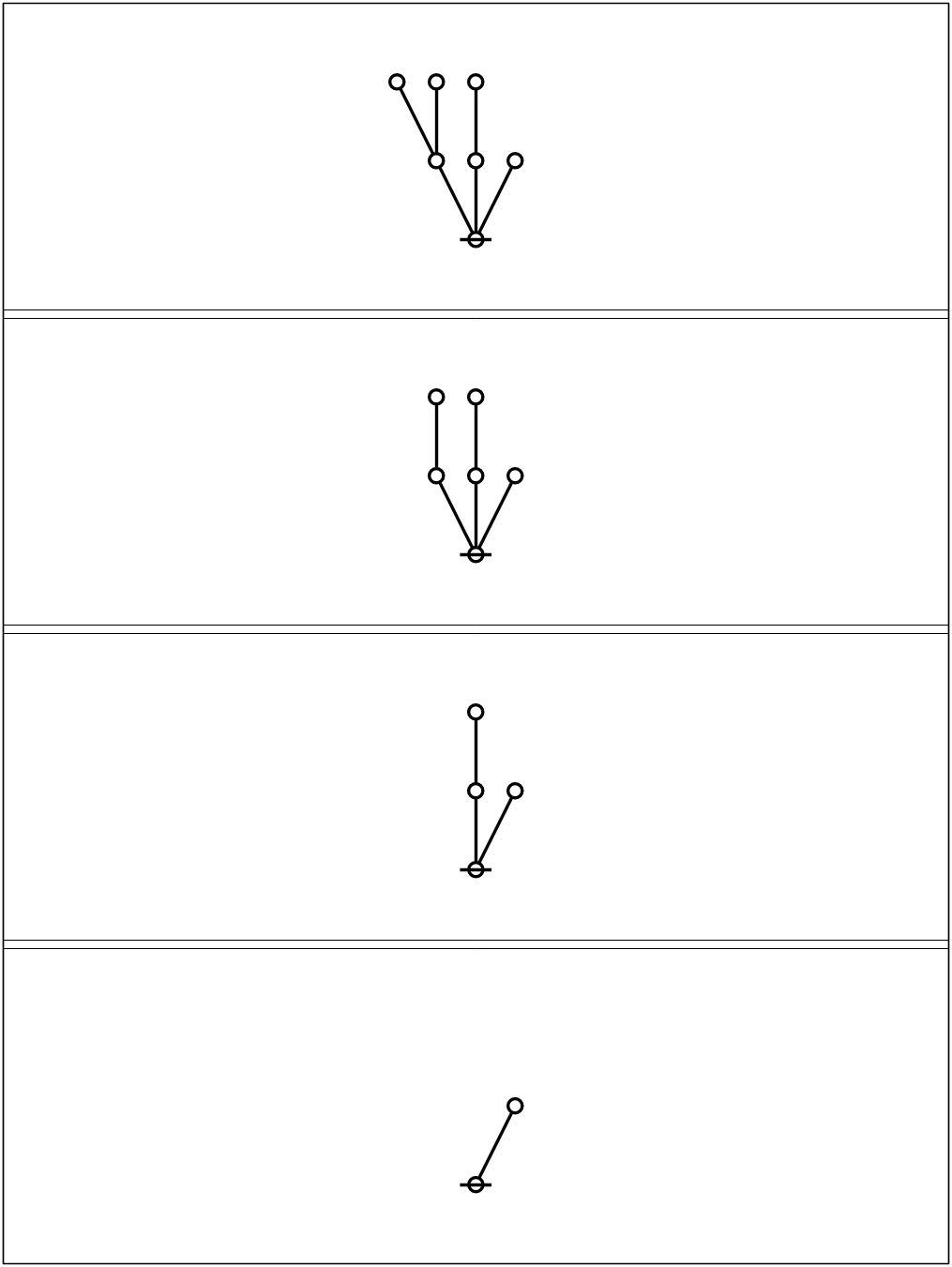
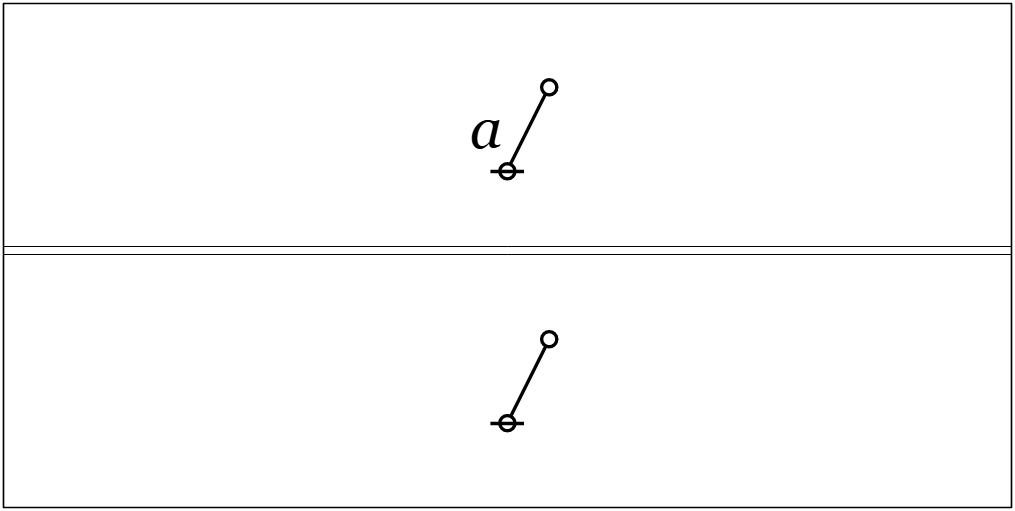
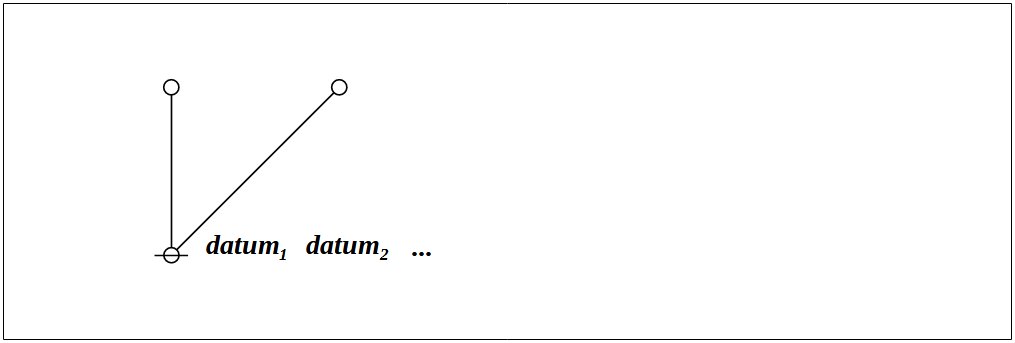
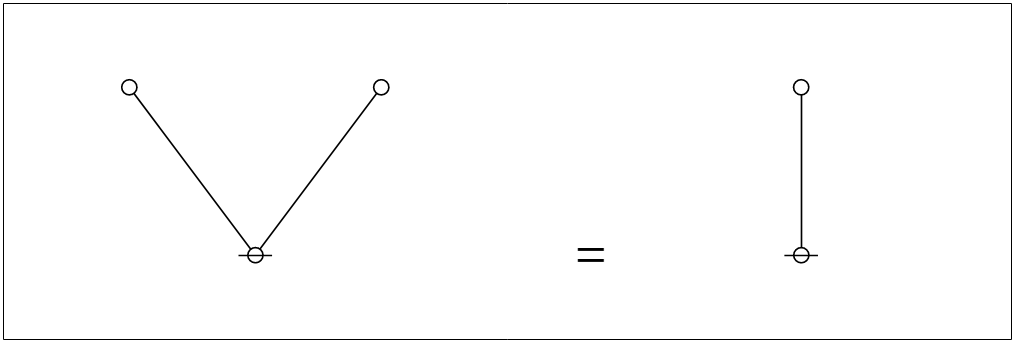
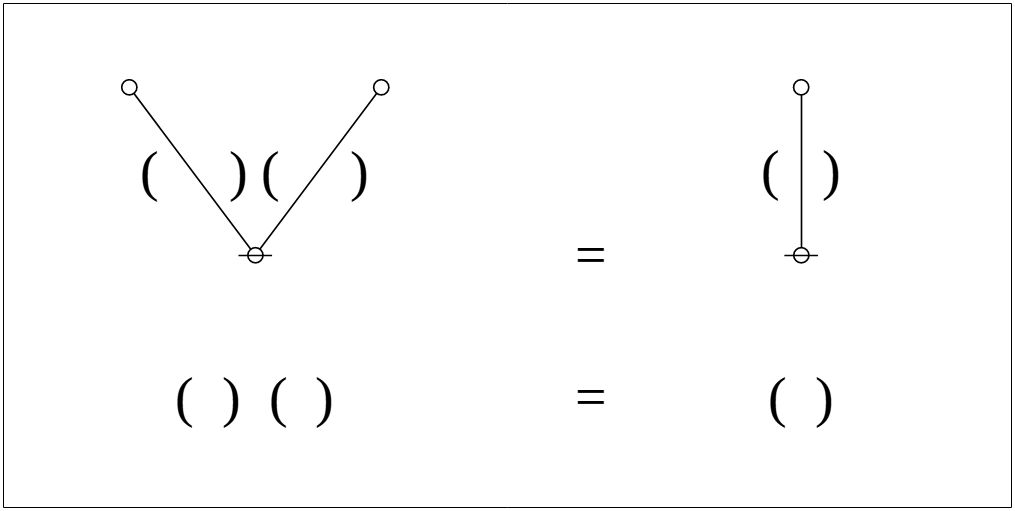
The just‑so‑story that relative terms got their meanings by blanking out pieces of clauses and phrases, plus the analogies to poly‑unsaturated chemical bonds, supply a stock of engaging ways to introduce the logic of relative terms and the mathematics of relations but they both run into cul‑de‑sacs when taken too literally, and for the same reason.  They tempt one to confuse the syntactic accidents used to suggest formal objects with the essential forms of the objects themselves.  That is the sort of confusion that leads to syntacticism and on to its kindred nominalism.

Here’s a short note I wrote the last time questions about rhemes or rhemata came up.

I wanted to check out some impressions I formed many years ago — this would have been the late 1960s and mainly from CP 3 and 4 — about Peirce’s use of the words rhema, rheme, rhemata, etc.

Rhema, Rheme

  • CP 2.95, 250-265, 272, 317, 322, 379, 409n
  • CP 3.420-422, 465, 636
  • CP 4.327, 354, 395n, 403, 404, 411, 438, 439, 441, 446, 453, 461, 465, 470, 474, 504, 538n, 560, 621

Reviewing the variations and vacillations in Peirce’s usage over the years, I’ve decided to avoid the whole complex of rhematic terms for now.  As I’ve come to realize more and more in recent years, analyzing and classifying signs as a substitute for analyzing and classifying objects is the first slip of a slide into nominalism, in effect, thinking the essence or reality of objects is contained in the signs we use to describe them.

Resources

cc: FB | Relation TheoryLaws of Form • Mathstodon • Academia.edu
cc: Conceptual GraphsCyberneticsStructural ModelingSystems Science

Posted in C.S. Peirce, Category Theory, Control, Cybernetics, Dyadic Relations, Information, Inquiry, Logic, Logic of Relatives, Mathematics, Relation Theory, Rheme, Semiosis, Semiotics, Sign Relations, Systems Theory, Triadic Relations | Tagged , , , , , , , , , , , , , , , , | 3 Comments

Relations & Their Relatives • Discussion 24

Re: Daniel Everett • Polyunsaturated Predicates

DE:
Among the several ideas Peirce and Frege came up with was the idea of a predicate before and after it is linked to its arguments.  Frege called the unlinked predicate unsaturated.  But Peirce built this into a theory of valency.  An unsaturated predicate in Frege’s system is a generic term, a rheme, in Peirce’s system.  So in Peirce’s theory all languages need generic terms (rhemes) to exist.  Additionally, thru his reduction thesis (a theorem proved separately by various logicians) Peirce set both the upper and lower bounds on valency which — even to this day — no other theory has done.

Dear Daniel,

In using words like “predicate” or “relation” some people mean an item of syntax, say, a verbal form with blanks substituted for a number of subject terms, and other people mean a mathematical object, say, a function f from a set X to a set \mathbb{B} = \{ 0, 1 \} or a subset L of a cartesian product X_1 \times \ldots \times X_k.

It would be a great service to understanding if we had a way to negotiate the gap between the above two interpretations.

To be continued …

Resources

cc: FB | Relation TheoryLaws of Form • Mathstodon • Academia.edu
cc: Conceptual GraphsCyberneticsStructural ModelingSystems Science

Posted in C.S. Peirce, Category Theory, Control, Cybernetics, Dyadic Relations, Information, Inquiry, Logic, Logic of Relatives, Mathematics, Relation Theory, Rheme, Semiosis, Semiotics, Sign Relations, Systems Theory, Triadic Relations | Tagged , , , , , , , , , , , , , , , , | 5 Comments

Pragmatic Truth • 6

Peirce on Semiosis and Inquiry

Peirce’s theory of truth depends on two other, intimately related subject matters, his theory of sign relations and his theory of inquiry.  Inquiry is special case of semiosis, a process passing from signs to signs while maintaining a specific relation to an object.  That object may be located outside the trajectory of signs or else be found at the end of it.  Inquiry includes all forms of belief revision and logical inference, including scientific method, which is what Peirce means by “the right method of transforming signs”.

A sign‑to‑sign transaction with respect to an object is a transaction involving three parties, or a relation involving three roles.  A relation of that sort is called a ternary relation or a triadic relation in logic.  Consequently, pragmatic theories of truth are largely expressed in terms of triadic truth predicates.

The statement above tells us one more thing:  Peirce, having started out in accord with Kant, is here giving notice he is parting ways with Kant’s idea that the ultimate object of a representation is an unknowable thing‑in‑itself.  Peirce would say the object is knowable, in fact, it is known in the form of its representation, however imperfectly or partially.

Reality and truth are coordinate concepts in pragmatic thinking, each being defined in relation to the other, and both together as they co‑evolve in the time evolution of inquiry.  Inquiry is not a disembodied process, nor the occupation of a singular individual, but the common life of an unbounded community.

The real, then, is that which, sooner or later, information and reasoning would finally result in, and which is therefore independent of the vagaries of me and you.  Thus, the very origin of the conception of reality shows that this conception essentially involves the notion of a COMMUNITY, without definite limits, and capable of an indefinite increase of knowledge.  (Peirce 1868, CP 5.311).

Different minds may set out with the most antagonistic views, but the progress of investigation carries them by a force outside of themselves to one and the same conclusion.  This activity of thought by which we are carried, not where we wish, but to a foreordained goal, is like the operation of destiny.  No modification of the point of view taken, no selection of other facts for study, no natural bent of mind even, can enable a man to escape the predestinate opinion.  This great law is embodied in the conception of truth and reality.  The opinion which is fated to be ultimately agreed to by all who investigate, is what we mean by the truth, and the object represented in this opinion is the real.  That is the way I would explain reality.  (Peirce 1878, CP 5.407).

Resources

cc: FB | Inquiry Driven SystemsLaws of Form • Mathstodon • Academia.edu
cc: Conceptual GraphsCyberneticsStructural ModelingSystems Science

Posted in Aristotle, C.S. Peirce, Coherence, Concordance, Congruence, Consensus, Convergence, Correspondence, Dewey, Fixation of Belief, Information, Inquiry, John Dewey, Kant, Logic, Logic of Science, Method, Peirce, Philosophy, Pragmatic Maxim, Pragmatism, Semiotics, Sign Relations, Triadic Relations, Truth, Truth Theory, William James | Tagged , , , , , , , , , , , , , , , , , , , , , , , , , , | 4 Comments

Pragmatic Truth • 5

Peirce on Reality, Signs, Truth

Very little in Peirce’s thought can be understood in its proper light without understanding he thinks all thoughts are signs, and thus, according to his theory of thought, no thought is understandable outside the context of a sign relation.  Sign relations taken collectively are the subject matter of a theory of signs.  So Peirce’s semeiotic, his theory of sign relations, is key to understanding his entire philosophy of pragmatic thinking.

In his contribution to the article “Truth and Falsity and Error” for Baldwin’s Dictionary of Philosophy and Psychology (1901), Peirce defines truth in the following way.

Truth is that concordance of an abstract statement with the ideal limit towards which endless investigation would tend to bring scientific belief, which concordance the abstract statement may possess by virtue of the confession of its inaccuracy and one‑sidedness, and this confession is an essential ingredient of truth.  (Peirce 1901, CP 5.565).

This statement emphasizes Peirce’s view that ideas of approximation, incompleteness, and partiality, what he describes elsewhere as fallibilism and “reference to the future”, are essential to a proper conception of truth.  Though Peirce occasionally uses words like concordance and correspondence to describe one aspect of the pragmatic sign relation, he is also quite explicit in saying that definitions of truth based on mere correspondence are no more than nominal definitions, which he follows long tradition in relegating to a lower status than real definitions.

That truth is the correspondence of a representation with its object is, as Kant says, merely the nominal definition of it.  Truth belongs exclusively to propositions.  A proposition has a subject (or set of subjects) and a predicate.  The subject is a sign;  the predicate is a sign;  and the proposition is a sign that the predicate is a sign of that of which the subject is a sign.  If it be so, it is true.  But what does this correspondence or reference of the sign, to its object, consist in?  (Peirce 1906, CP 5.553).

Peirce makes a statement here which is critical to understanding the relationship between his pragmatic definition of truth and any theory of truth which leaves it solely and simply a matter of representations corresponding with their objects.  Peirce, like Kant before him, recognizes Aristotle’s distinction between a nominal definition, a definition in name only, and a real definition, one which states the function of the concept, the vera causa or reason for conceiving it, and so indicates the essence, the underlying substance of its object.  This tells us the sense in which Peirce entertained a correspondence theory of truth, namely, a purely nominal sense.  To get beneath the superficiality of the nominal definition it is necessary to analyze the notion of correspondence in greater depth.

In preparing for this task, Peirce makes use of an allegorical story, omitted here, the moral of which tells us there is no use seeking a conception of truth which we cannot conceive ourselves being able to capture in a humanly conceivable concept.  So we might as well proceed on the assumption that we have a real hope of comprehending the answer, of being able to “handle the truth” when the time comes.  Bearing that in mind, the problem of defining truth reduces to the following form.

Now thought is of the nature of a sign.  In that case, then, if we can find out the right method of thinking and can follow it out — the right method of transforming signs — then truth can be nothing more nor less than the last result to which the following out of this method would ultimately carry us.  In that case, that to which the representation should conform, is itself something in the nature of a representation, or sign — something noumenal, intelligible, conceivable, and utterly unlike a thing‑in‑itself.  (Peirce 1906, CP 5.553).

Resources

cc: FB | Inquiry Driven SystemsLaws of Form • Mathstodon • Academia.edu
cc: Conceptual GraphsCyberneticsStructural ModelingSystems Science

Posted in Aristotle, C.S. Peirce, Coherence, Concordance, Congruence, Consensus, Convergence, Correspondence, Dewey, Fixation of Belief, Information, Inquiry, John Dewey, Kant, Logic, Logic of Science, Method, Peirce, Philosophy, Pragmatic Maxim, Pragmatism, Semiotics, Sign Relations, Triadic Relations, Truth, Truth Theory, William James | Tagged , , , , , , , , , , , , , , , , , , , , , , , , , , | 4 Comments

Pragmatic Truth • Discussion 28

Re: Pragmatic Truth • Discussion • (26)(27)
Re: FB | CybersemioticsRichard Saunders

RS:
My intention was not to expand the correspondence theory of truth but to narrow it with specific constraints.  I think of it as an evolution of the theory making it a progressively accurate representation of reality in that form.  That said, I think earlier, simpler forms of the correspondence theory are still good enough for government work and for the girls I go with. 😃

Dear Richard,

As a veteran of the Wikipedia Truth Theory Wars of 2005–2007 I can tell you the restriction of “correspondence theory of truth” to dyadic truth predicates is deeply entrenched in the popular imagination and we have no choice but leave the field to established usage.

Even if we take Peirce’s hint to recognize the “triple correspondences” of triadic sign relations as a category unto itself, they are almost invariably misinterpreted as logical conjunctions of three dyadic relations.  That of course misses the point of what Peirce is trying to point out.

Taking the long history of “failures to communicate” into consideration, a less misleading generic term might be “relational theories of truth”.  There is a residual ambiguity owing to the different ways people interpret the word “relation”, either (1) a mathematical object or (2) a syntactic entity.  But that’s about the best we can do in so many words.  When it comes to names for the species, then, we may enumerate monadic, dyadic, and triadic relational theories of truth.  Which brings us back to the top of the thread.

Resources

cc: FB | Inquiry Driven SystemsLaws of Form • Mathstodon • Academia.edu
cc: Conceptual GraphsCyberneticsStructural ModelingSystems Science

Posted in Aristotle, C.S. Peirce, Coherence, Concordance, Congruence, Consensus, Convergence, Correspondence, Dewey, Fixation of Belief, Information, Inquiry, John Dewey, Kant, Logic, Logic of Science, Method, Peirce, Philosophy, Pragmatic Maxim, Pragmatism, Semiotics, Sign Relations, Triadic Relations, Truth, Truth Theory, William James | Tagged , , , , , , , , , , , , , , , , , , , , , , , , , , | 4 Comments

Pragmatic Truth • Discussion 27

Re: Pragmatic Truth • Discussion 26
Re: FB | CybersemioticsRichard Saunders

RS:
Agreed, but given those qualifications (the perspective on facts qualified by the pragmatic maxim and the perspective on correspondence qualified by irreducible triadic relations) the pragmatic theory of truth is still a specialized correspondence theory.

Dear Richard,

It is always possible to expand the coverage of any term until it becomes vacuous, but that is not the sense in which “correspondence theory of truth” is normally used.  The usual suspects are always dyadic relations, the “mirror of nature”, Russell’s “isomorphism theory”, and iconographies of that ilk.

Resources

cc: FB | Inquiry Driven SystemsLaws of Form • Mathstodon • Academia.edu
cc: Conceptual GraphsCyberneticsStructural ModelingSystems Science

Posted in Aristotle, C.S. Peirce, Coherence, Concordance, Congruence, Consensus, Convergence, Correspondence, Dewey, Fixation of Belief, Information, Inquiry, John Dewey, Kant, Logic, Logic of Science, Method, Peirce, Philosophy, Pragmatic Maxim, Pragmatism, Semiotics, Sign Relations, Triadic Relations, Truth, Truth Theory, William James | Tagged , , , , , , , , , , , , , , , , , , , , , , , , , , | 5 Comments

Pragmatic Truth • Discussion 26

Re: Pragmatic Truth • (1)(2)
Re: OEIS Wiki | Correspondence Theory Of Truth
Re: FB | Inquiry Driven SystemsRichard Saunders

RS:
The pragmatic theory of truth seems to be a correspondence theory in which all the elements (objects, properties, relations, signs, correspondence, reality, etc) are qualified or defined in accordance with the pragmatic maxim.  Is that a fair summary?

Dear Richard,

In Peirce’s logic as normative semiotics everything swims in a medium of triadic sign relations.  One can say a triadic sign relation involves a “triple correspondence” among objects, signs, and their interpretant signs, if one likes, and Peirce occasionally expresses it that way, but the all‑important difference lies in the fact that triadic relations cannot be reduced to any congeries or compound of dyadic relations.

Resources

cc: FB | Inquiry Driven SystemsLaws of Form • Mathstodon • Academia.edu
cc: Conceptual GraphsCyberneticsStructural ModelingSystems Science

Posted in Aristotle, C.S. Peirce, Coherence, Concordance, Congruence, Consensus, Convergence, Correspondence, Dewey, Fixation of Belief, Information, Inquiry, John Dewey, Kant, Logic, Logic of Science, Method, Peirce, Philosophy, Pragmatic Maxim, Pragmatism, Semiotics, Sign Relations, Triadic Relations, Truth, Truth Theory, William James | Tagged , , , , , , , , , , , , , , , , , , , , , , , , , , | 6 Comments

Pragmatic Truth • Discussion 25

Re: Pragmatic Truth • (1)(2)
Re: OEIS Wiki | Correspondence Theory Of Truth
Re: FB | Inquiry Driven SystemsRichard Saunders

RS:
Given that “facts are basically combinations of objects together with their properties or relations;  so the fact that Fido barks is the combination of an object (i.e., Fido) with one of Fido’s properties (that he barks)”, if the object and the property are real, then the correspondence theory of truth seems adequate for most purposes.  But the question remains, what is “real”?  I like Phillip Dick’s suggestion that reality is what remains when you stop believing in it.

Dear Richard,

Let me clear up a few things about that section of the Correspondence Theory article you quote above.  The style of it tells me other Wikipedians probably had a bigger hand in it than I did — for my part I most likely took it as a thumbnail sketch of the conventional view, a sop to the two‑headed dogma of analytic philosoppy, if you will.

Pragmatic treatments of truth begin from a decidedly different standpoint and make a radical departure from correspondence accounts.  But there is nothing new about the pragmatic view, as we can see from the way Kant and even the Ancients had already criticized correspondence theories.

Resources

cc: FB | Inquiry Driven SystemsLaws of Form • Mathstodon • Academia.edu
cc: Conceptual GraphsCyberneticsStructural ModelingSystems Science

Posted in Aristotle, C.S. Peirce, Coherence, Concordance, Congruence, Consensus, Convergence, Correspondence, Dewey, Fixation of Belief, Information, Inquiry, John Dewey, Kant, Logic, Logic of Science, Method, Peirce, Philosophy, Pragmatic Maxim, Pragmatism, Semiotics, Sign Relations, Triadic Relations, Truth, Truth Theory, William James | Tagged , , , , , , , , , , , , , , , , , , , , , , , , , , | 4 Comments

Pragmatic Truth • 4

Truth Theories

Theories of truth may be described according to several dimensions of description affecting the character of the predicate “true”.  The truth predicates used in different theories may be classified according to the number of things which have to be taken into account in order to evaluate the truth of a sign, counting the sign itself as the first thing.  The number of dimensions is sometimes called the arity or adicity of the truth predicate.

  • A truth predicate is monadic if it applies to its main subject, typically a concrete representation or its abstract content, independently of reference to anything else.  In that case one may think of a truth bearer as being true in and of itself.
  • A truth predicate is dyadic if it applies to its main subject only in reference to something else, a second subject.  Most commonly, the ancillary subject is either an object, an interpreter, or a language to which the representation bears a specified relation.
  • A truth predicate is triadic if it applies to its main subject only in reference to a second and a third subject.  For example, in a pragmatic theory of truth one has to specify both the object of the sign and either its interpreter or another sign called its interpretant.  In that case, one says the sign is true “of” its object “to” its interpreting agent or sign.

There are practical considerations we need to keep in mind when contemplating such radically simple schemes of classification.  Real‑world practice seldom presents us with pure cases and ideal types.  There are many settings where it is useful to speak of a truth theory as “almost” k-adic or to say it “would be” k-adic if certain details are abstracted away and neglected in a particular context of discussion.  That said, given the generic division of truth predicates according to their dimensionality, further species may be differentiated within each genus according to a number of more refined features.

The truth predicate in a correspondence theory of truth tells of a relation between representations and objective states of affairs and is therefore expressed by a dyadic predicate.  In general terms, one says a representation is true of an objective situation, more briefly, a sign is true of an object.  The nature of the correspondence may vary from theory to theory in this family.  The correspondence can be fairly arbitrary or it can take on the character of an analogy, an icon, or a morphism, where a representation is rendered true of its object by the existence of corresponding elements and a similar structure.

Resources

cc: FB | Inquiry Driven SystemsLaws of Form • Mathstodon • Academia.edu
cc: Conceptual GraphsCyberneticsStructural ModelingSystems Science

Posted in Aristotle, C.S. Peirce, Coherence, Concordance, Congruence, Consensus, Convergence, Correspondence, Dewey, Fixation of Belief, Information, Inquiry, John Dewey, Kant, Logic, Logic of Science, Method, Peirce, Philosophy, Pragmatic Maxim, Pragmatism, Semiotics, Sign Relations, Triadic Relations, Truth, Truth Theory, William James | Tagged , , , , , , , , , , , , , , , , , , , , , , , , , , | 4 Comments

Pragmatic Truth • 3

Truth Predicates

An inquiry into the character of truth generally begins with the idea of an informative, meaningful, or significant element, the goodness of whose information, meaning, or significance may be put in question and needs to be evaluated.  Depending on context, the element may be called an artefact, expression, image, impression, lyric, mark, performance, picture, sentence, sign, string, symbol, text, thought, token, utterance, word, work, and so on.  However that may be, one has the task of judging whether the bearers of information, meaning, or significance are indeed truth‑bearers or not.  That judgment is typically expressed in the form of a specific truth predicate, whose positive application to a sign, or so on, asserts the truth of the sign.

Considered within the broadest horizon, there is little reason to imagine the process of judging a work, which leads to a predication of false or true, is necessarily amenable to formalization, and that task may always remain what is commonly called a judgment call.  But there are many well-circumscribed domains where it is useful to consider disciplined forms of evaluation and the observation of those limits allows for the institution of what is called a method of judging truth and falsity.

One of the first questions to be asked in this setting concerns the relationship between the significant performance and its reflective critique.  If one expresses oneself in a particular fashion, and someone says “that’s true”, is there anything useful at all to be said in general terms about the relationship between those two acts?  For instance, does the critique add value to the expression criticized, does it say something significant in its own right, or is it but an insubstantial echo of the original sign?

Resources

cc: FB | Inquiry Driven SystemsLaws of Form • Mathstodon • Academia.edu
cc: Conceptual GraphsCyberneticsStructural ModelingSystems Science

Posted in Aristotle, C.S. Peirce, Coherence, Concordance, Congruence, Consensus, Convergence, Correspondence, Dewey, Fixation of Belief, Information, Inquiry, John Dewey, Kant, Logic, Logic of Science, Method, Peirce, Philosophy, Pragmatic Maxim, Pragmatism, Semiotics, Sign Relations, Triadic Relations, Truth, Truth Theory, William James | Tagged , , , , , , , , , , , , , , , , , , , , , , , , , , | 4 Comments