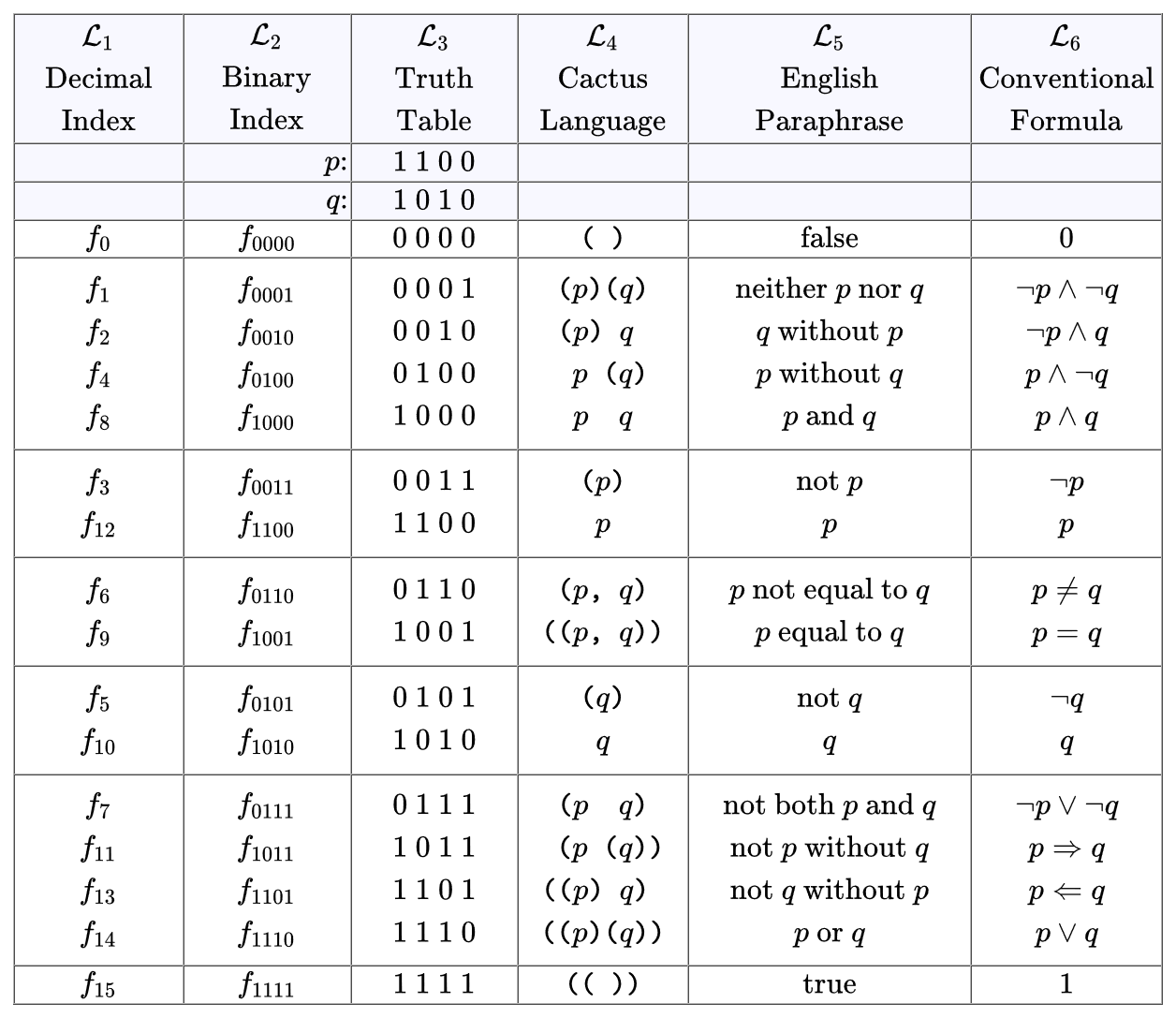
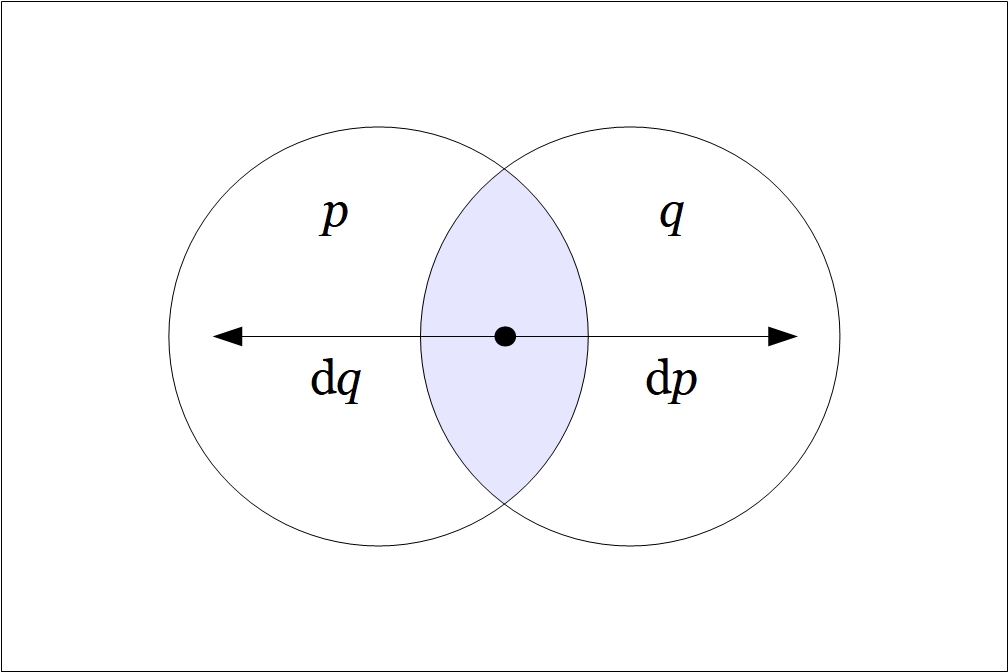
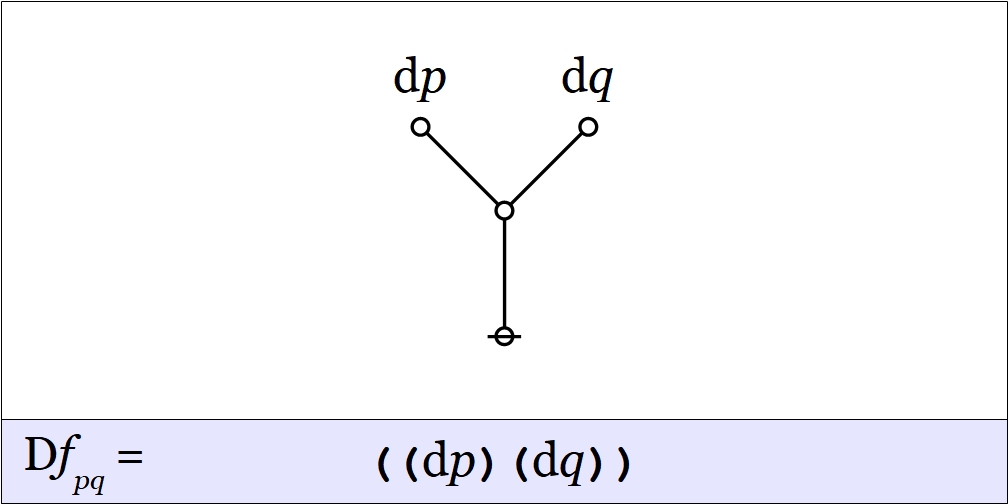
Let’s run through the initial example again, keeping an eye on the meanings of the formulas which develop along the way. We begin with a proposition or a boolean function  whose venn diagram and cactus graph are shown below.
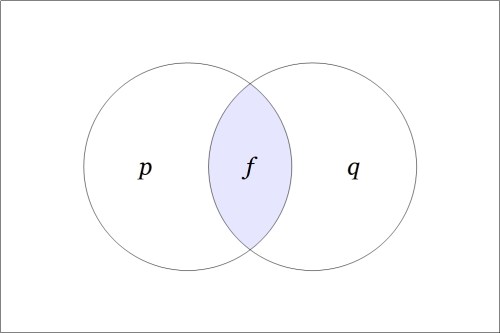
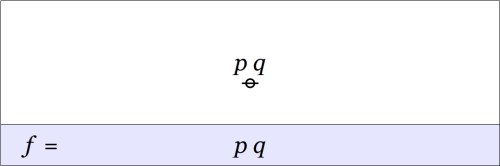
A function like  has an abstract type and a concrete type. The abstract type is what we invoke when we write things like
  or
or  The concrete type takes into account the qualitative dimensions or “units” of the case, which can be explained as follows.
Let  be the set of values
Let  be the set of values
Then interpret the usual propositions about  as functions of the concrete type
We are going to consider various operators on these functions. An operator  is a function which takes one function into another function
The first couple of operators we need are logical analogues of two which play a founding role in the classical finite difference calculus, namely, the following.
The difference operator  written here as
The enlargement operator, written here as 
These days,  is more often called the shift operator.
In order to describe the universe in which these operators operate, it is necessary to enlarge the original universe of discourse. Starting from the initial space  its (first order) differential extension
  is constructed according to the following specifications.

where:
![\begin{array}{rcc} X & = & P \times Q \\[4pt] \mathrm{d}X & = & \mathrm{d}P \times \mathrm{d}Q \\[4pt] \mathrm{d}P & = & \{ \texttt{(} \mathrm{d}p \texttt{)}, ~ \mathrm{d}p \} \\[4pt] \mathrm{d}Q & = & \{ \texttt{(} \mathrm{d}q \texttt{)}, ~ \mathrm{d}q \} \end{array}](https://s0.wp.com/latex.php?latex=%5Cbegin%7Barray%7D%7Brcc%7D++X+%26+%3D+%26+P+%5Ctimes+Q++%5C%5C%5B4pt%5D++%5Cmathrm%7Bd%7DX+%26+%3D+%26+%5Cmathrm%7Bd%7DP+%5Ctimes+%5Cmathrm%7Bd%7DQ++%5C%5C%5B4pt%5D++%5Cmathrm%7Bd%7DP+%26+%3D+%26+%5C%7B+%5Ctexttt%7B%28%7D+%5Cmathrm%7Bd%7Dp+%5Ctexttt%7B%29%7D%2C+%7E+%5Cmathrm%7Bd%7Dp+%5C%7D++%5C%5C%5B4pt%5D++%5Cmathrm%7Bd%7DQ+%26+%3D+%26+%5C%7B+%5Ctexttt%7B%28%7D+%5Cmathrm%7Bd%7Dq+%5Ctexttt%7B%29%7D%2C+%7E+%5Cmathrm%7Bd%7Dq+%5C%7D++%5Cend%7Barray%7D&bg=ffffff&fg=000000&s=0&c=20201002)
The interpretations of these new symbols can be diverse, but the easiest option for now is just to say  means “change
  ” and
” and  means “change
  ”.
”.
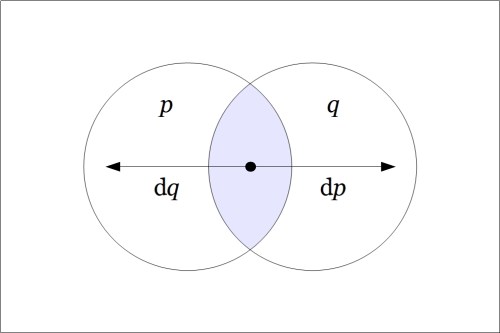
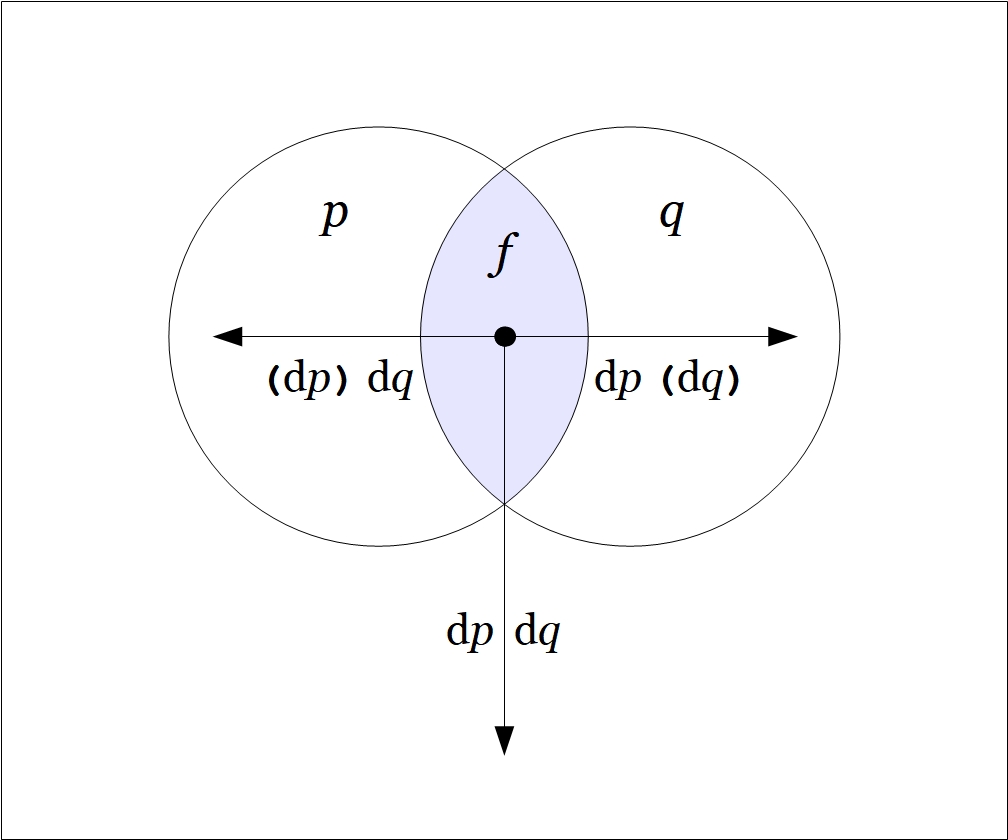
Drawing a venn diagram for the differential extension  requires four logical dimensions,
  but it is possible to project a suggestion of what the differential features and are about on the 2‑dimensional base space
  by drawing arrows crossing the boundaries of the basic circles in the venn diagram for
  reading an arrow as if it crosses the boundary between and
  in either direction and reading an arrow as if it crosses the boundary between and
  in either direction, as indicated in the following figure.
Propositions are formed on differential variables, or any combination of ordinary logical variables and differential logical variables, in the same ways propositions are formed on ordinary logical variables alone. For example, the proposition  says the same thing as
  in other words, there is no change in without a change in
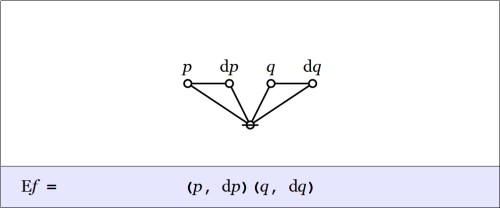
Given the proposition  over the space the (first order) enlargement of is the proposition
  over the differential extension defined by the following formula.

In the example  the enlargement is computed as follows.

Given the proposition over the (first order) difference of is the proposition  over defined by the formula
  or, written out in full:

In the example the difference is computed as follows.

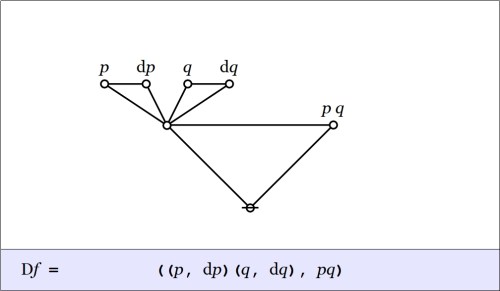
This brings us by the road meticulous to the point we reached at the end of the previous post. There we evaluated the above proposition, the first order difference of conjunction  at a single location in the universe of discourse, namely, at the point picked out by the singular proposition
  in terms of coordinates, at the place where
  and
and  That evaluation is written in the form
  or
or  and we arrived at the locally applicable law which may be stated and illustrated as follows.

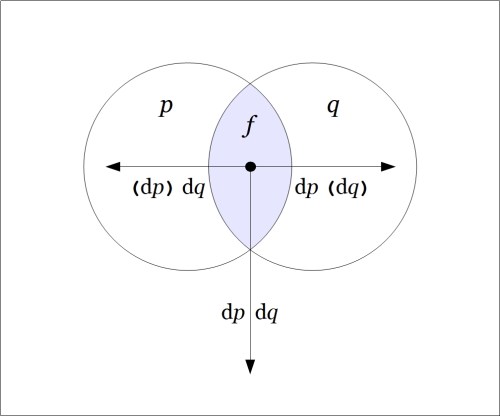
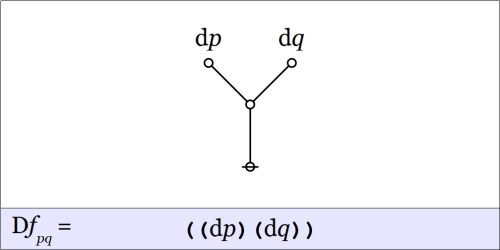
The venn diagram shows the analysis of the inclusive disjunction  into the following exclusive disjunction.

The differential proposition may be read as saying “change or change or both”. And this can be recognized as just what you need to do if you happen to find yourself in the center cell and require a complete and detailed description of ways to escape it.
Resources
cc: Academia.edu • Cybernetics • Structural Modeling • Systems Science
cc: Conceptual Graphs • Laws of Form • Mathstodon • Research Gate









 and examined how the differential operators
  Each operator takes the boolean function of two variables
  and gives back a boolean function of four variables,
  and
and  respectively.
 and abstract type
  Our inquiry into the differential aspects of logical conjunction will pay dividends as we study the actions of

![\begin{array}{cccl} \text{Let} & X & = & X_1 \times \ldots \times X_k. \\[6pt] \text{Let} & \mathrm{d}X & = & \mathrm{d}X_1 \times \ldots \times \mathrm{d}X_k. \\[6pt] \text{Then} & \mathrm{E}X & = & X \times \mathrm{d}X \\[6pt] & & = & X_1 \times \ldots \times X_k ~\times~ \mathrm{d}X_1 \times \ldots \times \mathrm{d}X_k \end{array}](https://s0.wp.com/latex.php?latex=%5Cbegin%7Barray%7D%7Bcccl%7D++%5Ctext%7BLet%7D+%26+X+%26+%3D+%26+X_1+%5Ctimes+%5Cldots+%5Ctimes+X_k.++%5C%5C%5B6pt%5D++%5Ctext%7BLet%7D+%26+%5Cmathrm%7Bd%7DX+%26+%3D+%26+%5Cmathrm%7Bd%7DX_1+%5Ctimes+%5Cldots+%5Ctimes+%5Cmathrm%7Bd%7DX_k.++%5C%5C%5B6pt%5D++%5Ctext%7BThen%7D+%26+%5Cmathrm%7BE%7DX+%26+%3D+%26+X+%5Ctimes+%5Cmathrm%7Bd%7DX++%5C%5C%5B6pt%5D++%26+%26+%3D+%26+X_1+%5Ctimes+%5Cldots+%5Ctimes+X_k+%7E%5Ctimes%7E+%5Cmathrm%7Bd%7DX_1+%5Ctimes+%5Cldots+%5Ctimes+%5Cmathrm%7Bd%7DX_k++%5Cend%7Barray%7D&bg=ffffff&fg=000000&s=0&c=20201002)
 the (first order) enlargement of
  defined by the following equation.
 are boolean variables of the same type as the ordinary variables
  Although it is conventional to distinguish the (first order) differential variables with the operational prefix
  that way of notating differential variables is entirely optional. It is their existence in particular relations to the initial variables, not their names, which defines them as differential variables.

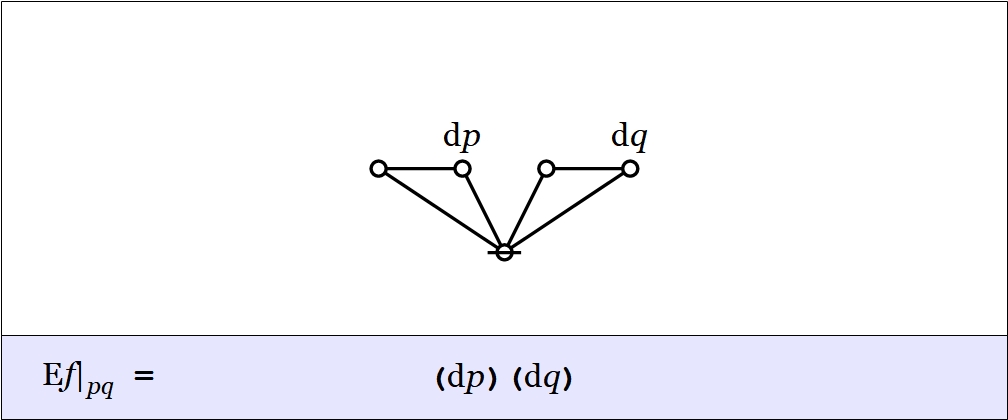
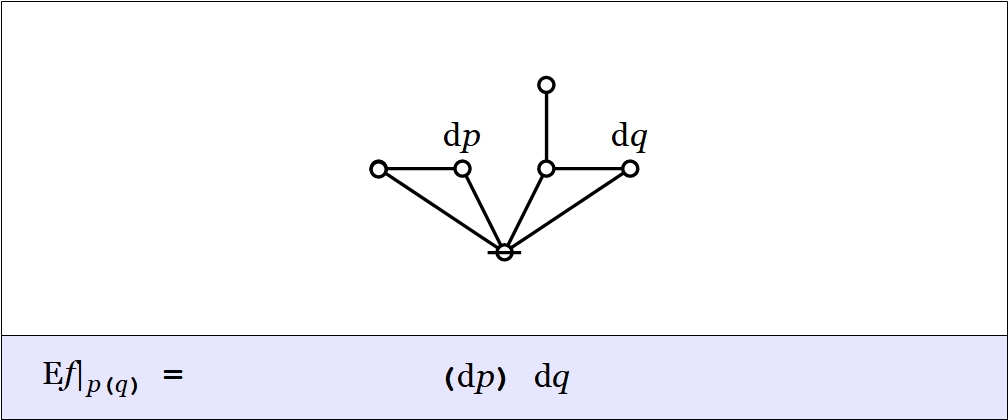
 To that end, the value of
  at each
  may be computed in graphical fashion as shown below.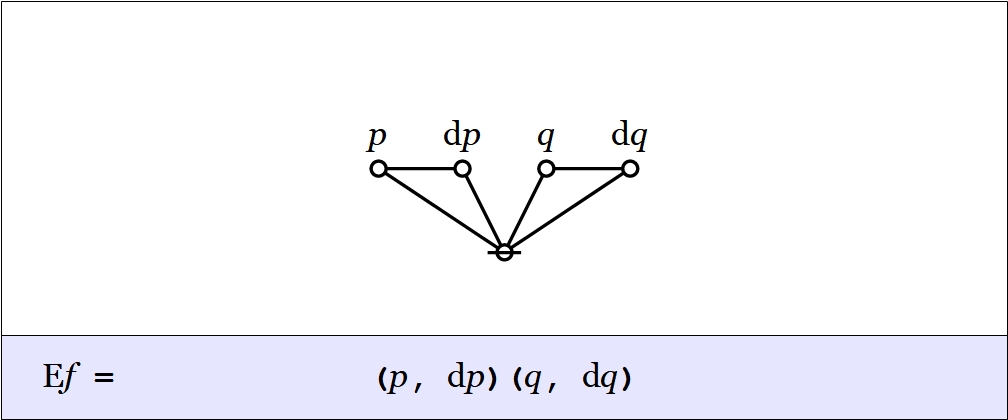
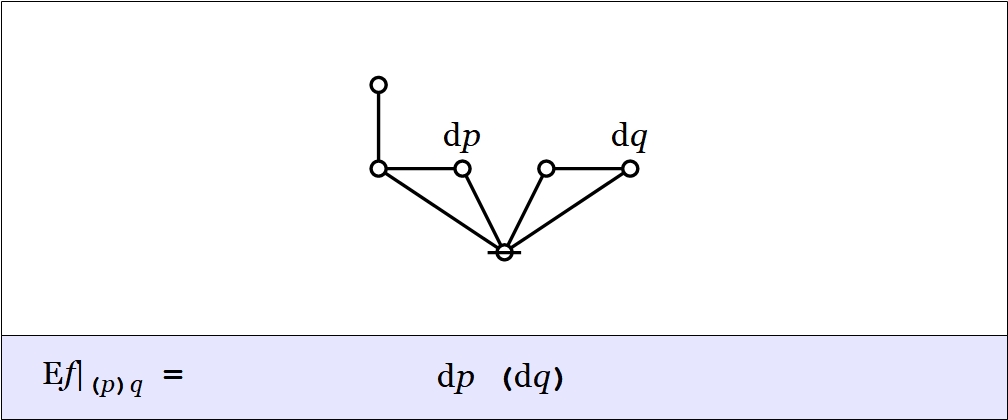
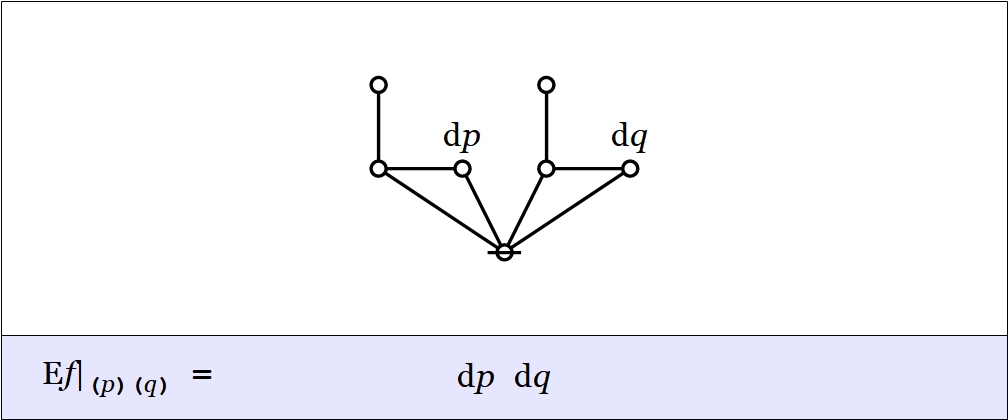


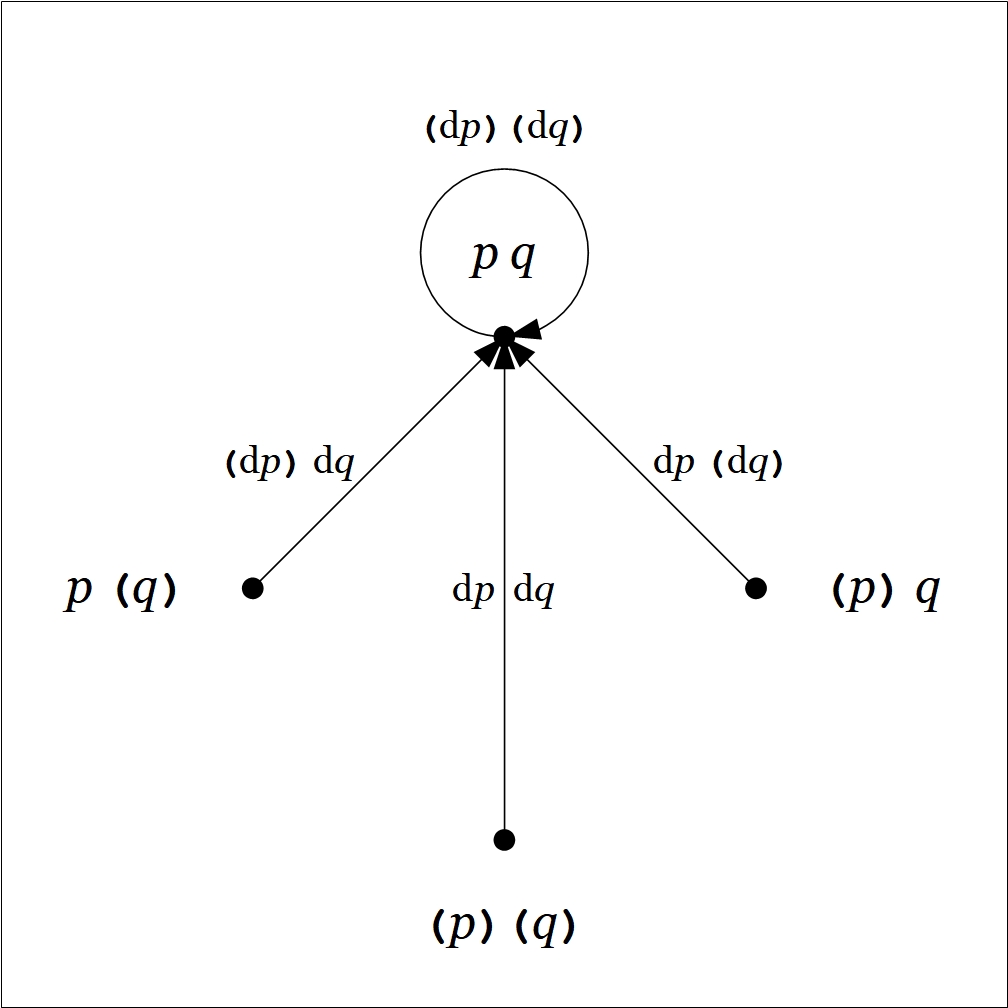
 is drawn as a loop at the point
![\begin{array}{rcccccc} f & = & p & \cdot & q \\[4pt] \mathrm{E}f & = & p & \cdot & q & \cdot & \texttt{(} \mathrm{d}p \texttt{)(} \mathrm{d}q \texttt{)} \\[4pt] & + & p & \cdot & \texttt{(} q \texttt{)} & \cdot & \texttt{(} \mathrm{d}p \texttt{)} \texttt{~} \mathrm{d}q \texttt{~} \\[4pt] & + & \texttt{(} p \texttt{)} & \cdot & q & \cdot & \texttt{~} \mathrm{d}p \texttt{~} \texttt{(} \mathrm{d}q \texttt{)} \\[4pt] & + & \texttt{(} p \texttt{)} & \cdot & \texttt{(} q \texttt{)} & \cdot & \mathrm{d}p \texttt{~~} \mathrm{d}q \end{array}](https://s0.wp.com/latex.php?latex=%5Cbegin%7Barray%7D%7Brcccccc%7D++f+%26+%3D+%26+p++%26+%5Ccdot+%26+q++%5C%5C%5B4pt%5D++%5Cmathrm%7BE%7Df+%26+%3D+%26+p++%26+%5Ccdot+%26++q++%26+%5Ccdot+%26++%5Ctexttt%7B%28%7D+%5Cmathrm%7Bd%7Dp+%5Ctexttt%7B%29%28%7D+%5Cmathrm%7Bd%7Dq+%5Ctexttt%7B%29%7D++%5C%5C%5B4pt%5D++%26+%2B+%26++p++%26+%5Ccdot+%26+%5Ctexttt%7B%28%7D+q+%5Ctexttt%7B%29%7D++%26+%5Ccdot+%26++%5Ctexttt%7B%28%7D+%5Cmathrm%7Bd%7Dp+%5Ctexttt%7B%29%7D+%5Ctexttt%7B%7E%7D+%5Cmathrm%7Bd%7Dq+%5Ctexttt%7B%7E%7D++%5C%5C%5B4pt%5D++%26+%2B+%26++%5Ctexttt%7B%28%7D+p+%5Ctexttt%7B%29%7D+%26+%5Ccdot+%26++q++%26+%5Ccdot+%26++%5Ctexttt%7B%7E%7D+%5Cmathrm%7Bd%7Dp+%5Ctexttt%7B%7E%7D+%5Ctexttt%7B%28%7D+%5Cmathrm%7Bd%7Dq+%5Ctexttt%7B%29%7D++%5C%5C%5B4pt%5D++%26+%2B+%26++%5Ctexttt%7B%28%7D+p+%5Ctexttt%7B%29%7D+%26+%5Ccdot+%26+%5Ctexttt%7B%28%7D+q+%5Ctexttt%7B%29%7D++%26+%5Ccdot+%26+%5Cmathrm%7Bd%7Dp+%5Ctexttt%7B%7E%7E%7D+%5Cmathrm%7Bd%7Dq++%5Cend%7Barray%7D&bg=ffffff&fg=000000&s=0&c=20201002)

 of the proposition
  where
where  can be taken to indicate the so‑called “cells” or smallest distinguished regions of the universe, otherwise indicated by their coordinates as the “points”
  respectively. In that regard the four propositions are called singular propositions because they serve to single out the minimal regions of the universe of discourse.
 so long as we know the frame of reference in force.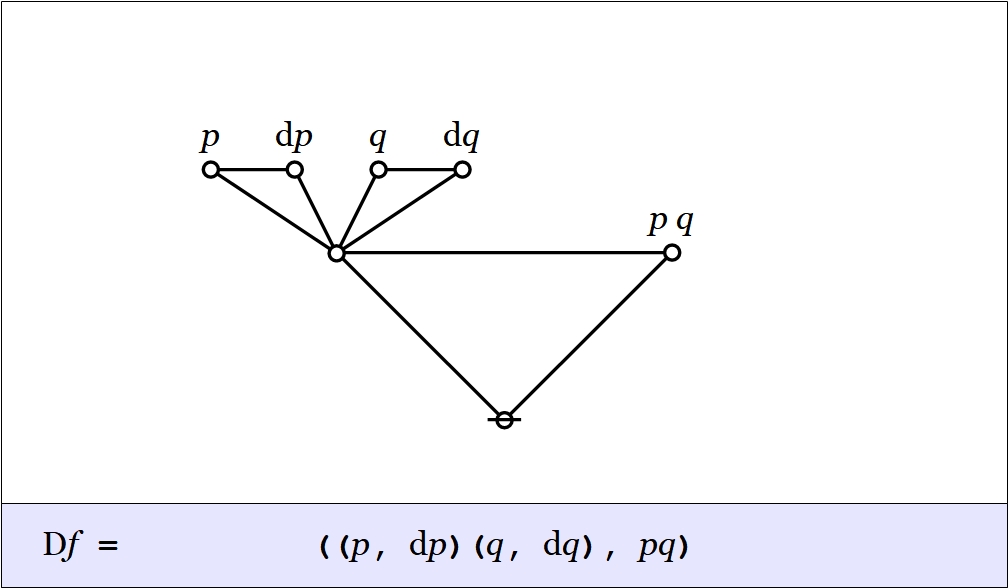
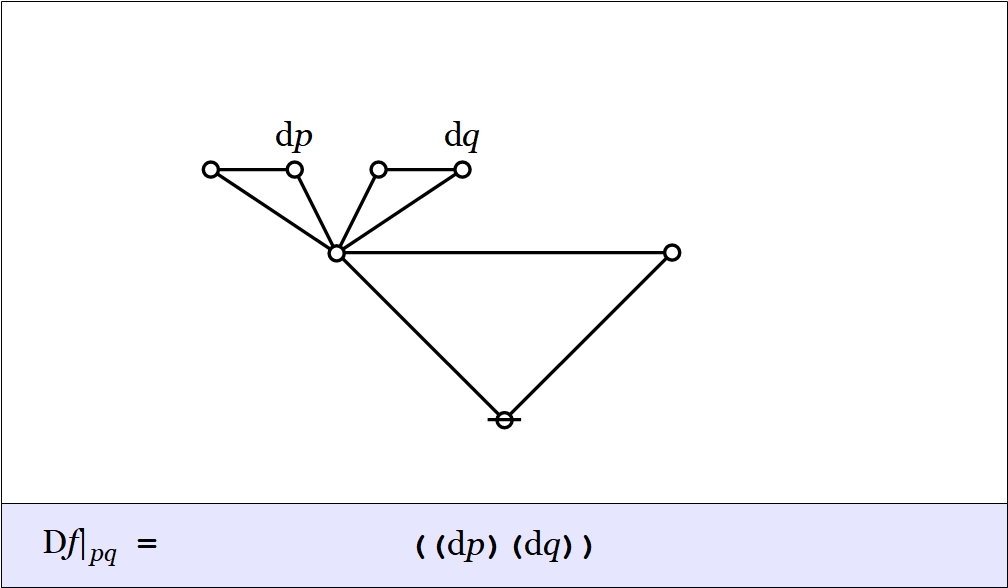
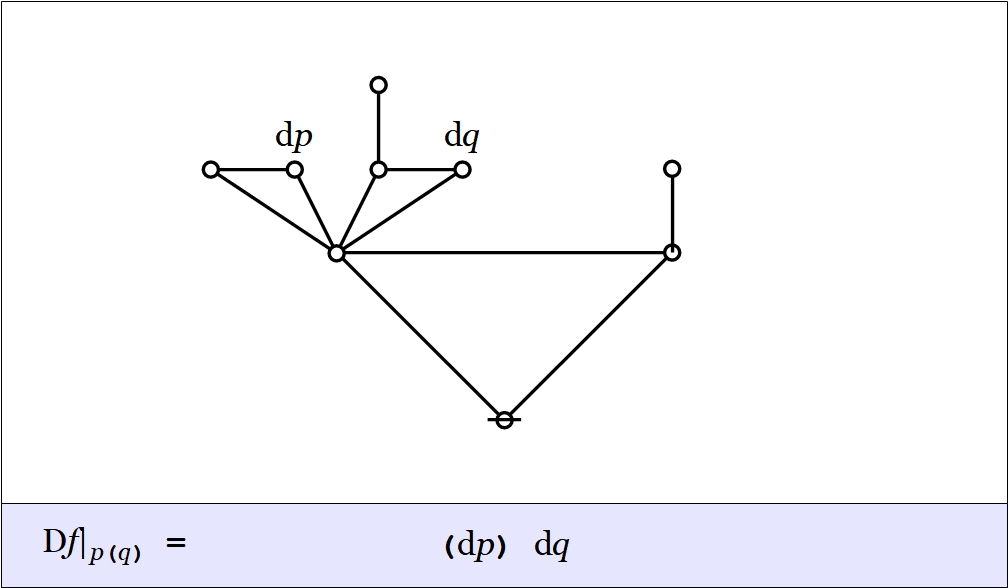
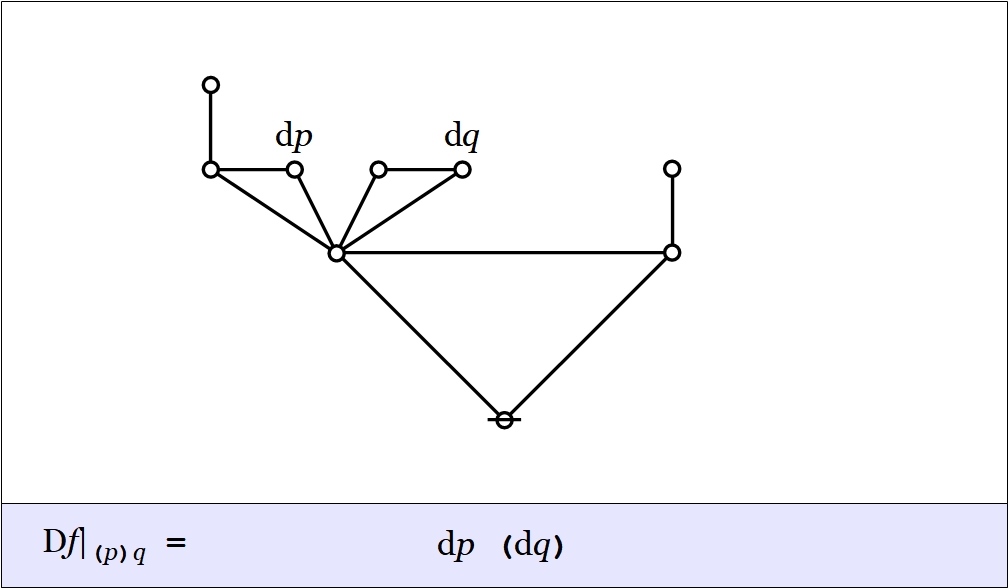
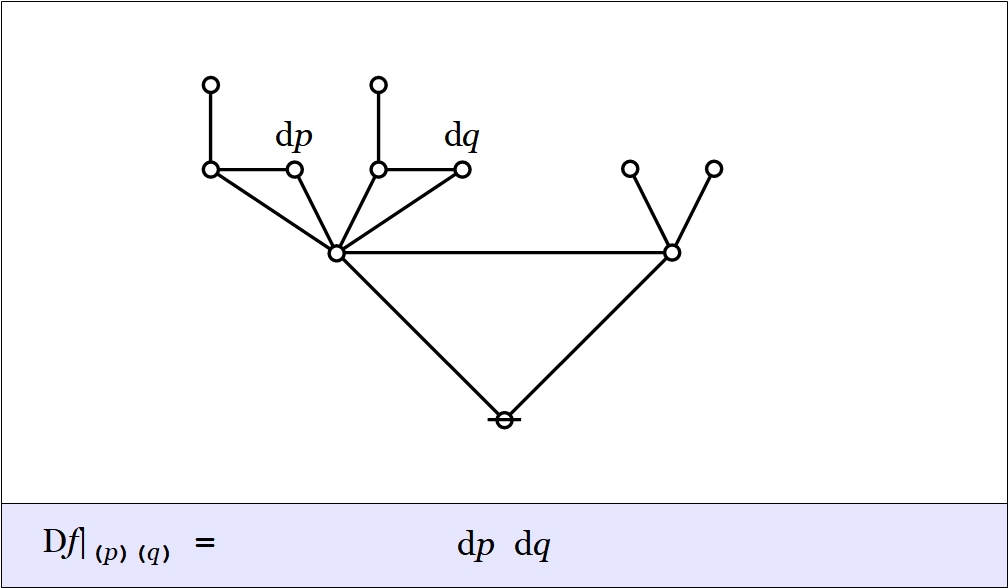

 indicated by the difference map
  namely, the following six points or singular propositions.
 in order to change the value borne by
  that is, the move you have to make in order to reach a point where the value of the proposition
  as illustrated by the example
 Abstracting from that picture, the difference map
  and whose arrows are labeled with the elements of
  as shown in the following Figure.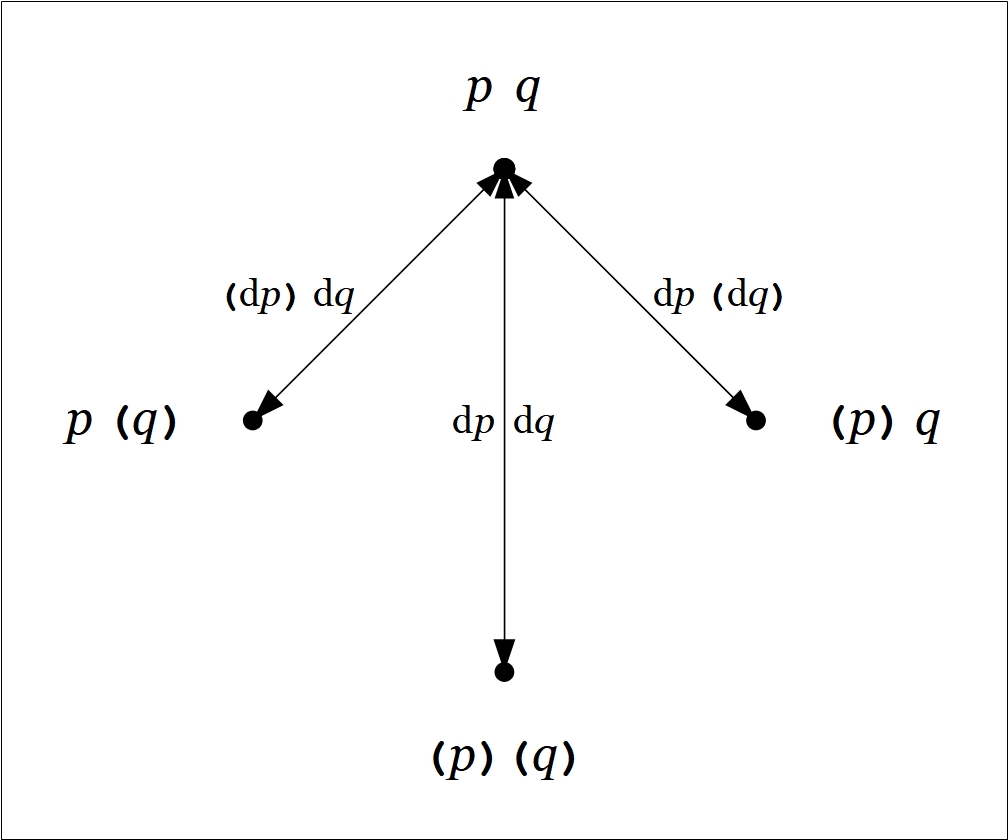
![\begin{array}{rcccccc} f & = & p & \cdot & q \\[4pt] \mathrm{D}f & = & p & \cdot & q & \cdot & \texttt{((} \mathrm{d}p \texttt{)(} \mathrm{d}q \texttt{))} \\[4pt] & + & p & \cdot & \texttt{(} q \texttt{)} & \cdot & \texttt{~(} \mathrm{d}p \texttt{)~} \mathrm{d}q \texttt{~~} \\[4pt] & + & \texttt{(} p \texttt{)} & \cdot & q & \cdot & \texttt{~~} \mathrm{d}p \texttt{~(} \mathrm{d}q \texttt{)~} \\[4pt] & + & \texttt{(} p \texttt{)} & \cdot & \texttt{(} q \texttt{)} & \cdot & \texttt{~~} \mathrm{d}p \texttt{~~} \mathrm{d}q \texttt{~~} \end{array}](https://s0.wp.com/latex.php?latex=%5Cbegin%7Barray%7D%7Brcccccc%7D++f+%26+%3D+%26+p+%26+%5Ccdot+%26+q++%5C%5C%5B4pt%5D++%5Cmathrm%7BD%7Df+%26+%3D+%26++p+%26+%5Ccdot+%26+q+%26+%5Ccdot+%26++%5Ctexttt%7B%28%28%7D+%5Cmathrm%7Bd%7Dp+%5Ctexttt%7B%29%28%7D+%5Cmathrm%7Bd%7Dq+%5Ctexttt%7B%29%29%7D++%5C%5C%5B4pt%5D++%26+%2B+%26++p+%26+%5Ccdot+%26+%5Ctexttt%7B%28%7D+q+%5Ctexttt%7B%29%7D+%26+%5Ccdot+%26++%5Ctexttt%7B%7E%28%7D+%5Cmathrm%7Bd%7Dp+%5Ctexttt%7B%29%7E%7D+%5Cmathrm%7Bd%7Dq+%5Ctexttt%7B%7E%7E%7D++%5C%5C%5B4pt%5D++%26+%2B+%26++%5Ctexttt%7B%28%7D+p+%5Ctexttt%7B%29%7D+%26+%5Ccdot+%26+q+%26+%5Ccdot+%26++%5Ctexttt%7B%7E%7E%7D+%5Cmathrm%7Bd%7Dp+%5Ctexttt%7B%7E%28%7D+%5Cmathrm%7Bd%7Dq+%5Ctexttt%7B%29%7E%7D++%5C%5C%5B4pt%5D++%26+%2B+%26++%5Ctexttt%7B%28%7D+p+%5Ctexttt%7B%29%7D+%26+%5Ccdot+%26+%5Ctexttt%7B%28%7D+q+%5Ctexttt%7B%29%7D+%26+%5Ccdot+%26++%5Ctexttt%7B%7E%7E%7D+%5Cmathrm%7Bd%7Dp+%5Ctexttt%7B%7E%7E%7D+%5Cmathrm%7Bd%7Dq+%5Ctexttt%7B%7E%7E%7D++%5Cend%7Barray%7D&bg=ffffff&fg=000000&s=0&c=20201002)

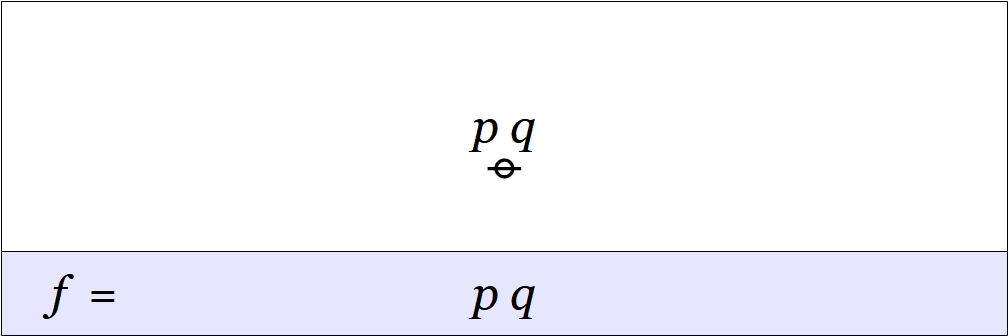
 graphed as two letters attached to a root node, as shown below.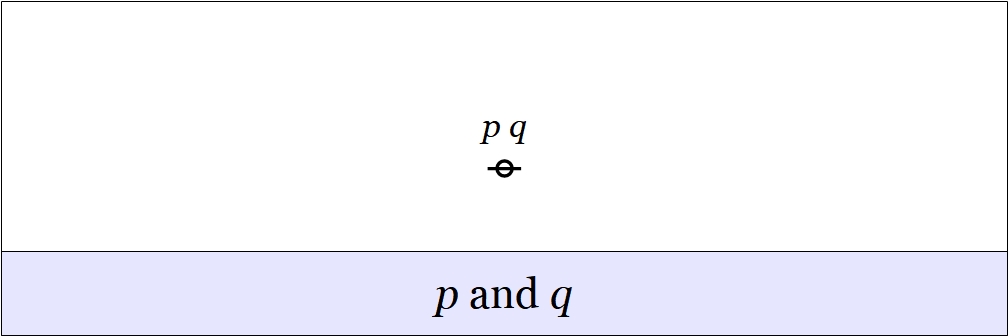
 .
. where
where  is read in such a way that
  means
means  and
and  means
means 

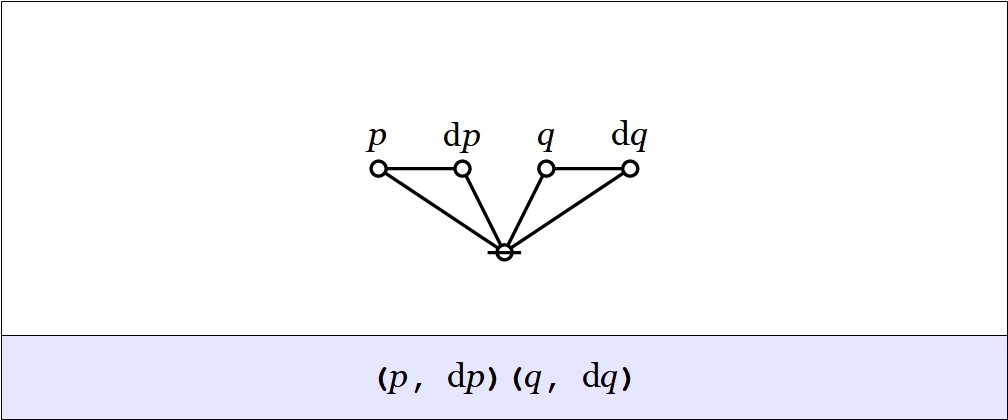
 and its corresponding graph arise by replacing
  and
and  in the boolean product or logical conjunction

 plus and minus are identical operations. This will make the relation between the differential and the integral parts of the appropriate calculus slightly stranger than usual, but we will get into that later.
 as shown below.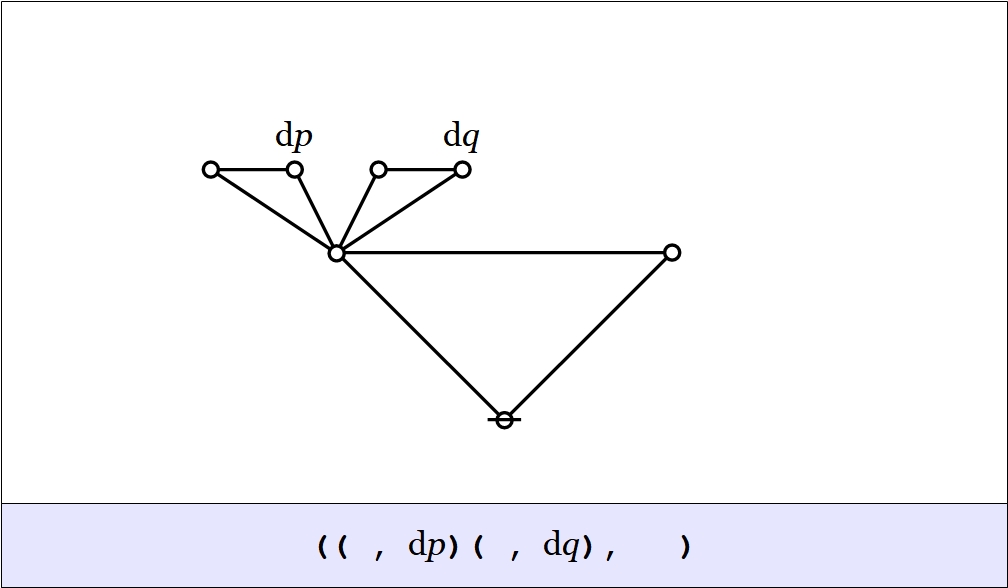
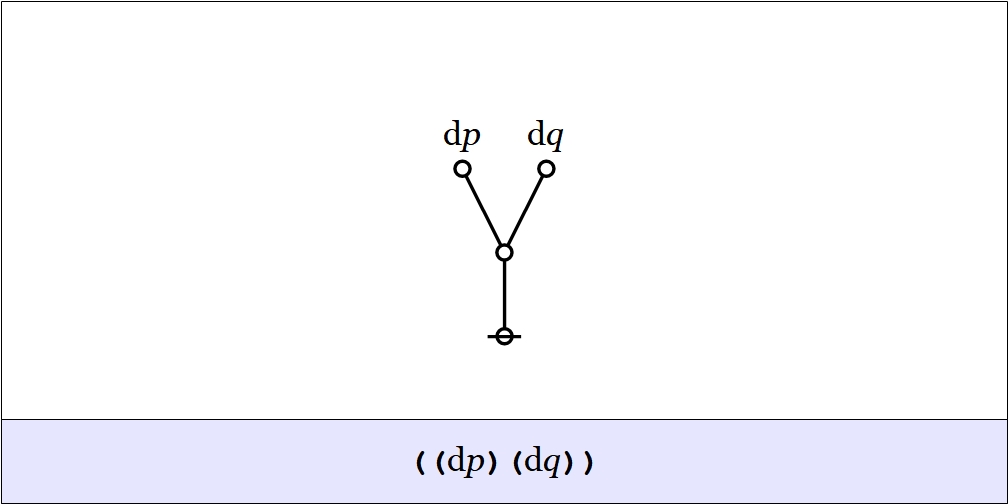



 or
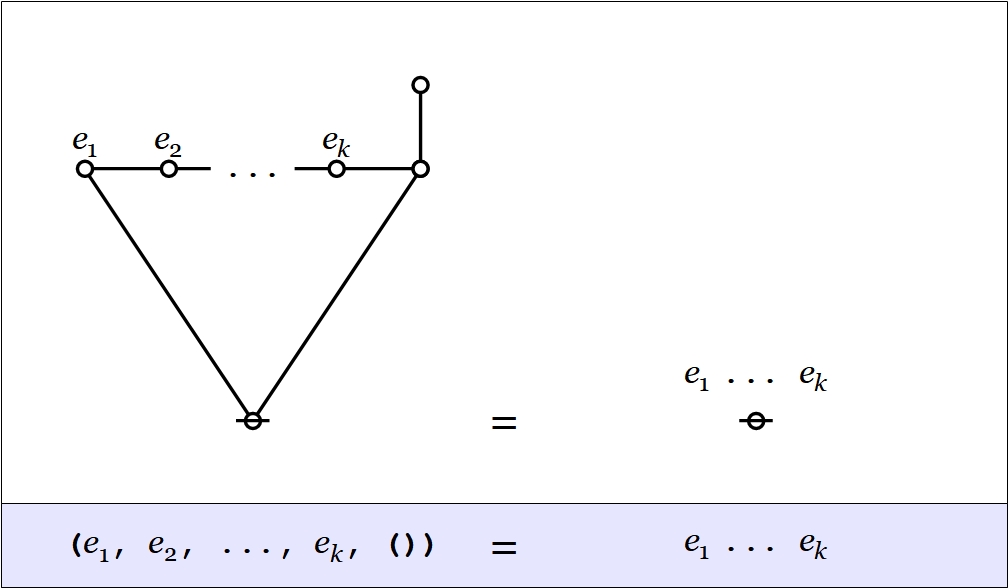
or  in formal languages, where it is the identity element for concatenation. To make it visible in context, it may be denoted by the equivalent expression
  or, especially if operating in an algebraic context, by a simple
  Also when working in an algebraic mode, the plus sign
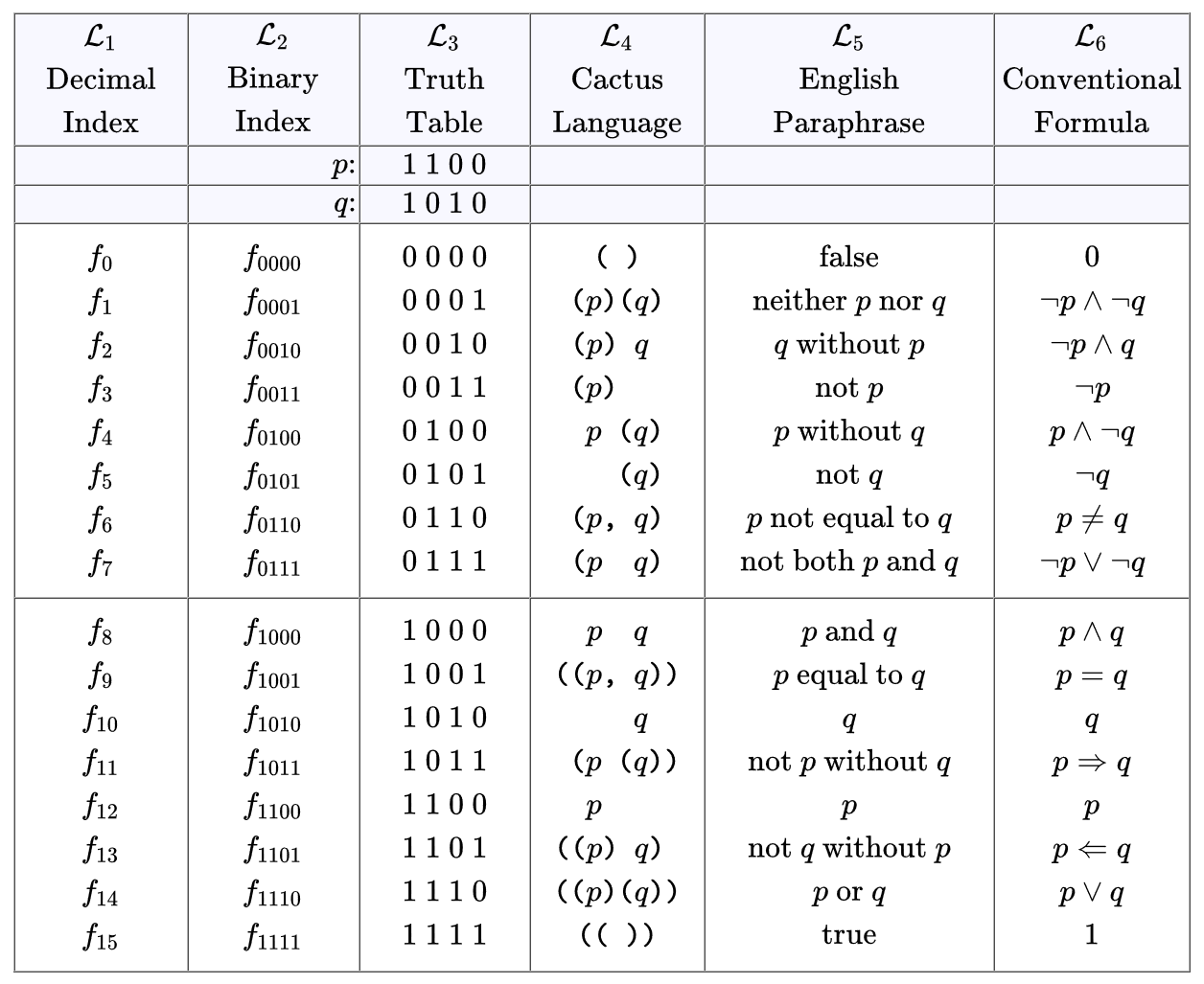
  may be used for exclusive disjunction. Thus we have the following translations of algebraic expressions into cactus expressions.
![\begin{matrix} a + b \quad = \quad \texttt{(} a \texttt{,} b \texttt{)} \\[8pt] a + b + c \quad = \quad \texttt{(} a \texttt{,(} b \texttt{,} c \texttt{))} \quad = \quad \texttt{((} a \texttt{,} b \texttt{),} c \texttt{)} \end{matrix}](https://s0.wp.com/latex.php?latex=%5Cbegin%7Bmatrix%7D++a+%2B+b+%5Cquad+%3D+%5Cquad+%5Ctexttt%7B%28%7D+a+%5Ctexttt%7B%2C%7D+b+%5Ctexttt%7B%29%7D++%5C%5C%5B8pt%5D++a+%2B+b+%2B+c++%5Cquad+%3D+%5Cquad+%5Ctexttt%7B%28%7D+a+%5Ctexttt%7B%2C%28%7D+b+%5Ctexttt%7B%2C%7D+c+%5Ctexttt%7B%29%29%7D++%5Cquad+%3D+%5Cquad+%5Ctexttt%7B%28%28%7D+a+%5Ctexttt%7B%2C%7D+b+%5Ctexttt%7B%29%2C%7D+c+%5Ctexttt%7B%29%7D++%5Cend%7Bmatrix%7D&bg=ffffff&fg=000000&s=1&c=20201002)

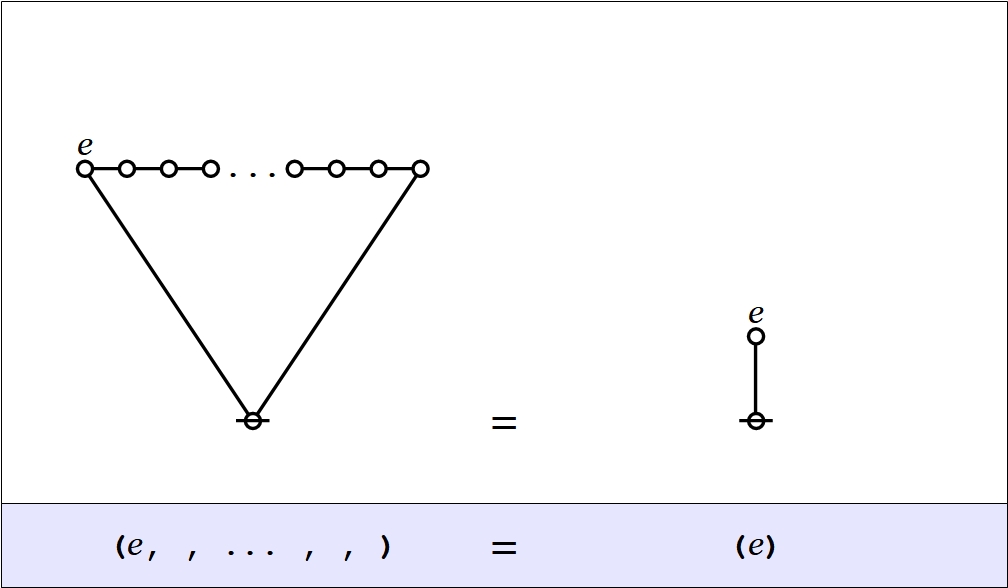
 -ary scope. The syntactic formulas of that calculus map into a family of graph-theoretic structures called “painted and rooted cacti” which lend visual representation to the functional structures of propositions and smooth the path to efficient computation.
 to mean exactly one of the propositions
  is false, in short, their minimal negation is true. An expression of that form is associated with a cactus structure called a lobe and is “painted” with the colors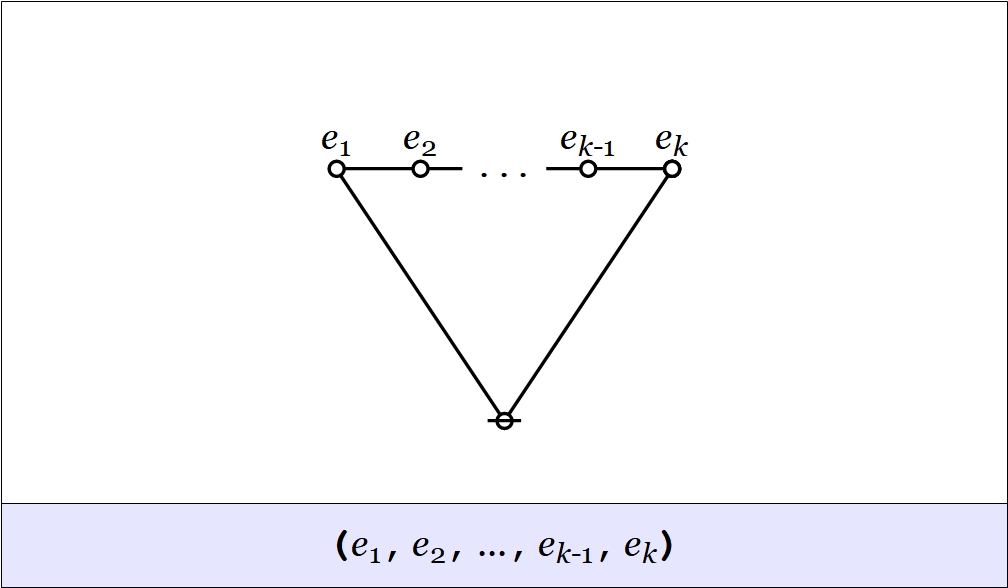
 to mean all the propositions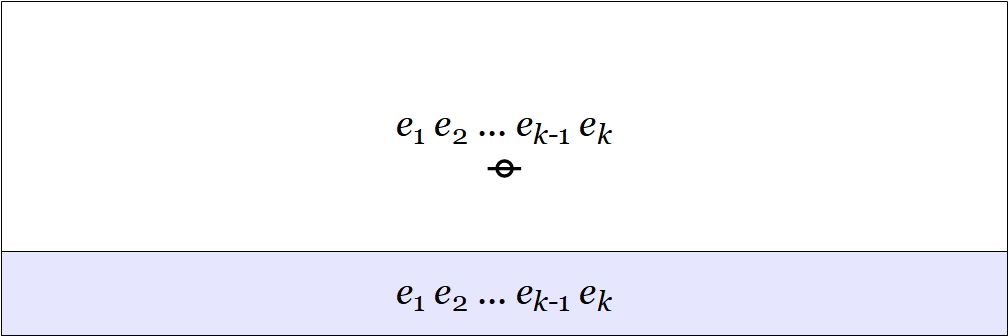
 may be used for the logical operators.
 Inquiry Into Inquiry