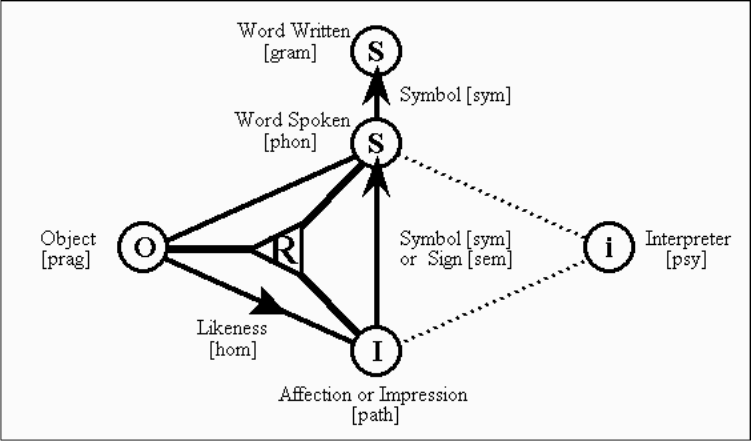
Differential Propositional Calculus • 16

Differential Propositions • Qualitative Analogues of Differential Equations

A differential extension of a universe of discourse [\mathcal{A}] is constructed by augmenting its alphabet \mathfrak{A} with a set of symbols for differential features, in effect basic changes capable of occurring in [\mathcal{A}].  The additional symbols are taken to denote primitive features of change, qualitative attributes of motion, or proposals about the ways items in the universe of discourse may change or move in relation to features noted in the original alphabet.

To give the new symbols a name, we define the differential alphabet or tangent alphabet \mathrm{d}\mathfrak{A} = \{``\mathrm{d}a_1", \ldots, ``\mathrm{d}a_n"\}, in principle just an arbitrary set of symbols, disjoint from the initial alphabet \mathfrak{A} = \{``a_1", \ldots, ``a_n"\} and given the meanings just indicated.

In practice the precise interpretation of the symbols in \mathrm{d}\mathfrak{A} is conceived to be changeable from point to point of the underlying space A.  Indeed, for all we know, the state space A might well be the state space of a language interpreter, one concerned with the idiomatic meanings of the dialect generated by \mathfrak{A} and \mathrm{d}\mathfrak{A}.

Resources

cc: Academia.eduCyberneticsStructural ModelingSystems Science
cc: Conceptual GraphsLaws of FormMathstodonResearch Gate

Posted in Amphecks, Animata, Boolean Algebra, Boolean Functions, C.S. Peirce, Cactus Graphs, Category Theory, Change, Cybernetics, Differential Analytic Turing Automata, Differential Calculus, Differential Logic, Discrete Dynamics, Equational Inference, Functional Logic, Graph Theory, Hologrammautomaton, Indicator Functions, Inquiry Driven Systems, Leibniz, Logic, Logical Graphs, Mathematics, Minimal Negation Operators, Propositional Calculus, Time, Topology, Visualization | Tagged , , , , , , , , , , , , , , , , , , , , , , , , , , , | 4 Comments

Differential Propositional Calculus • 15


Fire over water:
The image of the condition before transition.
Thus the superior man is careful
In the differentiation of things,
So that each finds its place.

I Ching ䷿ Hexagram 64

Differential Extension of Propositional Calculus

This much preparation is enough to begin introducing my subject, if I excuse myself from giving full arguments for my definitional choices until a later stage.  To express the goal in a turn of phrase, the aim is to develop a differential theory of qualitative equations, one which can parallel the application of differential geometry to dynamical systems.  The idea of a tangent vector is key to the work and a major goal is to find the right logical analogues of tangent spaces, bundles, and functors.  The strategy is taken of looking for the simplest versions of those constructions which can be discovered within the realm of propositional calculus, so long as they serve to fill out the general theme.

Reference

  • Wilhelm, R., and Baynes, C.F. (trans.), The I Ching, or Book of Changes,
    Foreword by C.G. Jung, Preface by H. Wilhelm, 3rd edition, Bollingen Series XIX, Princeton University Press, Princeton, NJ, 1967.

Resources

cc: Academia.eduCyberneticsStructural ModelingSystems Science
cc: Conceptual GraphsLaws of FormMathstodonResearch Gate

Posted in Amphecks, Animata, Boolean Algebra, Boolean Functions, C.S. Peirce, Cactus Graphs, Category Theory, Change, Cybernetics, Differential Analytic Turing Automata, Differential Calculus, Differential Logic, Discrete Dynamics, Equational Inference, Functional Logic, Graph Theory, Hologrammautomaton, Indicator Functions, Inquiry Driven Systems, Leibniz, Logic, Logical Graphs, Mathematics, Minimal Negation Operators, Propositional Calculus, Time, Topology, Visualization | Tagged , , , , , , , , , , , , , , , , , , , , , , , , , , , | 4 Comments

Differential Propositional Calculus • 14

Differential Extensions

Table 11 summarizes the notations needed to describe the first order differential extensions of propositional calculi in a systematic manner.

\text{Table 11. Differential Extension} \stackrel{_\bullet}{} \text{Basic Notation}
Differential Extension • Basic Notation

Resources

cc: Academia.eduCyberneticsStructural ModelingSystems Science
cc: Conceptual GraphsLaws of FormMathstodonResearch Gate

Posted in Amphecks, Animata, Boolean Algebra, Boolean Functions, C.S. Peirce, Cactus Graphs, Category Theory, Change, Cybernetics, Differential Analytic Turing Automata, Differential Calculus, Differential Logic, Discrete Dynamics, Equational Inference, Functional Logic, Graph Theory, Hologrammautomaton, Indicator Functions, Inquiry Driven Systems, Leibniz, Logic, Logical Graphs, Mathematics, Minimal Negation Operators, Propositional Calculus, Time, Topology, Visualization | Tagged , , , , , , , , , , , , , , , , , , , , , , , , , , , | 4 Comments

Differential Propositional Calculus • 13

Differential Extensions

An initial universe of discourse A^\bullet supplies the groundwork for any number of further extensions, beginning with the first order differential extension \mathrm{E}A^\bullet.  The construction of \mathrm{E}A^\bullet can be described in the following stages.

  • The initial alphabet \mathfrak{A} = \{ ``a_1", \ldots, ``a_n" \} is extended by a first order differential alphabet \mathrm{d}\mathfrak{A} = \{ ``\mathrm{d}a_1", \ldots, ``\mathrm{d}a_n" \} resulting in a first order extended alphabet \mathrm{E}\mathfrak{A} defined as follows.

    \mathrm{E}\mathfrak{A} ~=~ \mathfrak{A} ~\cup~ \mathrm{d}\mathfrak{A} ~=~ \{ ``a_1", \ldots, ``a_n", ``\mathrm{d}a_1", \ldots, ``\mathrm{d}a_n" \}.

  • The initial basis \mathcal{A} = \{ a_1, \ldots, a_n \} is extended by a first order differential basis \mathrm{d}\mathcal{A} = \{ \mathrm{d}a_1, \ldots, \mathrm{d}a_n \} resulting in a first order extended basis \mathrm{E}\mathcal{A} defined as follows.

    \mathrm{E}\mathcal{A} ~=~ \mathcal{A} ~\cup~ \mathrm{d}\mathcal{A} ~=~ \{ a_1, \ldots, a_n, \mathrm{d}a_1, \ldots, \mathrm{d}a_n \}.

  • The initial space A = \langle a_1, \ldots, a_n \rangle is extended by a first order differential space or tangent space \mathrm{d}A = \langle \mathrm{d}a_1, \ldots, \mathrm{d}a_n \rangle at each point of A, resulting in a first order extended space or tangent bundle space \mathrm{E}A defined as follows.

    \mathrm{E}A ~=~ A ~\times~ \mathrm{d}A ~=~ \langle \mathrm{E}\mathcal{A} \rangle ~=~ \langle \mathcal{A} \cup \mathrm{d}\mathcal{A} \rangle ~=~ \langle a_1, \ldots, a_n, \mathrm{d}a_1, \ldots, \mathrm{d}a_n \rangle.

  • Finally, the initial universe A^\bullet = [ a_1, \ldots, a_n ] is extended by a first order differential universe or tangent universe \mathrm{d}A^\bullet = [ \mathrm{d}a_1, \ldots, \mathrm{d}a_n ] at each point of A^\bullet, resulting in a first order extended universe or tangent bundle universe \mathrm{E}A^\bullet defined as follows.

    \mathrm{E}A^\bullet ~=~ [ \mathrm{E}\mathcal{A} ] ~=~ [ \mathcal{A} ~\cup~ \mathrm{d}\mathcal{A} ] ~=~ [ a_1, \ldots, a_n, \mathrm{d}a_1, \ldots, \mathrm{d}a_n ].

    That gives \mathrm{E}A^\bullet a type defined as follows.

    [ \mathbb{B}^n \times \mathbb{D}^n ] ~=~ (\mathbb{B}^n \times \mathbb{D}^n\ +\!\!\to \mathbb{B}) ~=~ (\mathbb{B}^n \times \mathbb{D}^n, \mathbb{B}^n \times \mathbb{D}^n \to \mathbb{B}).

A proposition in a differential extension of a universe of discourse is called a differential proposition and forms the analogue of a system of differential equations in ordinary calculus.  With the construction of the first order extended universe \mathrm{E}A^\bullet and the first order differential propositions f : \mathrm{E}A \to \mathbb{B} we arrive at the foothills of differential logic.

Resources

cc: Academia.eduCyberneticsStructural ModelingSystems Science
cc: Conceptual GraphsLaws of FormMathstodonResearch Gate

Posted in Amphecks, Animata, Boolean Algebra, Boolean Functions, C.S. Peirce, Cactus Graphs, Category Theory, Change, Cybernetics, Differential Analytic Turing Automata, Differential Calculus, Differential Logic, Discrete Dynamics, Equational Inference, Functional Logic, Graph Theory, Hologrammautomaton, Indicator Functions, Inquiry Driven Systems, Leibniz, Logic, Logical Graphs, Mathematics, Minimal Negation Operators, Propositional Calculus, Time, Topology, Visualization | Tagged , , , , , , , , , , , , , , , , , , , , , , , , , , , | 4 Comments

Differential Propositional Calculus • 12

Special Classes of Propositions (concl.)

Last and literally least in extent, we examine the family of singular propositions in a 3‑dimensional universe of discourse.

In our model of propositions as mappings from a universe of discourse X to a set of two values, in other words, indicator functions of the form f : X \to \mathbb{B}, singular propositions are those singling out the minimal distinct regions of the universe, represented by single cells of the corresponding venn diagram.

Singular Propositions

The singular propositions, \{ \mathbf{x} : \mathbb{B}^n \to \mathbb{B} \} = (\mathbb{B}^n \xrightarrow{s} \mathbb{B}), may be written as products:

\prod_{i=1}^n e_i ~=~ e_1 \cdot \ldots \cdot e_n  ~\text{where}~  \left\{\begin{matrix} e_i = a_i \\ \text{or} \\ e_i = \texttt{(} a_i \texttt{)} \end{matrix}\right\}  ~\text{for}~ i = 1 ~\text{to}~ n.

In a universe of discourse based on three boolean variables, p, q, r, there are 2^3 = 8 singular propositions.  Their venn diagrams are shown in Figure 10.

Singular Propositions on Three Variables
\text{Figure 10. Singular Propositions} : \mathbb{B}^3 \to \mathbb{B}

At the top is the venn diagram for the singular proposition of rank 3, corresponding to the boolean product pqr and identical with the positive proposition of rank 3.

Next are the venn diagrams for the three singular propositions of rank 2, which may be expressed by the following three forms, respectively.

pr \texttt{(} q \texttt{)}, \qquad  qr \texttt{(} p \texttt{)}, \qquad  pq \texttt{(} r \texttt{)}.

Next are the three singular propositions of rank 1, which may be expressed by the following three forms, respectively.

q \texttt{(} p \texttt{)(} r \texttt{)}, \qquad  p \texttt{(} q \texttt{)(} r \texttt{)}, \qquad  r \texttt{(} p \texttt{)(} q \texttt{)}.

At the bottom is the singular proposition of rank 0, which may be expressed by the following form.

\texttt{(} p \texttt{)(} q \texttt{)(} r \texttt{)}.

Resources

cc: Academia.eduCyberneticsStructural ModelingSystems Science
cc: Conceptual GraphsLaws of FormMathstodonResearch Gate

Posted in Amphecks, Animata, Boolean Algebra, Boolean Functions, C.S. Peirce, Cactus Graphs, Category Theory, Change, Cybernetics, Differential Analytic Turing Automata, Differential Calculus, Differential Logic, Discrete Dynamics, Equational Inference, Functional Logic, Graph Theory, Hologrammautomaton, Indicator Functions, Inquiry Driven Systems, Leibniz, Logic, Logical Graphs, Mathematics, Minimal Negation Operators, Propositional Calculus, Time, Topology, Visualization | Tagged , , , , , , , , , , , , , , , , , , , , , , , , , , , | 4 Comments

Differential Propositional Calculus • 11

Special Classes of Propositions (cont.)

Next we take up the family of positive propositions and follow the same plan as before, tracing the rule of their formation in the case of a 3‑dimensional universe of discourse.

Positive Propositions

The positive propositions, \{ p : \mathbb{B}^n \to \mathbb{B} \} = (\mathbb{B}^n \xrightarrow{p} \mathbb{B}), may be written as products:

\prod_{i=1}^n e_i ~=~ e_1 \cdot \ldots \cdot e_n  ~\text{where}~  \left\{\begin{matrix} e_i = a_i \\ \text{or} \\ e_i = 1 \end{matrix}\right\}  ~\text{for}~ i = 1 ~\text{to}~ n.

In a universe of discourse based on three boolean variables, p, q, r, there are 2^3 = 8 positive propositions, taking the shapes shown in Figure 9.

Positive Propositions on Three Variables
\text{Figure 9. Positive Propositions} : \mathbb{B}^3 \to \mathbb{B}

At the top is the venn diagram for the positive proposition of rank 3, corresponding to the boolean product or logical conjunction pqr.

Next are the venn diagrams for the three positive propositions of rank 2, corresponding to the three boolean products, pr, qr, pq, respectively.

Next are the three positive propositions of rank 1, which are none other than the three basic propositions, p, q, r.

At the bottom is the positive proposition of rank 0, the everywhere true proposition or the constant 1 function, which may be expressed by the form \texttt{((}~\texttt{))} or by a simple 1.

Resources

cc: Academia.eduCyberneticsStructural ModelingSystems Science
cc: Conceptual GraphsLaws of FormMathstodonResearch Gate

Posted in Amphecks, Animata, Boolean Algebra, Boolean Functions, C.S. Peirce, Cactus Graphs, Category Theory, Change, Cybernetics, Differential Analytic Turing Automata, Differential Calculus, Differential Logic, Discrete Dynamics, Equational Inference, Functional Logic, Graph Theory, Hologrammautomaton, Indicator Functions, Inquiry Driven Systems, Leibniz, Logic, Logical Graphs, Mathematics, Minimal Negation Operators, Propositional Calculus, Time, Topology, Visualization | Tagged , , , , , , , , , , , , , , , , , , , , , , , , , , , | 4 Comments

Differential Propositional Calculus • 10

Special Classes of Propositions (cont.)

Let’s pause at this point and get a better sense of how our special classes of propositions are structured and how they relate to propositions in general.  We can do this by recruiting our visual imaginations and drawing up a sufficient budget of venn diagrams for each family of propositions.  The case for 3 variables is exemplary enough for a start.

Linear Propositions

The linear propositions, \{ \ell : \mathbb{B}^n \to \mathbb{B} \} = (\mathbb{B}^n \xrightarrow{\ell} \mathbb{B}), may be written as sums:

\sum_{i=1}^n e_i ~=~ e_1 + \ldots + e_n  ~\text{where}~  \left\{\begin{matrix} e_i = a_i \\ \text{or} \\ e_i = 0 \end{matrix}\right\}  ~\text{for}~ i = 1 ~\text{to}~ n.

One thing to keep in mind about these sums is that the values in \mathbb{B} = \{ 0, 1 \} are added “modulo 2”, that is, in such a way that 1 + 1 = 0.

In a universe of discourse based on three boolean variables, p, q, r, the linear propositions take the shapes shown in Figure 8.

Linear Propositions on Three Variables
\text{Figure 8. Linear Propositions} : \mathbb{B}^3 \to \mathbb{B}

At the top is the venn diagram for the linear proposition of rank 3, which may be expressed by any one of the following three forms.

\texttt{(} p \texttt{,(} q \texttt{,} r \texttt{))}, \qquad  \texttt{((} p \texttt{,} q \texttt{),} r \texttt{)}, \qquad  p + q + r.

Next are the venn diagrams for the three linear propositions of rank 2, which may be expressed by the following three forms, respectively.

\texttt{(} p \texttt{,} r \texttt{)}, \qquad  \texttt{(} q \texttt{,} r \texttt{)}, \qquad  \texttt{(} p \texttt{,} q \texttt{)}.

Next are the three linear propositions of rank 1, which are none other than the three basic propositions, p, q, r.

At the bottom is the linear proposition of rank 0, the everywhere false proposition or the constant 0 function, which may be expressed by the form \texttt{(} ~ \texttt{)} or by a simple 0.

Resources

cc: Academia.eduCyberneticsStructural ModelingSystems Science
cc: Conceptual GraphsLaws of FormMathstodonResearch Gate

Posted in Amphecks, Animata, Boolean Algebra, Boolean Functions, C.S. Peirce, Cactus Graphs, Category Theory, Change, Cybernetics, Differential Analytic Turing Automata, Differential Calculus, Differential Logic, Discrete Dynamics, Equational Inference, Functional Logic, Graph Theory, Hologrammautomaton, Indicator Functions, Inquiry Driven Systems, Leibniz, Logic, Logical Graphs, Mathematics, Minimal Negation Operators, Propositional Calculus, Time, Topology, Visualization | Tagged , , , , , , , , , , , , , , , , , , , , , , , , , , , | 6 Comments

Differential Propositional Calculus • 9

Special Classes of Propositions

The full set of propositions f : A \to \mathbb{B} contains a number of smaller classes deserving of special attention.

A basic proposition in the universe of discourse [a_1, \ldots, a_n] is one of the propositions in the set \{ a_1, \ldots, a_n \}.  There are of course exactly n of these.  Depending on context, basic propositions may also be called coordinate propositions or simple propositions.

Among the 2^{2^n} propositions in [a_1, \ldots, a_n] are several families numbering 2^n propositions each which take on special forms with respect to the basis \{ a_1, \ldots, a_n \}.  Three of those families are especially prominent in the present context, the linear, the positive, and the singular propositions.  Each family is naturally parameterized by the coordinate n-tuples in \mathbb{B}^n and falls into n + 1 ranks, with a binomial coefficient \tbinom{n}{k} giving the number of propositions having rank or weight k in their class.

In each case the rank k ranges from 0 to n and counts the number of positive appearances of the coordinate propositions a_1, \ldots, a_n in the resulting expression.  For example, when n = 3 the linear proposition of rank 0 is 0, the positive proposition of rank 0 is 1, and the singular proposition of rank 0 is \texttt{(} a_1 \texttt{)} \texttt{(} a_2 \texttt{)} \texttt{(} a_3 \texttt{)}.

The basic propositions a_i : \mathbb{B}^n \to \mathbb{B} are both linear and positive.  So those two families of propositions, the linear and the positive, may be viewed as two different ways of generalizing the class of basic propositions.

It is important to note that all of the above distinctions are relative to the choice of a particular basis \mathcal{A} = \{ a_1, \ldots, a_n \}.  A singular proposition with respect to the basis \mathcal{A} will not remain singular if \mathcal{A} is extended by a number of new and independent features.  Even if one keeps to the original set of pairwise options \{ a_i \} \cup \{ \texttt{(} a_i \texttt{)} \} to pick out a new basis, the sets of linear propositions and positive propositions are both determined by the choice of basic propositions, and that entire determination is tantamount to the purely conventional choice of a cell as origin.

Resources

cc: Academia.eduCyberneticsStructural ModelingSystems Science
cc: Conceptual GraphsLaws of FormMathstodonResearch Gate

Posted in Amphecks, Animata, Boolean Algebra, Boolean Functions, C.S. Peirce, Cactus Graphs, Category Theory, Change, Cybernetics, Differential Analytic Turing Automata, Differential Calculus, Differential Logic, Discrete Dynamics, Equational Inference, Functional Logic, Graph Theory, Hologrammautomaton, Indicator Functions, Inquiry Driven Systems, Leibniz, Logic, Logical Graphs, Mathematics, Minimal Negation Operators, Propositional Calculus, Time, Topology, Visualization | Tagged , , , , , , , , , , , , , , , , , , , , , , , , , , , | 4 Comments

Differential Propositional Calculus • 8

Formal Development (cont.)

Before moving on, let’s unpack some of the assumptions, conventions, and implications involved in the array of concepts and notations introduced above.

A universe of discourse A^\bullet = [a_1, \ldots, a_n] qualified by the logical features a_1, \ldots, a_n is a set A plus the set of all functions from the space A to the boolean domain \mathbb{B} = \{ 0, 1 \}.  There are 2^n elements in A, often pictured as the cells of a venn diagram or the nodes of a hypercube.  There are 2^{2^n} possible functions from A to \mathbb{B}, accordingly pictured as all the ways of painting the cells of a venn diagram or the nodes of a hypercube with a palette of two colors.

A logical proposition about the elements of A is either true or false of each element in A, while a function f : A \to \mathbb{B} evaluates to 1 or 0 on each element of A.  The analogy between logical propositions and boolean-valued functions is close enough to adopt the latter as models of the former and simply refer to the functions f : A \to \mathbb{B} as propositions about the elements of A.

Resources

cc: Academia.eduCyberneticsStructural ModelingSystems Science
cc: Conceptual GraphsLaws of FormMathstodonResearch Gate

Posted in Amphecks, Animata, Boolean Algebra, Boolean Functions, C.S. Peirce, Cactus Graphs, Category Theory, Change, Cybernetics, Differential Analytic Turing Automata, Differential Calculus, Differential Logic, Discrete Dynamics, Equational Inference, Functional Logic, Graph Theory, Hologrammautomaton, Indicator Functions, Inquiry Driven Systems, Leibniz, Logic, Logical Graphs, Mathematics, Minimal Negation Operators, Propositional Calculus, Time, Topology, Visualization | Tagged , , , , , , , , , , , , , , , , , , , , , , , , , , , | 4 Comments

Differential Propositional Calculus • 7

Formal Development

The preceding discussion outlined the ideas leading to the differential extension of propositional logic.  The next task is to lay out the concepts and terminology needed to describe various orders of differential propositional calculi.

Elementary Notions

Logical description of a universe of discourse begins with a collection of logical signs.  For simplicity in a first approach we assume the signs are collected in the form of a finite alphabet, \mathfrak{A} = \{``a_1", \ldots, ``a_n"\}.  The signs are interpreted as denoting logical features, for example, properties of objects in the universe of discourse or simple propositions about those objects.  Corresponding to the alphabet \mathfrak{A} there is then a set of logical features, \mathcal{A} = \{ a_1, \ldots, a_n \}.

A set of logical features \mathcal{A} = \{ a_1, \ldots, a_n \} affords a basis for generating an n-dimensional universe of discourse, written A^\bullet = [ \mathcal{A} ] = [ a_1, \ldots, a_n ].  It is useful to consider a universe of discourse as a categorical object incorporating both the set of points A = \langle a_1, \ldots, a_n \rangle and the set of propositions A^\uparrow = \{ f : A \to \mathbb{B} \} implicit with the ordinary picture of a venn diagram on n features.

Accordingly, the universe of discourse A^\bullet may be regarded as an ordered pair (A, A^\uparrow) bearing the type (\mathbb{B}^n, (\mathbb{B}^n \to \mathbb{B})), which type designation may be abbreviated as \mathbb{B}^n\ +\!\!\to \mathbb{B} or even more succinctly as [ \mathbb{B}^n ].  For convenience, the data type of a finite set on n elements may be indicated by either one of the equivalent notations [n] or \mathbf{n}.

Table 7 summarizes the basic notations needed to describe ordinary propositional calculi in a systematic fashion.

\text{Table 7. Propositional Calculus} \stackrel{_\bullet}{} \text{Basic Notation}
Propositional Calculus • Basic Notation

Resources

cc: Academia.eduCyberneticsStructural ModelingSystems Science
cc: Conceptual GraphsLaws of FormMathstodonResearch Gate

Posted in Amphecks, Animata, Boolean Algebra, Boolean Functions, C.S. Peirce, Cactus Graphs, Category Theory, Change, Cybernetics, Differential Analytic Turing Automata, Differential Calculus, Differential Logic, Discrete Dynamics, Equational Inference, Functional Logic, Graph Theory, Hologrammautomaton, Indicator Functions, Inquiry Driven Systems, Leibniz, Logic, Logical Graphs, Mathematics, Minimal Negation Operators, Propositional Calculus, Time, Topology, Visualization | Tagged , , , , , , , , , , , , , , , , , , , , , , , , , , , | 4 Comments