
Inquiry and Analogy • Peirce’s Formulation of Analogy • Version 1
C.S. Peirce • “On the Natural Classification of Arguments” (1867)
The formula of analogy is as follows:


![\begin{matrix} T ~\text{is}~ P^{\prime}, P^{\prime\prime}, P^{\prime\prime\prime}, \\[4pt] S^{\prime}, S^{\prime\prime}, S^{\prime\prime\prime} ~\text{are}~ Q; \\[4pt] \therefore T ~\text{is}~ Q. \end{matrix}](https://s0.wp.com/latex.php?latex=%5Cbegin%7Bmatrix%7D++T+%7E%5Ctext%7Bis%7D%7E+P%5E%7B%5Cprime%7D%2C+P%5E%7B%5Cprime%5Cprime%7D%2C+P%5E%7B%5Cprime%5Cprime%5Cprime%7D%2C++%5C%5C%5B4pt%5D++S%5E%7B%5Cprime%7D%2C+S%5E%7B%5Cprime%5Cprime%7D%2C+S%5E%7B%5Cprime%5Cprime%5Cprime%7D+%7E%5Ctext%7Bare%7D%7E+Q%3B++%5C%5C%5B4pt%5D++%5Ctherefore+T+%7E%5Ctext%7Bis%7D%7E+Q.++%5Cend%7Bmatrix%7D&bg=ffffff&fg=000000&s=0&c=20201002)
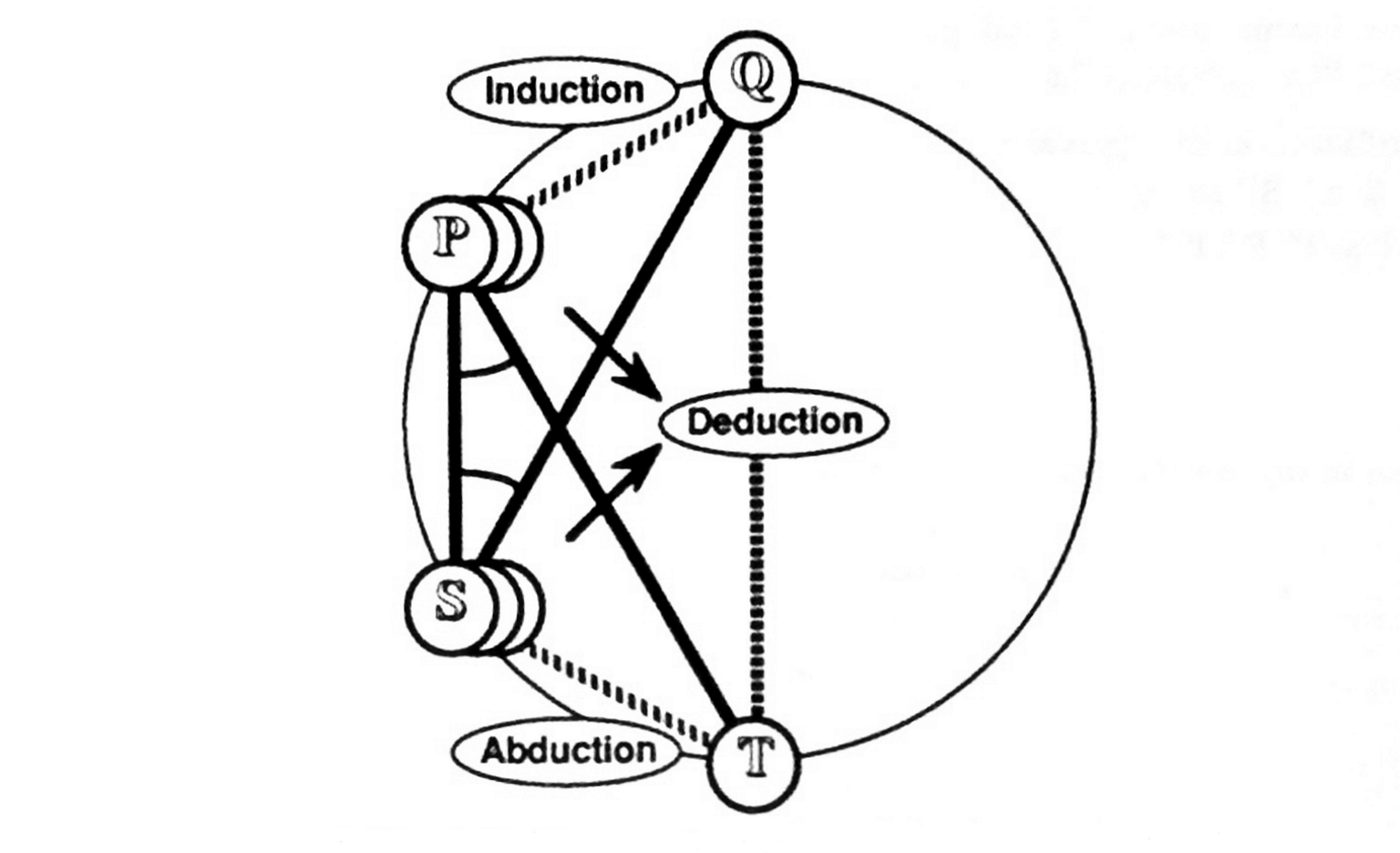
Such an argument is double. It combines the two following:
![\begin{matrix} 1. \\[4pt] S^{\prime}, S^{\prime\prime}, S^{\prime\prime\prime} ~\text{are taken as being}~ P^{\prime}, P^{\prime\prime}, P^{\prime\prime\prime}, \\[4pt] S^{\prime}, S^{\prime\prime}, S^{\prime\prime\prime} ~\text{are}~ Q; \\[4pt] \therefore ~(\text{By induction})~ P^{\prime}, P^{\prime\prime}, P^{\prime\prime\prime} ~\text{is}~ Q, \\[4pt] T ~\text{is}~ P^{\prime}, P^{\prime\prime}, P^{\prime\prime\prime}; \\[4pt] \therefore ~(\text{Deductively})~ T ~\text{is}~ Q. \end{matrix}](https://s0.wp.com/latex.php?latex=%5Cbegin%7Bmatrix%7D++1.++%5C%5C%5B4pt%5D++S%5E%7B%5Cprime%7D%2C+S%5E%7B%5Cprime%5Cprime%7D%2C+S%5E%7B%5Cprime%5Cprime%5Cprime%7D+%7E%5Ctext%7Bare+taken+as+being%7D%7E+P%5E%7B%5Cprime%7D%2C+P%5E%7B%5Cprime%5Cprime%7D%2C+P%5E%7B%5Cprime%5Cprime%5Cprime%7D%2C++%5C%5C%5B4pt%5D++S%5E%7B%5Cprime%7D%2C+S%5E%7B%5Cprime%5Cprime%7D%2C+S%5E%7B%5Cprime%5Cprime%5Cprime%7D+%7E%5Ctext%7Bare%7D%7E+Q%3B++%5C%5C%5B4pt%5D++%5Ctherefore+%7E%28%5Ctext%7BBy+induction%7D%29%7E+P%5E%7B%5Cprime%7D%2C+P%5E%7B%5Cprime%5Cprime%7D%2C+P%5E%7B%5Cprime%5Cprime%5Cprime%7D+%7E%5Ctext%7Bis%7D%7E+Q%2C++%5C%5C%5B4pt%5D++T+%7E%5Ctext%7Bis%7D%7E+P%5E%7B%5Cprime%7D%2C+P%5E%7B%5Cprime%5Cprime%7D%2C+P%5E%7B%5Cprime%5Cprime%5Cprime%7D%3B++%5C%5C%5B4pt%5D++%5Ctherefore+%7E%28%5Ctext%7BDeductively%7D%29%7E+T+%7E%5Ctext%7Bis%7D%7E+Q.++%5Cend%7Bmatrix%7D&bg=ffffff&fg=000000&s=0&c=20201002)
![\begin{matrix} 2. \\[4pt] S^{\prime}, S^{\prime\prime}, S^{\prime\prime\prime} ~\text{are, for instance,}~ P^{\prime}, P^{\prime\prime}, P^{\prime\prime\prime}, \\[4pt] T ~\text{is}~ P^{\prime}, P^{\prime\prime}, P^{\prime\prime\prime}; \\[4pt] \therefore ~(\text{By hypothesis})~ T ~\text{has the common characters of}~ S^{\prime}, S^{\prime\prime}, S^{\prime\prime\prime}, \\[4pt] S^{\prime}, S^{\prime\prime}, S^{\prime\prime\prime} ~\text{are}~ Q; \\[4pt] \therefore ~(\text{Deductively})~ T ~\text{is}~ Q. \end{matrix}](https://s0.wp.com/latex.php?latex=%5Cbegin%7Bmatrix%7D++2.++%5C%5C%5B4pt%5D++S%5E%7B%5Cprime%7D%2C+S%5E%7B%5Cprime%5Cprime%7D%2C+S%5E%7B%5Cprime%5Cprime%5Cprime%7D+%7E%5Ctext%7Bare%2C+for+instance%2C%7D%7E+P%5E%7B%5Cprime%7D%2C+P%5E%7B%5Cprime%5Cprime%7D%2C+P%5E%7B%5Cprime%5Cprime%5Cprime%7D%2C++%5C%5C%5B4pt%5D++T+%7E%5Ctext%7Bis%7D%7E+P%5E%7B%5Cprime%7D%2C+P%5E%7B%5Cprime%5Cprime%7D%2C+P%5E%7B%5Cprime%5Cprime%5Cprime%7D%3B++%5C%5C%5B4pt%5D++%5Ctherefore+%7E%28%5Ctext%7BBy+hypothesis%7D%29%7E+T+%7E%5Ctext%7Bhas+the+common+characters+of%7D%7E+S%5E%7B%5Cprime%7D%2C+S%5E%7B%5Cprime%5Cprime%7D%2C+S%5E%7B%5Cprime%5Cprime%5Cprime%7D%2C++%5C%5C%5B4pt%5D++S%5E%7B%5Cprime%7D%2C+S%5E%7B%5Cprime%5Cprime%7D%2C+S%5E%7B%5Cprime%5Cprime%5Cprime%7D+%7E%5Ctext%7Bare%7D%7E+Q%3B++%5C%5C%5B4pt%5D++%5Ctherefore+%7E%28%5Ctext%7BDeductively%7D%29%7E+T+%7E%5Ctext%7Bis%7D%7E+Q.++%5Cend%7Bmatrix%7D&bg=ffffff&fg=000000&s=0&c=20201002)
Owing to its double character, analogy is very strong with only a moderate number of instances.
(Peirce, CP 2.513, CE 2, 46–47)
Figure 7 shows the logical relationships involved in the above analysis.

Resources
- Logic Syllabus
- Boolean Function
- Boolean-Valued Function
- Logical Conjunction
- Minimal Negation Operator
- Functional Logic • Part 1 • Part 2 • Part 3
- Cactus Language • Part 1 • Part 2 • Part 3 • References • Document History
cc: FB | Peirce Matters • Laws of Form • Mathstodon • Ontolog • Academia.edu
cc: Conceptual Graphs • Cybernetics • Structural Modeling • Systems Science

 Inquiry Into Inquiry
Pingback: Survey of Abduction, Deduction, Induction, Analogy, Inquiry • 2 | Inquiry Into Inquiry
Pingback: Survey of Abduction, Deduction, Induction, Analogy, Inquiry • 3 | Inquiry Into Inquiry