Inquiry Into Inquiry • On Initiative 2

Re: Scott Aaronson(1)(2)(3)

SA:
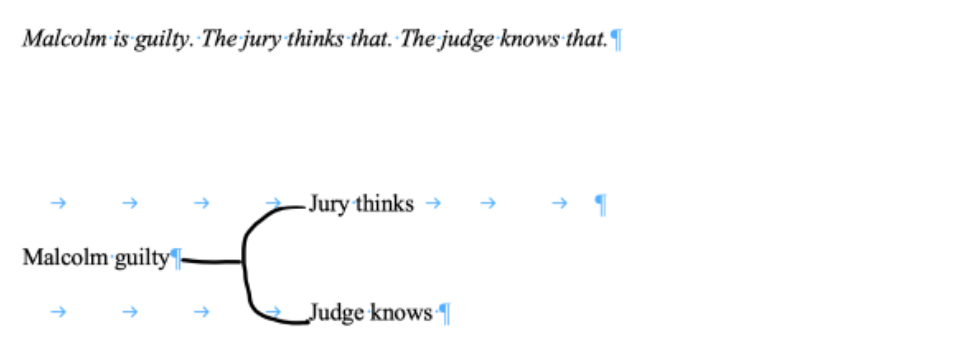
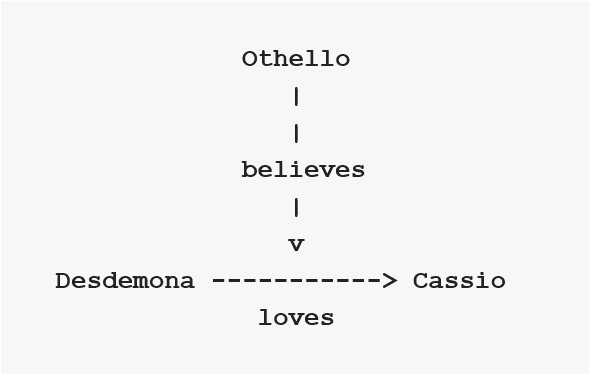
Personally, I’d give neither of them [Bohr or Einstein] perfect marks, in part because they not only both missed Bell’s Theorem, but failed even to ask the requisite question (namely:  what empirically verifiable tasks can Alice and Bob use entanglement to do, that they couldn’t have done without entanglement?).  But I’d give both of them very high marks for, y’know, still being Albert Einstein and Niels Bohr.

To Ask The Requisite Question

This brings me to the question I wanted to ask about AI sentience, but was afraid to ask.

  • Does GPT-3 ever ask an original question on its own?

Simply asking for clarification of an interlocutor’s prompt is not insignificant but I’m really interested in something more spontaneous and “self‑starting” than that.  Does it ever wake up one morning, as it were, and find itself in a “state of question”, a state of doubt or uncertainty so compelling as to bring it to ask on its own initiative what we might recognize as a novel question?

Resources

cc: Conceptual GraphsCyberneticsStructural ModelingSystems Science
cc: FB | Inquiry Driven SystemsMathstodonLaws of FormOntolog Forum

Posted in Anthem, Initiative, Inquiry | Tagged , , | 9 Comments

Sign Relations • Discussion 14

Re: Cybernetics • Cliff Joslyn (1) (2) (3) (4)

Dear Cliff,

A few examples of sign relations and triadic relations may serve to illustrate the problem of their demarcation.

First, to clear up one point of notation, in writing L \subseteq O \times S \times I, there is no assumption on my part the relational domains O, S, I are necessarily disjoint.  They may intersect or even be identical, as O = S = I.  Of course we rarely need to contemplate limiting cases of that type but I find it useful to keep them in our categorical catalogue.  (Other writers will differ on that score.)  On the other hand, we very often consider cases where S = I, as in the following two examples of sign relations discussed in Sign Relations • Examples.

Sign Relation Twin Tables LA & LB

We have the following data.

\begin{array}{ccl}  O & = & \{ \mathrm{A}, \mathrm{B} \}  \\[6pt]  S & = & \{ ``\mathrm{A}", ``\mathrm{B}", ``\mathrm{i}", ``\mathrm{u}" \}  \\[6pt]  I & = & \{ ``\mathrm{A}", ``\mathrm{B}", ``\mathrm{i}", ``\mathrm{u}" \}  \end{array}

As I mentioned, those examples were deliberately constructed to be as simple as possible but they do exemplify many typical features of sign relations in general.  Until the time my advisor asked me for cases of that order I had always contemplated formal languages with countable numbers of signs and never really thought about finite sign relations at all.

Reference

  • Charles S. Peirce (1902), “Parts of Carnegie Application” (L 75), in Carolyn Eisele (ed., 1976), The New Elements of Mathematics by Charles S. Peirce, vol. 4, 13–73.  Online.

Sources

cc: Conceptual GraphsCyberneticsLaws of FormOntolog Forum
cc: FB | SemeioticsStructural ModelingSystems Science

Posted in C.S. Peirce, Logic, Mathematics, Peirce, Relation Theory, Semiosis, Semiotics, Sign Relations | Tagged , , , , , , , | 6 Comments

Sign Relations • Discussion 13

Re: Cybernetics • Cliff Joslyn (1) (2) (3)

Dear Cliff,

Backing up a little —

Whether a thing qualifies as a sign is not an ontological question, a matter of what it is in itself, but a pragmatic question, a matter of what role it plays in a particular application.

By extension, whether a triadic relation qualifies as a sign relation is not just a question of its abstract structure but a question of its potential applications, of its fitness for a particular purpose, namely, whether we can imagine it capturing aspects of objective structure immanent in the conduct of logical reasoning.

Because it’s difficult, and not even desirable, to place prior limits on “what we can imagine finding a use for”, there is seldom a good case for trying to reduce pragmatic definitions to ontological definitions.  That’s why I feel bound to leave the boundaries a bit fuzzy.

Just to sum up what I’ve been struggling to say here —

It’s not a bad idea to cast an oversized net at the outset, and the à priori method can take us a way with that, but developing semiotics beyond its first principles and early stages will depend on gathering more significant examples of sign relations and sign transformations approaching the level we actually employ in the practice of communication, computation, inquiry, learning, proof, and reasoning in general.  I think that’s probably the best way to see the real sense and utility of Peirce’s double definition of logic and signs.

Reference

  • Charles S. Peirce (1902), “Parts of Carnegie Application” (L 75), in Carolyn Eisele (ed., 1976), The New Elements of Mathematics by Charles S. Peirce, vol. 4, 13–73.  Online.

Sources

cc: Conceptual GraphsCyberneticsLaws of FormOntolog Forum
cc: FB | SemeioticsStructural ModelingSystems Science

Posted in C.S. Peirce, Logic, Mathematics, Peirce, Relation Theory, Semiosis, Semiotics, Sign Relations | Tagged , , , , , , , | 6 Comments

Sign Relations • Discussion 12

Re: CyberneticsCliff Joslyn

CJ:
For a given arbitrary triadic relation L \subseteq O \times S \times I (let’s say that O, S, and I are all finite, non‑empty sets), I’m interested to understand what additional axioms you’re saying are necessary and sufficient to make L a sign relation.  I checked Sign Relations • Definition, but it wasn’t obvious, or at least, not formalized.

Dear Cliff,

From a purely speculative point of view, any triadic relation L \subseteq X \times X \times X on any set X might be capable of capturing aspects of objective structure immanent in the conduct of logical reasoning.  At least I can think of no reason to exclude the possibility à priori.

When we turn to the task of developing computational adjuncts to inquiry there is still no harm in keeping arbitrary triadic relations in mind, as entire hosts of them will turn up on the universe side of many universes of discourse we happen to encounter, if nowhere else.

Peirce’s use of the word definition understandably leads us to anticipate a strictly apodictic development, say, along the lines of abstract group theory or axiomatic geometry.  In that light I often look to group theory for hints on how to go about tackling a category of triadic relations such as we find in semiotics.  The comparison makes for a very rough guide but the contrasts are also instructive.

More than that, the history of group theory, springing as it did as yet unnamed from the ground of pressing mathematical problems, from Newton’s use of symmetric functions and Galois’ application of permutation groups to the theory of equations among other sources, tells us what state of development we might reasonably expect from the current still early days of semiotics.

To be continued …

Reference

  • Charles S. Peirce (1902), “Parts of Carnegie Application” (L 75), in Carolyn Eisele (ed., 1976), The New Elements of Mathematics by Charles S. Peirce, vol. 4, 13–73.  Online.

Sources

cc: Conceptual GraphsCyberneticsLaws of FormOntolog Forum
cc: FB | SemeioticsStructural ModelingSystems Science

Posted in C.S. Peirce, Logic, Mathematics, Peirce, Relation Theory, Semiosis, Semiotics, Sign Relations | Tagged , , , , , , , | 6 Comments

Sign Relations • Discussion 11

Re: CyberneticsCliff Joslyn

CJ:
For a given arbitrary triadic relation L \subseteq O \times S \times I (let’s say that O, S, and I are all finite, non‑empty sets), I’m interested to understand what additional axioms you’re saying are necessary and sufficient to make L a sign relation.  I checked Sign Relations • Definition, but it wasn’t obvious, or at least, not formalized.

Dear Cliff,

Peirce claims a definition of logic as formal semiotic and goes on to define a sign in terms of its relation to its interpretant sign and its object.

For ease of reference, here’s the cited paragraph again.

Logic will here be defined as formal semiotic.  A definition of a sign will be given which no more refers to human thought than does the definition of a line as the place which a particle occupies, part by part, during a lapse of time.  Namely, a sign is something, A, which brings something, B, its interpretant sign determined or created by it, into the same sort of correspondence with something, C, its object, as that in which itself stands to C.  It is from this definition, together with a definition of “formal”, that I deduce mathematically the principles of logic.  I also make a historical review of all the definitions and conceptions of logic, and show, not merely that my definition is no novelty, but that my non‑psychological conception of logic has virtually been quite generally held, though not generally recognized.  (C.S. Peirce, NEM 4, 20–21).

Let me cut to the chase and say what I see in that passage.  Peirce draws our attention to a category of mathematical structures of use in understanding various domains of complex phenomena by capturing aspects of objective structure immanent in those domains.

The domains of complex phenomena of interest to logic in its broadest sense encompass all that appears on the discourse side of any universe of discourse we happen to discuss.  That’s a big enough sky for anyone to live under, but for the moment I am focusing on the ways we transform signs in activities like communication, computation, inquiry, learning, proof, and reasoning in general.  I’m especially focused on the ways we do now and may yet use computation to advance the other pursuits on that list.

To be continued …

Reference

  • Charles S. Peirce (1902), “Parts of Carnegie Application” (L 75), in Carolyn Eisele (ed., 1976), The New Elements of Mathematics by Charles S. Peirce, vol. 4, 13–73.  Online.

Sources

cc: Conceptual GraphsCyberneticsLaws of FormOntolog Forum
cc: FB | SemeioticsStructural ModelingSystems Science

Posted in C.S. Peirce, Logic, Mathematics, Peirce, Relation Theory, Semiosis, Semiotics, Sign Relations | Tagged , , , , , , , | 6 Comments

Inquiry Into Inquiry • On Initiative 1

Re: R.J. Lipton and K.W. ReganSorting and Proving

Somewhat incidental to the twin themes of Sorting and Proving in computer science, Dick Lipton and Ken Regan made the following observation about an AI program whose sentience or otherwise is currently a hot topic in the news.

  • GPT‑3 works by playing a game of guess the next word in a phrase.  This is akin to guess the next move in chess and other games, and we will have more to say about it.

And that inspired the following reflection on my part.

  • As a person who struggles on a daily basis to rise to the level of sentience
    I’ve learned it has more to do with beginning than ending this sentence.

Resources

cc: Conceptual GraphsCyberneticsStructural ModelingSystems Science
cc: FB | Inquiry Driven SystemsMathstodonLaws of FormOntolog Forum

Posted in Anthem, Initiative, Inquiry | Tagged , , | 7 Comments

Sign Relations • Semiotic Equivalence Relations 2

A few items of notation are useful in discussing equivalence relations in general and semiotic equivalence relations in particular.

In general, if E is an equivalence relation on a set X then every element x of X belongs to a unique equivalence class under E called the equivalence class of x under E.  Convention provides the square bracket notation for denoting such equivalence classes, in either the form [x]_E or the simpler form [x] when the subscript E is understood.  A statement that the elements x and y are equivalent under E is called an equation or an equivalence and may be expressed in any of the following ways.

\begin{array}{clc}  (x, y) & \in & E  \\[4pt]  x & \in & [y]_E  \\[4pt]  y & \in & [x]_E  \\[4pt]  [x]_E & = & [y]_E  \\[4pt]  x & =_E & y  \end{array}

Thus we have the following definitions.

\begin{array}{ccc}  [x]_E & = & \{ y \in X : (x, y) \in E \}  \\[6pt]  x =_E y & \Leftrightarrow & (x, y) \in E  \end{array}

In the application to sign relations it is useful to extend the square bracket notation in the following ways.  If L is a sign relation whose connotative component L_{SI} is an equivalence relation on S = I, let [s]_L be the equivalence class of s under L_{SI}.  In short, [s]_L = [s]_{L_{SI}}.  A statement that the signs x and y belong to the same equivalence class under a semiotic equivalence relation L_{SI} is called a semiotic equation (SEQ) and may be written in either of the following forms.

\begin{array}{clc}  [x]_L & = & [y]_L  \\[6pt]  x & =_L & y  \end{array}

In many situations there is one further adaptation of the square bracket notation for semiotic equivalence classes which can be useful.  Namely, when there is known to exist a particular triple (o, s, i) in a sign relation L, it is permissible to let [o]_L be defined as [s]_L.  This lets the notation for semiotic equivalence classes harmonize more smoothly with the frequent use of similar devices for the denotations of signs and expressions.

Applying the array of equivalence notations to the sign relations for A and B will serve to illustrate their use and utility.

Connotative Components Con(L_A) and Con(L_B)

The semiotic equivalence relation for interpreter \mathrm{A} yields the following semiotic equations.

\begin{matrix}  [ {}^{\backprime\backprime} \mathrm{A} {}^{\prime\prime} ]_{L_\mathrm{A}}  & = &  [ {}^{\backprime\backprime} \mathrm{i} {}^{\prime\prime} ]_{L_\mathrm{A}}  \\[6pt]  [ {}^{\backprime\backprime} \mathrm{B} {}^{\prime\prime} ]_{L_\mathrm{A}}  & = &  [ {}^{\backprime\backprime} \mathrm{u} {}^{\prime\prime} ]_{L_\mathrm{A}}  \end{matrix}

or

\begin{matrix}  {}^{\backprime\backprime} \mathrm{A} {}^{\prime\prime}  & =_{L_\mathrm{A}} &  {}^{\backprime\backprime} \mathrm{i} {}^{\prime\prime}  \\[6pt]  {}^{\backprime\backprime} \mathrm{B} {}^{\prime\prime}  & =_{L_\mathrm{A}} &  {}^{\backprime\backprime} \mathrm{u} {}^{\prime\prime}  \end{matrix}

In this way it induces the following semiotic partition.

\{ \{ {}^{\backprime\backprime} \mathrm{A} {}^{\prime\prime}, {}^{\backprime\backprime} \mathrm{i} {}^{\prime\prime} \}, \{ {}^{\backprime\backprime} \mathrm{B} {}^{\prime\prime}, {}^{\backprime\backprime} \mathrm{u} {}^{\prime\prime} \} \}.

The semiotic equivalence relation for interpreter \mathrm{B} yields the following semiotic equations.

\begin{matrix}  [ {}^{\backprime\backprime} \mathrm{A} {}^{\prime\prime} ]_{L_\mathrm{B}}  & = &  [ {}^{\backprime\backprime} \mathrm{u} {}^{\prime\prime} ]_{L_\mathrm{B}}  \\[6pt]  [ {}^{\backprime\backprime} \mathrm{B} {}^{\prime\prime} ]_{L_\mathrm{B}}  & = &  [ {}^{\backprime\backprime} \mathrm{i} {}^{\prime\prime} ]_{L_\mathrm{B}}  \end{matrix}

or

\begin{matrix}  {}^{\backprime\backprime} \mathrm{A} {}^{\prime\prime}  & =_{L_\mathrm{B}} &  {}^{\backprime\backprime} \mathrm{u} {}^{\prime\prime}  \\[6pt]  {}^{\backprime\backprime} \mathrm{B} {}^{\prime\prime}  & =_{L_\mathrm{B}} &  {}^{\backprime\backprime} \mathrm{i} {}^{\prime\prime}  \end{matrix}

In this way it induces the following semiotic partition.

\{ \{ {}^{\backprime\backprime} \mathrm{A} {}^{\prime\prime}, {}^{\backprime\backprime} \mathrm{u} {}^{\prime\prime} \}, \{ {}^{\backprime\backprime} \mathrm{B} {}^{\prime\prime}, {}^{\backprime\backprime} \mathrm{i} {}^{\prime\prime} \} \}.

Semiotic Partitions for Interpreters A and B

References

  • Peirce, C.S. (1902), “Parts of Carnegie Application” (L 75), in Carolyn Eisele (ed., 1976), The New Elements of Mathematics by Charles S. Peirce, vol. 4, 13–73.  Online.
  • Awbrey, J.L., and Awbrey, S.M. (1995), “Interpretation as Action : The Risk of Inquiry”, Inquiry : Critical Thinking Across the Disciplines 15(1), pp. 40–52.  ArchiveJournal.  Online (doc) (pdf).

Resources

Document History

See OEIS Wiki • Sign Relation • Document History.

cc: FB | SemeioticsCyberneticsLaws of FormOntolog Forum
cc: Conceptual GraphsStructural ModelingSystems Science

Posted in C.S. Peirce, Logic, Mathematics, Peirce, Relation Theory, Semiosis, Semiotics, Sign Relations | Tagged , , , , , , , | 3 Comments

Sign Relations • Semiotic Equivalence Relations 1

A semiotic equivalence relation (SER) is a special type of equivalence relation arising in the analysis of sign relations.  Generally speaking, any equivalence relation induces a partition of the underlying set of elements, known as the domain or space of the relation, into a family of equivalence classes.  In the case of a SER the equivalence classes are called semiotic equivalence classes (SECs) and the partition is called a semiotic partition (SEP).

The sign relations L_\mathrm{A} and L_\mathrm{B} have many interesting properties over and above those possessed by sign relations in general.  Some of those properties have to do with the relation between signs and their interpretant signs, as reflected in the projections of L_\mathrm{A} and L_\mathrm{B} on the SI‑plane, notated as \mathrm{proj}_{SI} L_\mathrm{A} and \mathrm{proj}_{SI} L_\mathrm{B}, respectively.  The dyadic relations on S \times I induced by those projections are also referred to as the connotative components of the corresponding sign relations, notated as \mathrm{Con}(L_\mathrm{A}) and \mathrm{Con}(L_\mathrm{B}), respectively.  Tables 6a and 6b show the corresponding connotative components.

Connotative Components Con(L_A) and Con(L_B)

A nice property of the sign relations L_\mathrm{A} and L_\mathrm{B} is that their connotative components \mathrm{Con}(L_\mathrm{A}) and \mathrm{Con}(L_\mathrm{B}) form a pair of equivalence relations on their common syntactic domain S = I.  This type of equivalence relation is called a semiotic equivalence relation (SER) because it equates signs having the same meaning to some interpreter.

Each of the semiotic equivalence relations, \mathrm{Con}(L_\mathrm{A}), \mathrm{Con}(L_\mathrm{B}) \subseteq S \times I \cong S \times S partitions the collection of signs into semiotic equivalence classes.  This constitutes a strong form of representation in that the structure of the interpreters’ common object domain \{ \mathrm{A}, \mathrm{B} \} is reflected or reconstructed, part for part, in the structure of each one’s semiotic partition of the syntactic domain \{ {}^{\backprime\backprime} \mathrm{A} {}^{\prime\prime}, {}^{\backprime\backprime} \mathrm{B} {}^{\prime\prime}, {}^{\backprime\backprime} \mathrm{i} {}^{\prime\prime}, {}^{\backprime\backprime} \mathrm{u} {}^{\prime\prime} \}.

It’s important to observe the semiotic partitions for interpreters \mathrm{A} and \mathrm{B} are not identical, indeed, they are orthogonal to each other.  Thus we may regard the form of the partitions as corresponding to an objective structure or invariant reality, but not the literal sets of signs themselves, independent of the individual interpreter’s point of view.

Information about the contrasting patterns of semiotic equivalence corresponding to the interpreters \mathrm{A} and \mathrm{B} is summarized in Tables 7a and 7b.  The form of the Tables serves to explain what is meant by saying the SEPs for \mathrm{A} and \mathrm{B} are orthogonal to each other.

Semiotic Partitions for Interpreters A and B

References

  • Peirce, C.S. (1902), “Parts of Carnegie Application” (L 75), in Carolyn Eisele (ed., 1976), The New Elements of Mathematics by Charles S. Peirce, vol. 4, 13–73.  Online.
  • Awbrey, J.L., and Awbrey, S.M. (1995), “Interpretation as Action : The Risk of Inquiry”, Inquiry : Critical Thinking Across the Disciplines 15(1), pp. 40–52.  ArchiveJournal.  Online (doc) (pdf).

Resources

Document History

See OEIS Wiki • Sign Relation • Document History.

cc: FB | SemeioticsCyberneticsLaws of FormOntolog Forum
cc: Conceptual GraphsStructural ModelingSystems Science

Posted in C.S. Peirce, Logic, Mathematics, Peirce, Relation Theory, Semiosis, Semiotics, Sign Relations | Tagged , , , , , , , | 3 Comments

Sign Relations • Ennotation

A third aspect of a sign’s complete meaning concerns the relation between its objects and its interpretants, which has no standard name in semiotics.  It would be called an induced relation in graph theory or the result of relational composition in relation theory.  If an interpretant is recognized as a sign in its own right then its independent reference to an object can be taken as belonging to another moment of denotation, but this neglects the mediational character of the whole transaction in which this occurs.  Denotation and connotation have to do with dyadic relations in which the sign plays an active role but here we are dealing with a dyadic relation between objects and interpretants mediated by the sign from an off‑stage position, as it were.

As a relation between objects and interpretants mediated by a sign, this third aspect of meaning may be referred to as the ennotation of a sign and the dyadic relation making up the ennotative aspect of a sign relation L may be notated as \mathrm{Enn}(L).  Information about the ennotative aspect of meaning is obtained from L by taking its projection on the object‑interpretant plane.  We may visualize this as the “shadow” L casts on the 2‑dimensional space whose axes are the object domain O and the interpretant domain I.  The ennotative component of a sign relation L, variously written in any of the forms, \mathrm{proj}_{OI} L,  L_{OI},  \mathrm{proj}_{13} L,  and L_{13}, is defined as follows.

\begin{matrix}  \mathrm{Enn}(L) & = & \mathrm{proj}_{OI} L & = &  \{ (o, i) \in O \times I ~:~ (o, s, i) \in L ~\text{for some}~ s \in S \}.  \end{matrix}

As it happens, the sign relations L_\mathrm{A} and L_\mathrm{B} are fully symmetric with respect to exchanging signs and interpretants, so all the data of \mathrm{proj}_{OS} L_\mathrm{A} is echoed unchanged in \mathrm{proj}_{OI} L_\mathrm{A} and all the data of \mathrm{proj}_{OS} L_\mathrm{B} is echoed unchanged in \mathrm{proj}_{OI} L_\mathrm{B}.

Tables 5a and 5b show the ennotative components of the sign relations associated with the interpreters \mathrm{A} and \mathrm{B}, respectively.  The rows of each Table list the ordered pairs (o, i) in the corresponding projections, \mathrm{Enn}(L_\mathrm{A}), \mathrm{Enn}(L_\mathrm{B}) \subseteq O \times I.

Ennotative Components Enn(L_A) and Enn(L_B)

References

  • Peirce, C.S. (1902), “Parts of Carnegie Application” (L 75), in Carolyn Eisele (ed., 1976), The New Elements of Mathematics by Charles S. Peirce, vol. 4, 13–73.  Online.
  • Awbrey, J.L., and Awbrey, S.M. (1995), “Interpretation as Action : The Risk of Inquiry”, Inquiry : Critical Thinking Across the Disciplines 15(1), pp. 40–52.  ArchiveJournal.  Online (doc) (pdf).

Resources

Document History

See OEIS Wiki • Sign Relation • Document History.

cc: FB | SemeioticsCyberneticsLaws of FormOntolog Forum
cc: Conceptual GraphsStructural ModelingSystems Science

Posted in C.S. Peirce, Logic, Mathematics, Peirce, Relation Theory, Semiosis, Semiotics, Sign Relations | Tagged , , , , , , , | 3 Comments

Sign Relations • Connotation

Another aspect of a sign’s complete meaning concerns the reference a sign has to its interpretants, which interpretants are collectively known as the connotation of the sign.  In the pragmatic theory of sign relations, connotative references fall within the projection of the sign relation on the plane spanned by its sign domain and its interpretant domain.

In the full theory of sign relations the connotative aspect of meaning includes the links a sign has to affects, concepts, ideas, impressions, intentions, and the whole realm of an interpretive agent’s mental states and allied activities, broadly encompassing intellectual associations, emotional impressions, motivational impulses, and real conduct.  Taken at the full, in the natural setting of semiotic phenomena, this complex system of references is unlikely ever to find itself mapped in much detail, much less completely formalized, but the tangible warp of its accumulated mass is commonly alluded to as the connotative import of language.

Formally speaking, however, the connotative aspect of meaning presents no additional difficulty.  The dyadic relation making up the connotative aspect of a sign relation L is notated as \mathrm{Con}(L).  Information about the connotative aspect of meaning is obtained from L by taking its projection on the sign-interpretant plane.  We may visualize this as the “shadow” L casts on the 2-dimensional space whose axes are the sign domain S and the interpretant domain I.  The connotative component of a sign relation L, variously written in any of the forms, \mathrm{proj}_{SI} L,  L_{SI},  \mathrm{proj}_{23} L,  and L_{23}, is defined as follows.

\begin{matrix}  \mathrm{Con}(L) & = & \mathrm{proj}_{SI} L & = &  \{ (s, i) \in S \times I ~:~ (o, s, i) \in L ~\text{for some}~ o \in O \}.  \end{matrix}

Tables 4a and 4b show the connotative components of the sign relations associated with the interpreters \mathrm{A} and \mathrm{B}, respectively.  The rows of each Table list the ordered pairs (s, i) in the corresponding projections, \mathrm{Con}(L_\mathrm{A}), \mathrm{Con}(L_\mathrm{B}) \subseteq S \times I.

Connotative Components Con(L_A) and Con(L_B)

References

  • Peirce, C.S. (1902), “Parts of Carnegie Application” (L 75), in Carolyn Eisele (ed., 1976), The New Elements of Mathematics by Charles S. Peirce, vol. 4, 13–73.  Online.
  • Awbrey, J.L., and Awbrey, S.M. (1995), “Interpretation as Action : The Risk of Inquiry”, Inquiry : Critical Thinking Across the Disciplines 15(1), pp. 40–52.  ArchiveJournal.  Online (doc) (pdf).

Resources

Document History

See OEIS Wiki • Sign Relation • Document History.

cc: FB | SemeioticsCyberneticsLaws of FormOntolog Forum
cc: Conceptual GraphsStructural ModelingSystems Science

Posted in C.S. Peirce, Logic, Mathematics, Peirce, Relation Theory, Semiosis, Semiotics, Sign Relations | Tagged , , , , , , , | 3 Comments